

























































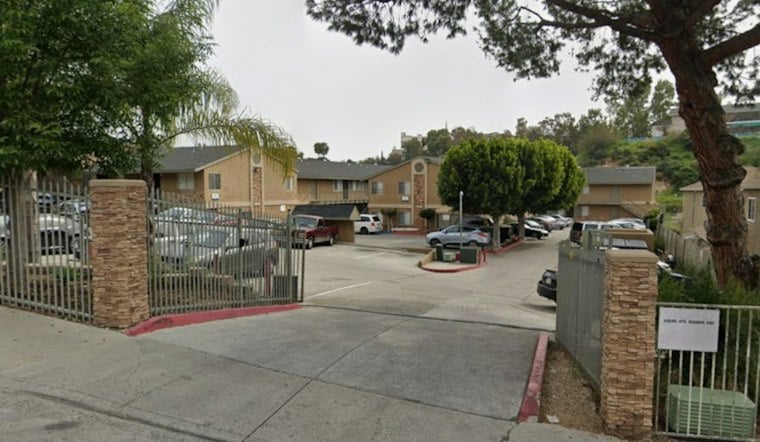
A 45-unit apartment complex at 4960-4970 Auburn Drive in San Diego has changed hands for $9.99 million, or roughly $222,067 per unit, in a deal that involved private Southern California investors. Built in 1986, the property known as Auburn Apartments had last sold back in 2016.
The transaction was reported by CoStar, which lists the property's neighborhood two different ways in its coverage — the headline places Auburn Apartments in City Heights, while a separate data point in the same reporting identifies it as sitting in the Fox Canyon neighborhood. CoStar's reporting also names Cash Cow Investments, LLC and Dave Plutner of DP Properties in connection with the deal, though it does not specify which party was the buyer and which was the seller.
The two neighborhood labels describe different levels of the city’s geography: Fox Canyon is one of the neighborhoods within the City Heights community. The City of San Diego lists Fox Canyon among City Heights’ neighborhoods, placing the property’s two reported locations in the same broader area rather than in competing parts of the city. The city’s description of City Heights also notes that the community includes a mix of single-family and multifamily housing.
San Diego Apartment Market
In the third quarter, San Diego's average asking rent was $2,462, up 1.4% year over year, according to Kidder Mathews.
San Diego's year-to-date median multifamily sale price reached $380,700 per unit in the third quarter, a 14% jump from 2025, per the same Northmarq report. Lower-tier properties bucked that trend, though — the report found their median sale price actually fell 10% this year to $224,600 per unit, a figure close to what Auburn Apartments fetched on a per-unit basis.
The price gap between Auburn’s per-unit sale price and San Diego’s overall median reflects a market where results vary by property tier. Northmarq found lower-tier properties were the only segment whose median price declined year to date, falling 10% to $224,600 per unit; it also said those properties tended to be smaller and concentrated in more affordable areas. That comparison gives context for Auburn’s price, but does not establish how Northmarq would classify the complex. Northmarq’s Q3 market analysis also found San Diego sales activity accelerated during the quarter.
Nearby Deals Show a Similar Pattern
Just a few months earlier, a much smaller property in City Heights set a notable benchmark of its own. A 9-unit multifamily building at 4344 Van Dyke Ave. sold for $3.1 million on March 30, 2026 — about $344,000 per unit, which Commercial Asset Advisors described as a record-setting price per door for that ZIP code. In that deal, AZ Investments served as the seller and Bouza Investments, LLC was the buyer, with Commercial Asset Advisors representing the seller and CRE Advisory Group representing the buyer.
Zooming out further, the national picture shows investors broadly still active in multifamily even as per-unit pricing softens. Multi-Housing News reported that nationwide multifamily sales totaled $41.1 billion in the first half of 2026, down just 0.3% from the same period in 2025, while the number of properties traded rose 7.1% year over year to 1,230 and units traded increased 5.8%. At the same time, the average price per unit nationwide fell 5.8% to $188,401, according to the same report, which noted the ten markets it ranked accounted for 39.9% of national investment volume, up from 32.9% a year earlier.
Taken together, the local and national numbers paint a picture of steady investor appetite for rental housing even as vacancy inches up and per-unit pricing diverges by property tier. For a 45-unit complex like Auburn Apartments, built nearly four decades ago and still carrying strong occupancy heading into its sale, that appetite appears to have translated into a deal that closely tracks where San Diego's lower-tier apartment market has been trading this year.
The complex’s 1986 construction date also places it within the age range covered by California’s rent-increase limits, although exemptions can apply and the sale itself does not establish the rules for any particular tenancy. For increases taking effect from Aug. 1, 2026, through July 31, 2027, the state Attorney General lists an 8.2% maximum for San Diego County under the statewide Tenant Protection Act. The state’s rent-cap guidance says the law generally applies to most rental housing more than 15 years old and allows new rents to be set when a tenancy turns over.





