

























































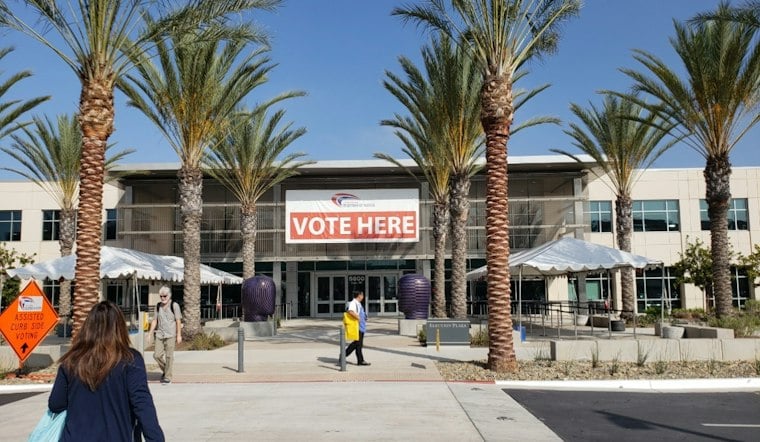
San Diego Unified's push for a massive new school bond is off to a strong start. Early vote counts released Wednesday showed Measure M pulling in 64.86% yes votes to 35.14% no, comfortably clearing the 55% threshold the measure needs to pass, even as hundreds of thousands of ballots across the county remained uncounted.
According to FOX 5 San Diego, the San Diego County Registrar of Voters estimated around 11 a.m. Wednesday that approximately 540,000 ballots still needed to be tallied countywide. Measure M, like all California school bonds since 2000, requires 55% voter approval to take effect, a threshold set statewide and reiterated in KPBS's reporting on the county's bond measures.
Reporting on the bond's size has varied. The San Diego Union-Tribune and KPBS both describe Measure M as a $3.5 billion bond, while a separate FOX 5 page lists the figure as $3.5 million. If the larger figure holds, EdSource has reported that Measure M would be the largest bond measure on California's 2026 ballot, a distinction echoed in the Union-Tribune's own coverage.
What the Bond Could Pay For
Measure M could fund a wide range of projects, from aging school facilities and special education spaces to workforce and teacher housing and new transitional kindergarten facilities, per the Union-Tribune's reporting. The list includes workforce housing and transitional-kindergarten construction. Prioritized projects reportedly include athletic facilities, secure campuses and improved campus accessibility.
The scale of the need is substantial. San Diego Unified estimates it faces $461 million a year in deterioration costs, a figure attributed to facilities director Lee Dulgeroff in Voice of San Diego's reporting.
A District Shrinking Even as Buildings Age
The bond arrives as San Diego Unified grapples with declining enrollment. The district has lost more than 17,500 students since 2014 — about one in every eight — according to the same Voice of San Diego report, and nearly half of its schools are now operating at less than 70% capacity. The district still had 1,411 portable classrooms remaining as of its facilities master plan's release in July, per the Union-Tribune.
The district has outlined facility priorities. Officials have said they'll prioritize spending based on facility condition, health and safety needs, educational needs, enrollment and available funding — and plan to reduce reliance on underused sites, reconfiguring or consolidating campuses where appropriate.
District and Union Voices Weigh In
The San Diego Education Association had already thrown its weight behind the measure months earlier, with the San Diego Education Association noting that its elected representatives approved the endorsement at a special Rep Council meeting.
If approved, Measure M would mark the district's fifth bond since 2008 — and its fifth-in-a-row success, since San Diego Unified has passed every bond measure it has put before voters since then, with voters approving more than $11 billion in bonds since 2008. School bonds can raise money for new or improved facilities, temporarily raising property taxes so districts can borrow for those needs; Measure M is projected to cost taxpayers $32 per $100,000 of assessed property value.
Part of a Statewide Wave
San Diego Unified isn't alone on the ballot. Eight K-12 districts across San Diego County asked voters this November to approve borrowing for construction and repairs, per KPBS, while NBC San Diego counted nine total school bond measures aimed at campus repairs and new facilities on the local ballot. Smaller measures include La Mesa-Spring Valley School District's Measure AA, authorizing up to $131 million, the Santee School District's Measure BB, authorizing up to $30 million, and the Julian Union High School District's bid to borrow $9 million, according to KPBS.
Voters in 82 California school districts across 40 counties are deciding a combined $12.6 billion in school bonds this cycle, according to EdSource.




