

























































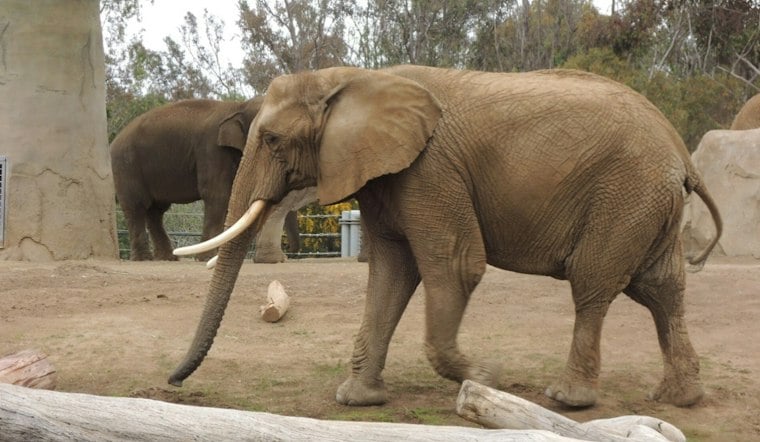
Fifteen-year-old Inhlonipho, known as Nipho, died Wednesday at the San Diego Zoo after a brief battle with elephant endotheliotropic herpesvirus hemorrhagic disease. By Saturday, zoo officials said his half-brother Tsandzikle, called Sundzu, had developed signs of the same illness.
The two bulls had shared a bachelor herd with a third elephant, Vus'Musi, called Musi. Over four days, one death became a second case under intensive care, in a disease known for turning severe in a hurry. The San Diego Union-Tribune reported that officials identified EEHV-HD as the preliminary cause of Nipho's death, and that Sundzu was receiving antiviral medications, fluids and elephant plasma infusions.
A Preliminary Cause, Not a Closed File
Nipho died Nov. 11. A report the next day said the cause had not yet been determined and that further examinations were underway. Saturday's announcement moved the case from an open question to a named preliminary cause: EEHV-HD, the hemorrhagic disease tied to elephant endotheliotropic herpesvirus.
The illness was unusually fast in onset and progression. Zoo teams began treatment immediately, before a definitive diagnosis. San Diego Zoo Wildlife Alliance is investigating what happened, and zoo officials have said they hope Nipho's death will advance understanding of EEHV-HD and ultimately save lives.
The zoo has described EEHV-HD as one of the most serious diseases facing elephants. It has also said the disease poses no risk to people or other wildlife. On the zoo's account, the emergency stays with the elephants, not with visitors or the other animals on the grounds.
Round-the-Clock Care, and Plasma Already Banked
Sundzu is Nipho's 15-year-old half-brother, and he had been living in the same bachelor herd. On Saturday, officials announced that he had developed signs of EEHV-HD. The care they described was continuous: antiviral medications, fluids and elephant plasma infusions, around the clock.
The plasma was already on hand. Plasma is routinely collected from elephants at the zoo and the Safari Park and banked, the zoo said, "for moments exactly like this one." The bank is a standing piece of the medical plan, drawn from herds the alliance already keeps, not a workaround assembled after Nipho died.
As of that Saturday announcement, no other elephants at the zoo were showing diagnostic, clinical or behavioral changes. The update left Musi, and the rest of the zoo's elephants, outside the warning signs officials said they were watching. They asked the public to keep zoo teams in their thoughts as they support Sundzu and one another. They described signs and treatment, not an outcome.
A Herd Assembled Over Years
Nipho was born at the San Diego Zoo Safari Park, the son of Umngani. She thrives in the Elephant Valley herd, so the family line in this story runs between the park and the city zoo rather than sitting in one enclosure.
He joined the bachelor herd at the San Diego Zoo in 2021, living with Sundzu and Musi. The zoo has said Tsandzikle and Inhlonipho arrived from Reid Park Zoo and the Safari Park, respectively, at ages 10 and 9. They were to be introduced gradually, on the expectation that they would begin to form a bachelor group. By this month that group was the daily arrangement: three bulls, one herd, until Wednesday.
After Nipho died, Sundzu and Musi were offered the opportunity to say goodbye. The offer ran alongside the medical work already turning toward Sundzu, who by Saturday was the herd's active case.
A Common Virus, an Uncommon Emergency
EEHV is a naturally occurring virus found in Asian and African elephants worldwide, in native habitats and under human care. The EEHV Advisory Group says most elephants will contract it during their lifetime, and many carry it without showing signs of illness. Carriage is the common story. Hemorrhagic disease is the break in it.
The advisory group says EEHV-HD most often occurs in African elephants under 15 and Asian elephants under 10, and calls it the single largest cause of death in young elephants in North America, Europe and Thailand. The disease can progress rapidly. Early treatment is the point the guidance keeps returning to, because there is no later stage in which the virus politely waits.
No permanent cure exists for herpesvirus infections, the zoo said. What it offered instead was a sequence: "Reduction of viral illness from early treatment, and prevention of severe illness through vaccination, is key to saving elephants."
Survivors, a Mismatched Vaccine, and a Research Target
Early detection has a documented record and a grim remainder. The Association of Zoos and Aquariums says more than 30 elephants in North America have survived EEHV-HD with early detection and treatment. In that same account, the case fatality rate among Asian elephants under care is 66 percent. Survivors are real. So is a fatality rate that still describes most of those Asian elephant cases. The 66 percent figure is a measure from a defined group, not a forecast for Sundzu, and the San Diego updates have not placed him in it.
The Oregon Zoo has been in a similar stretch. OregonLive reported Oct. 31 that calf Tula-Tu had completed a week of EEHV treatment and remained stable. Her half-sister Lily died suddenly of EEHV at age 6 in 2018. Tula-Tu received two vaccine doses in summer 2026, but her infection was a different strain from the one the vaccine targeted. The doses were real. The match was not. Vaccination is part of the strategy San Diego officials named; that Oregon case is a concrete look at what a strain mismatch leaves behind.
A 2026 study in Communications Biology reported that elephant heterophils can release neutrophil extracellular traps when stimulated, including by plasma from elephants with EEHV-HD. Tissue samples from fatal cases showed large amounts of those traps, suggesting they play a harmful role in how the disease progresses. The researchers said the finding may point toward a treatment strategy. For the team with Sundzu this weekend, it is a target in the literature, not a change in the protocol already described.
Saturday's tools were the ones the zoo could name in the present: antivirals, fluids, and plasma banked from elephants at the zoo and Safari Park. Nipho's case is still under investigation, with EEHV-HD the preliminary cause officials have named. The other elephants, as of that update, were not showing the diagnostic, clinical or behavioral changes keepers use as a warning.



