

























































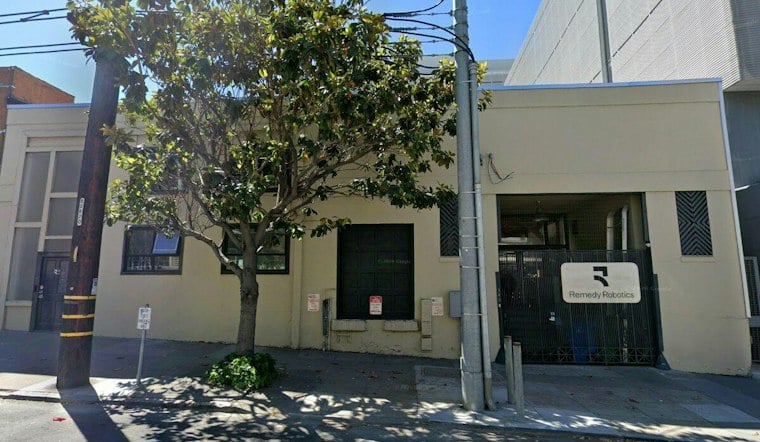
A San Francisco medical technology company says it has raised $62 million to bring a robot that lets doctors treat stroke patients from hundreds of kilometres away closer to real-world use. Remedy Robotics announced the Series B funding round on Monday, saying the money will support a planned clinical trial with the University of California and further work toward federal approval for treating blood vessels that supply the brain.
The company, which was founded in Australia but is now based in San Francisco, said DCVC led the round, according to the funding announcement distributed by prnewswire.com. New investors in the round included UC Investments, the University of California's investment office, along with Skip Capital and Hostplus, while existing backers Build Collective, Blackbird, Divergent Capital and KdT Ventures put in more money as well. Build Collective is associated with Tony Fadell, according to the seed reporting from Startup Daily, which described the raise as A$92 million even as the company's own release put the figure at US$62 million — a difference in currency and framing the available reporting does not reconcile.
Remedy's technology, called the N1 System, is built so a specialist sitting at a console can steer a catheter through a patient's blood vessels without being in the same room, let alone the same city. Per the Startup Daily report, the underlying software uses machine learning to analyze scans, simulate procedures in advance, and match a 3D vessel map to live X-ray images as the catheter moves. The company is also developing autonomous functions for the system, according to the same account.
From a Lead-Lined Garage to a Global Hospital Network
The company's origin story, as laid out in the Startup Daily piece, traces back to 2021, when cofounders David Bell and Jake Sganga lined a garage in Venice Beach with lead and bought a second-hand X-ray machine to begin testing their prototype. That same year, the pair tested the device remotely with a colleague in Berkeley. Bell, a Perth-born doctor who spent eight years in medicine including cardiac surgery and air retrieval, met Sganga, Remedy's chief technology officer, while studying at Stanford.
Sganga said the new funding would advance N1 toward clinical trials and potential FDA approval, and would support additional features including full autonomy, according to Startup Daily's reporting. Remedy's own announcement states that it now works with more than 100 hospitals worldwide and previously raised US$35 million across its seed and Series A rounds.
Diagnostic Tests in Toronto, Trial Plans Taking Shape
The clearest real-world test so far took place in Toronto, where CP24 reported that St. Michael's Hospital completed 10 brain angiograms using a robot controlled remotely by neurosurgeon Vitor Mendes Pereira. At one point Pereira guided the catheter from St. Joseph's Health Centre, roughly six kilometres away, while a clinical team stayed with each patient on site. According to the Startup Daily account, the Toronto procedures were diagnostic angiograms performed on two patients rather than full clot-removal surgeries. CP24's report adds that the team plans to apply to Health Canada for permission to start a clinical trial following further diagnostic angiograms.
Remedy's announcement states that the company has not secured approval for routine clinical use of N1 anywhere and that the system is not currently available for sale or clinical use in any jurisdiction. The company says it plans to place prototype robots with clinical partners, including through strategic ties to the Australian Stroke Alliance and SVIN Mission Thrombectomy, while it works toward a pivotal clinical trial across the University of California network. A separate study, described by the American Journal of Neuroradiology as a collaboration between the University of California Stroke Consortium's Robotics Committee and Remedy Robotics, tested remote robotic neurointervention on a silicone vascular model in October 2025. Five remote neurointerventionalists operated four devices, with procedures fully robotically controlled after catheter placement, and procedure times ranging from 11 minutes 1 second to 14 minutes with mean round-trip network latency under 150 milliseconds; first-attempt vessel entry succeeded in 84.2 percent of cases.
Why Access to Clot-Removal Treatment Remains Limited
Remedy and the Australian Stroke Alliance want specialists in major Australian cities to eventually be able to remove clots remotely while patients stay at regional hospitals, according to Startup Daily's reporting. That ambition runs up against a stark access gap documented by the Australian Stroke Alliance, whose March 2023 white paper found just 21 stroke centres in the country providing mechanical thrombectomy, all located in public hospitals in major cities. The same paper reported that fewer than 7 percent of people suffering an ischaemic stroke in Australia received the procedure, with 2,194 patients treated nationwide in 2021, and recommended that the federal government establish a Mechanical Thrombectomy Advisory Committee to develop a national strategy.
Global estimates of access to this kind of treatment vary depending on the source. Remedy's own announcement states that just 2.8 percent of eligible stroke patients worldwide have access to endovascular treatment, while IEEE Spectrum has reported that about one in 10 patients eligible for thrombectomy receive one — figures that use different definitions or populations and are not reconciled in the available reporting. IEEE Spectrum has separately noted that two companies have recently demonstrated remote robotic stroke-treatment capabilities.
Remedy is not the only company chasing this model. The Sydney Morning Herald has described Intuitive Surgical, a market leader in surgical robotics, as having begun with similar remote-surgery aspirations that proved difficult to execute because of technical challenges. For now, Remedy's own materials make clear that N1 remains under development, with the company seeking FDA approval for procedures on blood vessels supplying the brain rather than claiming it has already secured that clearance.



