

























































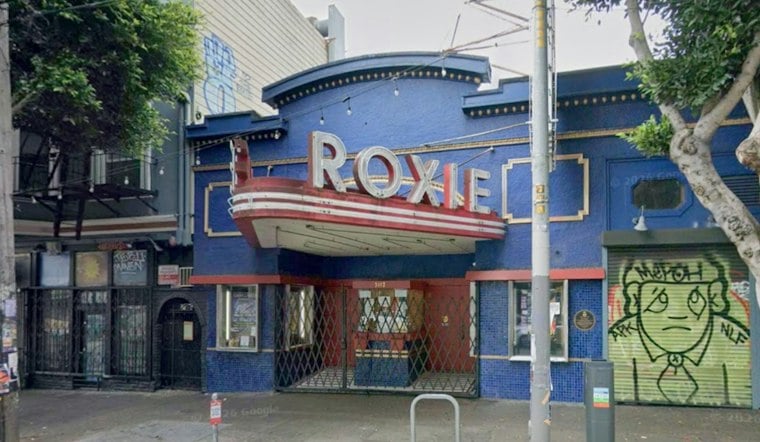
The Roxie Theater lit up Thursday evening for the opening night of the 29th annual San Francisco Transgender Film Festival, launching three days of in-person screenings that organizers are framing as both a celebration and a statement. The festival, which began at 7 p.m., is presenting six programs of short films this year, with two screenings scheduled each evening through Saturday.
According to KQED, festival artistic director Shawna Virago called attendance this year a statement and “a loving act of resistance” to anti-trans forces. Virago, who has led the festival as artistic director since becoming a co-director in 2003 according to a separate KQED report, said trans people are resilient and will outlast their haters, adding that trans people have always been and will always be part of the human experience.
A Festival Built Over Nearly Three Decades
The festival was launched in 1997 by Christopher Lee and Alex Austin, initially operating biennially before becoming an annual event in 2005, per KQED. Over its history it has screened roughly 800 films, Virago told the outlet, and the festival describes itself as North America's first and longest-running transgender and gender nonconforming film festival — a description that echoes a 2019 KQED profile calling it the world's first and longest-running festival of its kind at the time of that writing.
As reported by Local News Matters, this year's lineup spans six programs of short films, including horror and documentary selections. A 2026 preview from 48 Hills noted there are no feature-length films this year, but around 30 shorts grouped by theme, with most films originating in the United States alongside titles from Germany, Brazil, South Africa, Australia, Costa Rica and elsewhere. KQED's reporting similarly describes contributing artists from the United States, Canada, South Africa and the United Kingdom.
Horror and Documentary Highlights
Among the horror selections is “Dread,” written and directed by Gabe Gabriel and Loren Loubser, who are from South Africa. The film, according to Local News Matters, follows a transmasculine Uber driver whose car becomes supernaturally possessed. KQED's account adds that the driver encounters a digital nomad with blonde dreadlocks and that the film depicts something unseen taking root in the car; Virago said it explores karmic justice and the lingering effects of apartheid.
The documentary slate includes “One of the Girls,” which the Roxie Theater describes as following Mary, a Japanese American immigrant, single mother and electrologist whose work supports transgender women — a true story KQED frames as allyship expressed through gender-affirming care. The same documentary program also follows three transmasculine athletes taking on an Ironman together, per the festival's own schedule. Elsewhere in the lineup, KQED describes “Swoletarian” as a gay anthem presented in the style of a music video.
Accessibility Measures and Screening Schedule
In-person screenings run through Saturday at the Roxie, according to Local News Matters, though accounts diverge on when the online component begins afterward. KQED, citing Virago, reports that programs move online for free starting Nov. 16 and run through Nov. 22; Local News Matters likewise cites an online component running Nov. 16-22, while 48 Hills reports the same programs become available for streaming on demand starting Nov. 15 through Nov. 22.
The festival's 2026 schedule states that the Roxie's entrance, lobby, bathrooms and audience seating are wheelchair accessible, and that all in-person screenings will feature ASL interpretation, with every film — in person and virtual — closed-captioned. The schedule also requires audiences at in-person screenings to remain KN95 masked for the entirety of their time inside the building.
A Call to Gather Amid Political Pressure
KQED's reporting notes that the Trump administration has sought to roll back protections for the transgender community, framing that backdrop as part of why Virago is urging community members to attend as an act of solidarity. Virago described the festival as a celebratory space to take a breath and “bask in our cinema,” saying the films on screen stand for freedom of expression, beauty, community and a future not driven by corporate AI.
Rather than dwelling on hostility, Virago said the community need not focus on hate and can instead focus on films, art and community — a framing that threads through the festival's broader mission of centering transgender issues, transgender lives, and films by and starring transgender people, as described in KQED's coverage.





