

























































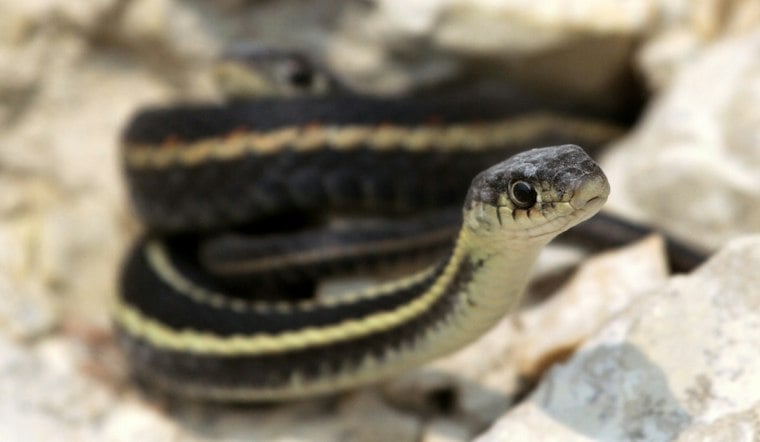
The San Francisco Zoo reared an estimated 120 young San Francisco garter snakes in 2025 for planned release in 2026. The effort marks what conservation partners describe as the first successful head-starting program ever conducted for the species, according to a Facebook post from the San Francisco Zoo.
The young snakes planned for release in 2026 were born to wild, gravid females that were collected from the San Mateo County coast, according to the San Francisco Zoo. That collection effort happened in spring 2025, when project partners gathered 11 pregnant female snakes and brought them to the Zoo, according to the Midpeninsula Regional Open Space District. A September 4, 2025, article from the district said the females were expected to give birth in late summer or early fall 2025, and that 80–120 births were feasible.
The program draws on a wide coalition. Partners include Midpen, the San Francisco Zoo, the U.S. Geological Survey, the National Park Service, the Golden Gate National Parks Conservancy, the Golden Gate National Recreation Area, the California Department of Fish and Wildlife, the San Francisco Recreation and Park Department, and the U.S. Fish and Wildlife Service, per the Zoo's post and Midpen's own account of the project's partners.
Why Head-Starting Matters for a Fragile Species
Head-starting — raising young animals in captivity before release — is meant to increase young snakes' likelihood of surviving once they're out in the wild, and it supports recovery of populations that are struggling with declining numbers and genetic diversity, according to the Zoo's post. The Golden Gate National Parks Conservancy described the effort as being at the center of a first-ever head-start program for the San Francisco garter snake.
A federal demographic-modeling study backs up that approach: releasing head-started juveniles over a span of 15 years was found to be the most viable modeled reintroduction strategy while minimizing potential impacts on the wild populations that donor snakes come from, according to the U.S. Fish and Wildlife Service's 5-Year Review. The San Francisco garter snake is endangered.
A Species Confined to a Shrinking Footprint
The San Francisco garter snake is found only in San Mateo County. The species was first listed as endangered in 1967 on the U.S. Fish and Wildlife Service’s first endangered species list, not under the Endangered Species Act.
Midpen's own account of the broader restoration push is blunt about the stakes: despite decades of special protection, the snake's survival remains precarious. The wild population today is limited to pockets in San Mateo County, the district has said. Separately, the Zoo's post states that an estimated couple thousand individuals remain in the wild.
The Parks Conservancy says it has helped lead habitat restoration across more than 30 acres since 2007. The U.S. Fish and Wildlife Service notes that remaining populations have been fragmented due to urbanization, with the snake now found in isolated populations mostly along the coast in San Mateo County, and that it requires both aquatic and upland habitat to survive.
Genetic Testing and the Road Ahead
Under the 2025 project plan, one-third of the young snakes were slated to be released at the site where their mothers were originally collected, with the remaining two-thirds distributed to other known San Francisco garter snake population sites, according to Midpen. The plan also called for genetically testing each baby snake to ensure a good mix of genes was spread across populations.
The Zoo reared about 120 San Francisco garter snake neonates in 2025, with release planned for 2026. The effort also focuses on diversifying and bolstering the snakes' gene pool.




