

























































A federal appeals court has wiped out a $1.35 million judgment against San Jose and police officer James Adgar, ruling he did not violate clearly established law when he fired a projectile that struck demonstrator Kyle Johnson during the May 2020 protests over George Floyd's killing. The 9th U.S. Circuit Court of Appeals found that qualified immunity shielded Adgar from damages, even though Johnson says the injury left him with blood clots and a lung blockage that have required blood-thinning medication ever since.
The ruling, reported Monday by San Francisco Chronicle reporter Bob Egelko, overturns a judgment that a San Jose jury had handed down in January 2025. Adgar fired projectiles into a crowd where some demonstrators were throwing bottles at police, and the appeals court found the jury could have concluded he could not identify a clear target and instead shot generally toward whoever was throwing the bottle. Adgar has said he aimed at a bottle-thrower and accidentally hit Johnson.
A Pellet to the Leg, a Legal Fight That Dragged On
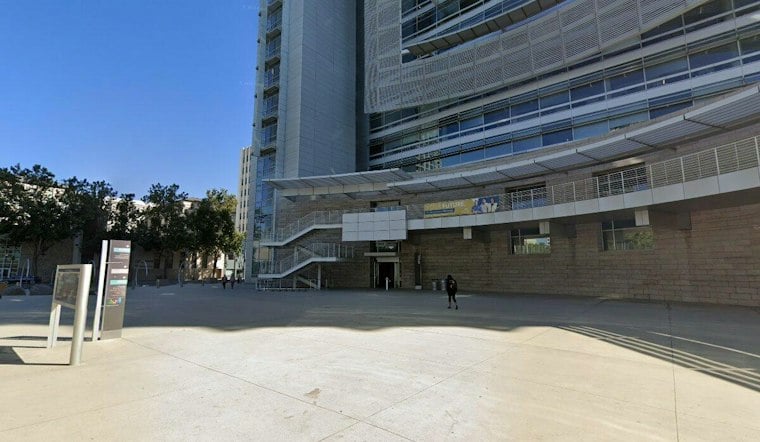
The protests erupted outside San Jose City Hall, where hundreds of people gathered after George Floyd was killed in Minneapolis in May 2020 — a white police officer, Derek Chauvin, knelt on his neck and back for nearly 10 minutes after a store clerk accused Floyd of using a counterfeit $20 bill, and Chauvin was later convicted of murder. Johnson, who worked as a girls’ basketball coach and teachers’ assistant at the time, was hit in the back of his leg by a pellet. According to a federal court order hosted by Justia, Johnson was struck after a 10:33 p.m. volley on May 30, 2020, and he “was walking away from the police skirmish line at the time and had not thrown any objects toward the police skirmish line.”
That same court record shows the case moved slowly through the system after Johnson sued. A San Jose jury awarded damages against Adgar under federal and state law in January 2025, and the district court's report of the verdict put the figure at roughly $1.4 million. U.S. District Judge Beth Labson Freeman later upheld that award in an August 2025 order, denying the defense's bid for judgment as a matter of law on Johnson's Fourth Amendment claims while granting it on his First Amendment claim and ruling partly in Adgar's favor on a Bane Act claim.
A Conflicting Record on the City's Role
Accounts of the case diverge on whether San Jose itself was ever found liable alongside Adgar. The Chronicle's report describes a jury that awarded damages against both San Jose and Adgar under federal and state laws. But a verdict-form excerpt from the U.S. District Court for the Northern District of California, posted on govinfo.gov, states plainly that “the jury found in favor of Kyle Johnson and against James Adgar on Mr. Johnson's Fourth Amendment claim, First Amendment claim, Bane Act claim, battery claim, and negligence claim” while finding no liability against the City of San Jose. The same conflict appears in the Justia-hosted district court order, which likewise states the jury found no liability against the city.
A Split Panel and a Sharp Dissent
The three-judge appellate panel didn't rule unanimously. Judge Richard Tallman wrote that Johnson was part of a crowd in which some people were assaulting a peace officer, and Judge Mark Bennett joined that majority opinion. Judge Richard Paez dissented, writing that Johnson and nearby protesters were acting peacefully and that shooting projectiles indiscriminately into protesters who posed no imminent risk was clearly unlawful.
The panel did not close the door on every legal question. It asked the California Supreme Court to clarify how state law applies to the case, and said it would decide in later proceedings whether any portion of the original damages award was based solely on a violation of California civil rights law. Johnson's lawyers were not immediately available for comment, and they could still ask the full appeals court for a new hearing before an 11-judge panel.
San Jose's Projectile Policy Has Already Shifted Once
The case lands against a backdrop of other costly litigation tied to San Jose's 2020 protest response. A separate lawsuit brought by five people injured by police projectiles during the same wave of demonstrations settled with the city for more than $3.3 million in 2023, according to KQED. San José also approved restrictions later in 2020 that limited projectile-weapon use to situations where officers were directly attacked, rather than allowing it purely for crowd control, per the same outlet's reporting.
For now, the appellate ruling leaves Johnson without the damages a jury once awarded him, even as he continues dealing with the medical aftermath he has attributed to the 2020 shooting. The unresolved question of California-law damages, along with the possibility of a rehearing request, means the case isn't necessarily finished.




