

























































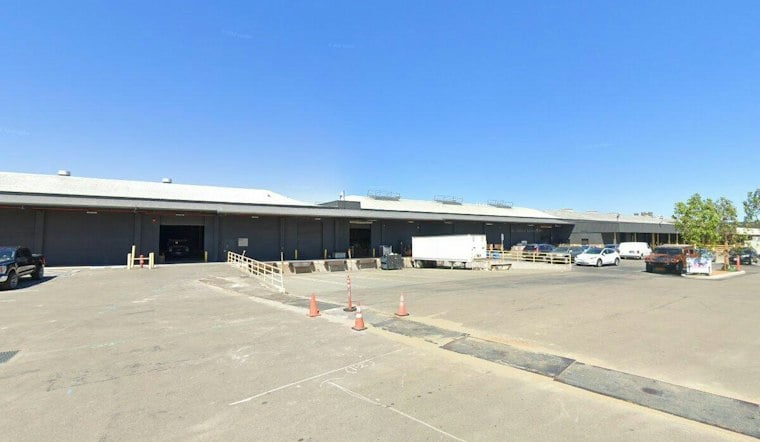
A San Leandro battery startup just pulled in $30 million to prove it can build lithium-ion cells without a single gram of Chinese graphite. Coreshell Technologies announced the close of its Series B financing round on Wednesday, with the money earmarked for scaling up manufacturing and customer programs as the company races to replace one of the battery industry's most China-dependent materials.
The round was co-led by Ferroglobe PLC and Access Industries, according to a PR Newswire announcement, with ADS, Helios Ventures, Pegasus Tech Ventures, Mana Ventures and Entrada Ventures also putting in money. The company says the funding will accelerate commercialization of its battery technology and support the expansion of both manufacturing and customer programs. It's another major cash infusion for Coreshell this year, following a $46.3 million financing in March and a $50 million DOE grant announced in August.
DFX, which tracks startup financing, reports that Coreshell is based in San Leandro, California — though the company's own citybiz-sourced materials describe it as based in Berkeley. DFX notes that its records do not show the company's valuation or how the $30 million was divided among the seven participating investors.
Why Graphite Became a Liability
The core pitch is straightforward: more than 90 percent of the world's graphite is processed in China, according to Coreshell's financing announcement, and China tightened controls on graphite exports in 2023. Coreshell says it sidesteps that vulnerability entirely by swapping graphite for metallurgical silicon, a material the company describes as widely available and produced domestically in the U.S.
Silicon isn't a new idea in battery chemistry — it's long been known to store substantially more lithium than graphite, which can translate into higher energy density. The challenge, as Heatmap reports, is that silicon tends to swell during charging, a quirk that can shorten a battery's cycle life. Silicon-based anodes have much higher theoretical capacity than graphite.
From Lab Cells to Navy Ships
Heatmap's reporting indicates Coreshell is already shipping its first battery cells to the military, for use aboard Navy ships and in Army ground vehicles. The outlet also reports that the $50 million DOE grant is intended to support construction of a 2-gigawatt-hour commercial-scale factory, which Coreshell itself has described as the first giga-scale facility built for cells using metallurgical-silicon anodes.
The company is still weighing where that factory will go. Per the same Heatmap account, Coreshell is evaluating several potential U.S. sites and expects to announce its selection early next year. Longer term, the company has laid out a roadmap that would bring electrode production in-house by 2028, followed by full cell assembly in 2029 — a timeline that would see Coreshell control considerably more of its own supply chain than it does today.
Locking Down the Rest of the Supply Chain
Graphite isn't the only material Coreshell is trying to source outside China. The company says it has signed an eight-year supply agreement with South Korea's L&F Co. to secure lithium-iron-phosphate cathode material from outside China, according to a statement posted on Coreshell's own website. The company has framed the new financing as a way to scale a battery supply chain that eliminates dependence on China for critical materials while also delivering performance and cost advantages.
Coreshell isn't alone in chasing this bet. Heatmap identifies Sila Nanotechnologies and Group14 Technologies as other companies working to commercialize silicon anodes, and rival Sila has already moved further down the manufacturing path — InsideEVs reports Sila secured $300 million in private funding to expand its Moses Lake, Washington, factory, which began operating in fall 2025 with 2 gigawatt-hours of initial capacity and contracts to supply Mercedes-Benz and Panasonic Energy. Sila says its Titan Silicon anode could boost battery energy density by 20 to 40 percent over conventional graphite.
Coreshell has made its own performance claims for its technology: the company said in a prior statement that its cells deliver a tenfold increase in specific capacity compared to graphite anodes while cutting material costs by up to 50 percent. Whether those gains hold up at the scale of a full commercial factory remains to be seen, and a separate research review flags that silicon-containing cells have historically struggled with shorter cycle life than conventional graphite cells — a gap the entire industry, including Coreshell, is racing to close. As citybiz first reported, the company's leadership has stressed that simply meeting domestic-sourcing requirements doesn't automatically make a battery supply chain secure — a distinction that will likely shape how closely regulators and customers scrutinize Coreshell's next moves as it picks a factory site and starts building toward 2028.





