

























































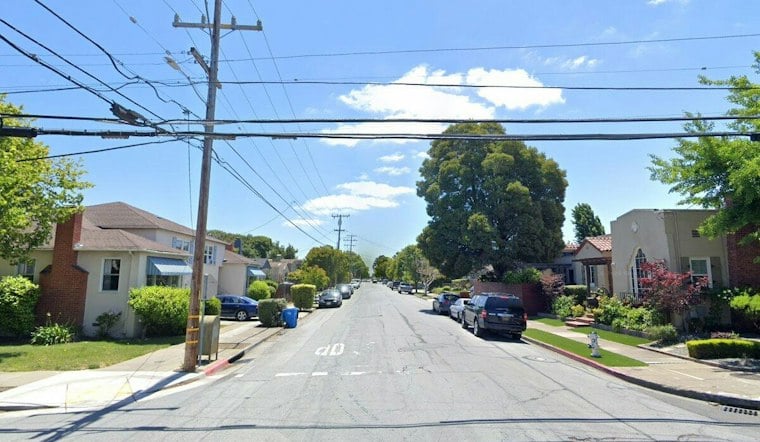
San Mateo's Humboldt Street bike lanes are staying put, but the fight over the roughly 200 parking spaces they displaced in North Central is far from settled. The San Mateo City Council has decided to retain the bike lanes installed in 2022 and briefly considered converting the residential corridor into a one-way street before abandoning that idea over safety and traffic concerns. Now city staff are chasing a grab bag of alternatives, from off-site parking leases to shuttle service to expanded rideshare options, to soften the blow for residents who lost street parking when the lanes went in.
Why the One-Way Idea Died
City staff found that converting the 40-foot-wide Humboldt Street into a one-way corridor was infeasible and incompatible with fire code, according to reporting by the San Mateo Daily Journal. Police separately raised concerns about longer emergency response times, the loss of route redundancy, and traffic that would get pushed onto residential streets. The city's public works engineering manager said the feasibility study also found that one-way conversion would create frequent queues from delivery trucks, trash pickup, and transit stops that were not received well by the community.
The parking crunch traces back to the council's February 2022 approval of bicycle lanes along Humboldt Street and E. Poplar Avenue, which required removing 214 parking spaces, according to the city's own North Central Neighborhood Parking Program page on cityofsanmateo.org. That loss has fueled years of organized pushback. According to citizenportal.ai, more than 80 speakers addressed the council during nearly eight hours of testimony on the issue, with opponents arguing that losing more than 200 on-street spaces has imposed daily hardships on residents.
A Permit Program That Fell Short
City staff had proposed a residential parking permit program to address the parking loss, but the plan ran into a wall of its own making: survey results. Citywide surveys yielded only a 20% response rate with 47% support for the program, while households surveyed specifically on Humboldt Street showed 39% support, the Daily Journal reported. San Mateo's residential parking policy requires at least 50% of households in a proposed zone to respond to the survey, with at least 67% of respondents supporting the program, according to the city's Residential Parking Permit Program Policy and Procedures document.
That threshold proved impossible to clear. City staff said they had exhausted the actions available under current policy to make the permit program happen, per the Daily Journal's reporting, and attributed the low response partly to working-class families living in North Central and to outreach workers door-knocking during peak work hours. Danielle Cwirko-Godycki recommended another round of door-to-door outreach to obtain a more granular sample size.
Looking for Parking Elsewhere
With the permit program stalled, the city is turning to other fixes. San Mateo has identified Fiesta Gardens International School and Community Baptist Church of San Mateo in the North Central neighborhood as possible locations for private parking leases, though the Daily Journal noted those potential leases are not guaranteed to yield a clean-cut acquisition of parking. Councilmember Rob Newsom said private off-site parking leases remain worth exploring and suggested the county could help find parking near the courthouse.
The city has also applied for a shuttle grant, even as shuttle operating costs are expected to rise by upwards of 150%, with no exact amount determined. A senior rideshare program already has a waitlist and is at capacity, and expanding it to provide low-fare, door-to-door service capped at four rides per user monthly would require a dedicated pilot with additional funding. San Mateo did find a viable ridesharing route in the neighborhood and will continue pursuing off-site parking and rideshare opportunities to replace parking lost to the Humboldt Street bike lanes, per the same account.
A Divided Council and Community
The city council majority supported keeping the existing bike lanes and exploring car-friendly options elsewhere in the neighborhood, but that consensus didn't extend to every member or resident. Councilmember Michael Ragan criticized installing the Humboldt Street bike lanes and removing residents' on-street parking in the first place. Deputy Mayor Nicole Fernandez described the bike lanes as “a travesty and a tragedy” and opposed considering alternatives that exclude restoring parking on Humboldt Street outright.
Other voices framed the debate around safety rather than convenience. San Mateo bicycle advocate Mike Swire said removing the bike lanes would be fiscally irresponsible given the city's budget deficit and ongoing community safety needs. Lisa Diaz Nash viewed the project as a benefit to a growing neighborhood and pushed for faster safety improvements. Danielle Cwirko-Godycki said the city must consider the future and children attending school on Humboldt Street, adding that strengthening infrastructure near three nearby schools would improve safety for kids walking or biking to class. As the Daily Journal's Cecilia Schutz reported, San Mateo residents have shown no clear consensus on wanting more cars and parking at the expense of safety in North Central.
The Bigger Picture
The Humboldt Street fight has already swung back and forth once before. In 2025, San Mateo's Sustainability & Infrastructure Committee voted unanimously to keep the bike lanes, according to Streetsblog San Francisco, a decision that Move San Mateo said was backed by 800 community members who signed a petition to preserve the lanes. That came after the council had earlier moved to remove most of the Humboldt Street bike lanes in a step that would have restored about 100 parking spaces, as reported by the Daily Journal in an earlier story. The city's North Central parking programs, including a pilot overnight option at the King Center lot, have been offered free of charge to residents, and the policy is explicit that any permit would not guarantee a space, since parking remains first-come, first-served.





