

























































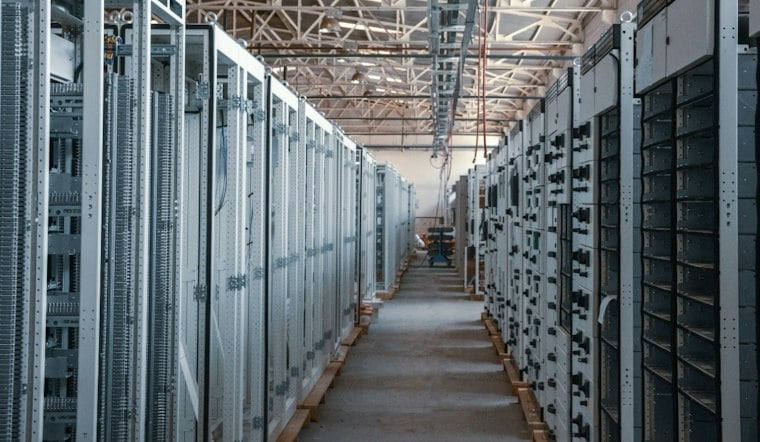
A Spanish renewable-energy company is quietly exploring a data center near Jacumba Hot Springs with a proposed load about four times the reported capacity of California's largest existing data center. The proposal, dubbed Project ECO, could reach up to 500 megawatts at full build-out on 177 acres about 70 miles east of San Diego, and it is already rattling residents in the small East County community.
According to 10News, the site sits north of Interstate 8 at 1425 Carrizo Creek Road, close to the US-Mexico border and near an existing substation and solar farm. The project developer is IGNIS, a Spain-based company, as reported by East County Magazine. Founded in 2015, IGNIS has more than 1 gigawatt of owned generation either operating or under construction and manages roughly 10 gigawatts of owned and third-party assets, according to Data Center Dynamics.
The land is currently owned by Derik Martin, who is set to sell it to Ignis Energy USA LLC, the same outlet reports. Site plans suggest the project could include two data-center buildings and a battery energy storage system, though the station's report notes no publicly disclosed power-supply plan has emerged for how the massive electrical load would actually be served.
County Flags Water and Power Concerns Early
San Diego County has already identified water availability as a major concern and has requested a review of the electrical infrastructure that would need to support the project, per the same account from 10News. Any final version of Project ECO would require approval from the San Diego County Board of Supervisors, a county spokesperson said. For now, though, the project remains in a preliminary stage.
IGNIS representative Tahir Fazal told 10News, “We have not done an application, so this project right now is nothing more than a consultation to the county,” describing it as an early proposal meant to test feasibility. He added that the local pushback against the project is “very reasonable.” Santee Pulse reported that IGNIS would conduct community outreach if it moves forward with the proposal.
That reassurance hasn't quieted critics. Greg Curran, vice president of the Jacumba Sponsor Group, is organizing opposition to Project ECO and wants the county to adopt a moratorium on large data centers, mirroring steps already taken elsewhere in the region.
A Region Already Pushing Back on Data Centers
Project ECO isn't arriving in a vacuum. The City of San Diego and the City of Escondido have both approved moratoriums on large-scale data centers, while Poway has moved to ban standalone facilities outright, according to 10News. The San Diego City Council's suspension, approved on October 27, 2026, imposed a 45-day halt on data-center development that took effect immediately and can be extended, as reported by The San Diego Union-Tribune.
A separate report from 10News described the broader regional conversation on large-scale data centers as dominated by resistance. Project ECO is not the only massive proposal under consideration in the county, either. The UCSD Guardian reports that Manchester Financial Group has confirmed it is exploring a 400-megawatt data center at the Navy's NAVWAR site in San Diego's Midway District, though that project's plans are still being refined and no final decision has been approved.
Why the Power Demand Stands Out
The scale of Project ECO's proposed 500-megawatt load is what has drawn the most attention. It would be roughly four times the reported capacity of California's largest existing data center in Santa Clara County, according to 10News's reporting. For context, California data centers statewide currently consume about 5,580 gigawatt-hours of electricity annually, or roughly 2.6 percent of the state's 2023 electricity demand, according to the California Community Choice Association. The same analysis cites a Lawrence Berkeley National Laboratory projection that U.S. data-center load could double or triple by 2028.
Plans for Project ECO were disclosed through a California Public Records Act request, according to MLQ.ai. With no formal application yet filed and the proposal still described by its own developer as a consultation, the path forward for Project ECO remains uncertain — but for residents in Jacumba already mobilizing against it, the stakes feel very real.




