

























































A professional soccer player in Spain died after colliding with the opposing team's goalkeeper during a match earlier this month. Conflicting accounts of the emergency response have prompted Spanish police and prosecutors to examine what happened after CD Tenerife forward Jesús de Miguel went down against FC Andorra. The questions about the response have also drawn comparisons with Damar Hamlin's on-field collapse nearly four years ago in Cincinnati.
Collision, Collapse, and a Preliminary Finding
De Miguel died after colliding on the field with the opposing goalkeeper, according to media reports cited by USA TODAY, which described him as a 30-year-old professional player in Spain. The Buffalo News also identified him as 30 years old, matching USA TODAY. A preliminary autopsy report cited “accidental chest trauma” as the cause of death, according to USA TODAY's reporting of accounts from El Día and Canarias7.
El Día reported separately that the preliminary autopsy described the chest trauma as a cause compatible with de Miguel's death, while additional test results had not yet been added to the findings. That detail leaves the full medical picture incomplete for now, with further analysis still pending according to the outlet's reporting.
Conflicting Accounts of the Emergency Response
Exactly what happened in the minutes after de Miguel went down remains unclear. USA TODAY reported that media accounts conflict over when CPR was administered and whether an automated external defibrillator was used. ESPN, citing a Spanish medical official, reported that team medical staff reached de Miguel's side 20 seconds after he collapsed and that emergency workers arrived with a stretcher in under a minute.
El Mundo offered yet another version, reporting that de Miguel regained a pulse after resuscitation efforts performed by medical teams once he was already inside the ambulance. The competing timelines underscore how unsettled the public record remains even days after the game between CD Tenerife and FC Andorra at Estadio Heliodoro Rodríguez López in Santa Cruz.
Police and Prosecutors Open Separate Inquiries
El Mundo reported that Spain's National Police opened an investigation into de Miguel's death, now under judicial supervision. Criminal proceedings were described as unlikely.
USA TODAY reported that Spanish soccer federation regulations require a physician to be present throughout a match and an ambulance equipped for advanced life support to be on site at every game. FIFA recommends pitch-side AEDs, according to the same report. The reported requirements and recommendation do not establish whether any rule was broken in de Miguel's case.
What Spain’s AED Rules Establish
Spain’s Real Decreto 365/2009 sets minimum conditions for using and maintaining semi-automatic external defibrillators outside healthcare settings, according to the Official State Gazette. The decree alone does not establish whether an AED was required at this match, and the information cited here does not clarify whether additional Canary Islands or venue-specific rules applied.
Echoes of Damar Hamlin's Survival
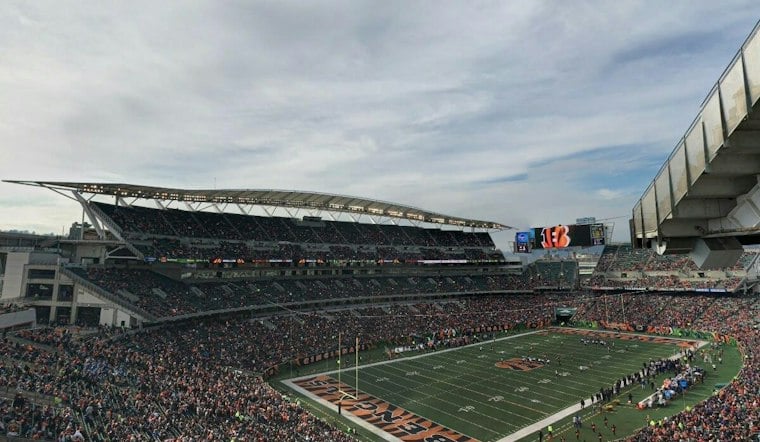
The case has drawn comparisons to Damar Hamlin, the Buffalo Bills safety who suffered sudden cardiac arrest during a Monday Night Football game against the Cincinnati Bengals at Paycor Stadium on January 2, 2023. Hamlin collapsed near midfield, and field paramedics applied a defibrillator within the first few minutes after reaching him, according to Woods Curry, an emergency medicine physician who was part of the medical team that treated Hamlin that night.
Curry, an associate professor of clinical emergency medicine at the University of Cincinnati and a physician at UC Health, told USA TODAY that both CPR and the AED were critical to saving Hamlin's life. He said every minute of delay in defibrillation cuts a person's chance of survival by roughly 10 percent, and noted that ambulances in the United States typically arrive eight to 12 minutes after a 911 call — a gap that makes on-site equipment and trained responders essential. Curry also told the outlet he was proud of Hamlin's advocacy for cardiac arrest awareness since his recovery.
What the Research Shows About AEDs and Survival
The numbers behind Curry's warning are backed by published research. A video analysis of 48 sports-related sudden cardiac arrest cases found that early AED use had the strongest association with survival, with 19 of 22 cases involving early defibrillation resulting in survival — an 86 percent rate, according to a study in the British Journal of Sports Medicine. That same analysis found 47 of 48 cases, or 98 percent, occurred in male athletes, and most events happened during low-to-moderate intensity exertion rather than peak effort.
A separate FIFA registry study covering football events from 2014 to 2018 found CPR resulted in an 85 percent survival rate when an AED was used, compared with just 35 percent when one was not, according to British Journal of Sports Medicine. That registry recorded 617 players worldwide who died suddenly or survived sudden cardiac arrest across 67 countries, with 142, or 23 percent, surviving. The same registry found traumatic sudden death, including commotio cordis, occurred in just 6 percent of cases.
Calls for Consistent Standards
Jonathan A. Drezner, director of the University of Washington Medicine Center for Sports Cardiology, told USA TODAY that AEDs should be in place at all sporting events and that professional soccer matches should meet that standard of care. The varying accounts of what equipment was or was not used in de Miguel's case have not been resolved publicly, and USA TODAY's reporting does not establish whether a defibrillator was deployed before he reached the hospital.
Hamlin, for his part, has continued his career since the 2023 scare. Curry told USA TODAY it looked like Hamlin was set to start at safety in the Bills' next game, a far different outcome than the one facing de Miguel's family, teammates, and supporters following the CD Tenerife forward's death. A photograph of de Miguel and FC Andorra's Lautaro de León from the match was credited to Reuters.



