

























































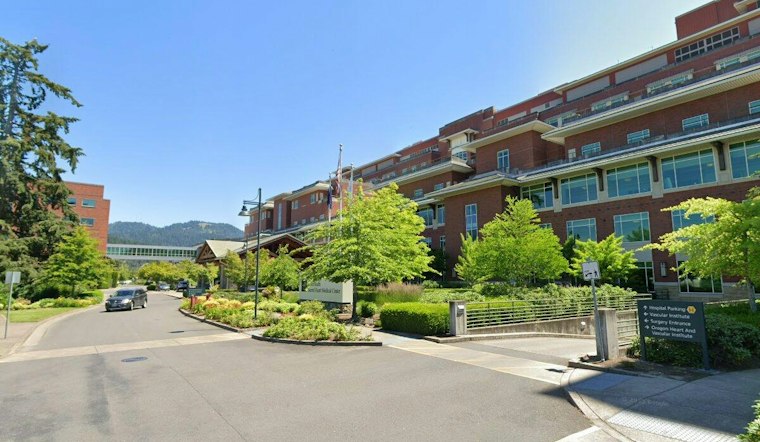
A surgeon at PeaceHealth Sacred Heart Medical Center at RiverBend in Springfield has performed the Pacific Northwest's first minimally invasive, hidden-scar mastectomy, a procedure that removes breast tissue through a single incision barely over an inch long near the underarm while leaving no visible scar on the breast itself. Dr. Winnie Henderson of Willamette Valley Cancer Institute and Research Center completed the operation, known as an endoscopic nipple-sparing mastectomy, or E-NSM, marking a regional first for the approach.
According to KEZI, Henderson recently completed the region's first E-NSM, a technique that relies on high-definition endoscopic cameras and a specialized access platform to give surgeons a magnified view of the tissue they are removing. That stands in contrast to a conventional nipple-sparing mastectomy, which typically requires a two- to four-inch incision beneath the breast. With E-NSM, surgeons can remove the breast while preserving the skin, nipple and areola, all through that single underarm incision.
Lisa, identified by the station as Oregon's first patient to undergo the procedure, said her experience exceeded what she had expected going in. She had been told she likely wouldn't retain feeling in the area afterward, but that hasn't been her experience so far. “I was told I likely wouldn't have sensation, yet I still have sensation just a week out from surgery,” she said.
Why Henderson Says the Technique Matters
Henderson said the approach is designed to reduce visible scarring and pain while improving patient outcomes and quality of life. She described E-NSM as offering a smaller incision, less pain and a shorter recovery compared with traditional methods, the station reported. Still, the technique is not a fit for every patient — it's described as an option for early-stage breast cancer patients and those with hereditary risk, not a universal replacement for existing surgical approaches.
Ideal candidates, per the report, are those whose tumors sit safely away from the nipple and whose breast anatomy features smaller cup sizes without significant drooping. That mirrors criteria described elsewhere in the field: a Cleveland Clinic case study notes that patients with very large breasts, breast ptosis or a tumor located near the nipple cannot undergo the surgery. In one Cleveland Clinic case, the surgeon made a 3 cm incision in the inframammary fold where it was completely hidden, and the patient was discharged within 24 hours and back at work two weeks later.
A Procedure Still New to the U.S.
Henderson said the United States has lagged behind Asia and Europe, where surgeons have performed E-NSM for years before it reached American hospitals. That timeline tracks with outside accounts of the procedure's arrival stateside: NewYork-Presbyterian says the technique was only introduced to the United States in 2025 after being used abroad for several years, and that its own breast surgeons performed one of the country's first E-NSM procedures that June. Cleveland Clinic similarly describes the method as broadly used in Europe and Asia but still new to the U.S.
A 2025 study published in BJS Open, cited in a Willamette Valley Cancer Institute and Research Center press release distributed via FlashAlert, found that E-NSM offers the same cancer safety as conventional surgery while delivering higher cosmetic satisfaction and a lower risk of tissue complications. The same study also found that the approach may better preserve skin and nipple sensation. Separately, NewYork-Presbyterian reports that international studies found E-NSM's oncological outcomes were not inferior to those of conventional nipple-sparing mastectomies, and that the procedure there can be performed through an incision of approximately 3 centimeters along the side of the breast.
What Comes Next in Springfield
Willamette Valley Cancer Institute and Research Center says it invested in specialized training so it could offer the advanced surgical option locally, and the institute plans to make E-NSM part of standard surgical treatment for patients who are good candidates. The stakes for patients in the region are not small: breast cancer affects one in eight U.S. women and remains the most common cancer diagnosis among American women, according to the KEZI report.
For now, Lisa's early recovery offers one data point in what institute leaders hope will become a routine option for qualifying patients in the Willamette Valley. Her case, as the region's first, will likely be watched closely as Henderson and her colleagues look to expand access to the hidden-scar technique beyond this initial surgery.




