

























































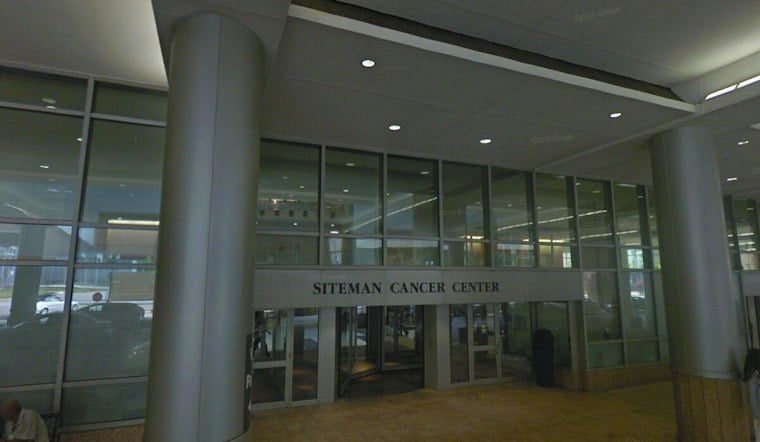
A green, battery-powered Lamborghini is now available to young patients visiting Siteman Cancer Center’s proton therapy unit. Tate and his family donated it after the ride-on car he used during treatment stopped working. Tate was diagnosed in January 2025 with ETMR, a rare and aggressive brain tumor, and has since received extensive care.
Tate’s treatment has involved hospital stays, medications, transplants and proton radiation, according to KSDK. He first received proton therapy in the summer of 2025. After a relapse earlier in 2026, his care team used proton radiation to treat his brain and spine, the station reported. Dr. Shannon Jiang, a resident physician, has been part of the team throughout his treatment.
The failed car had become important to Tate, who wanted a replacement that other children could use. KSDK reported that this idea grew into a family effort to bring a new ride-on car to the treatment center.
A Lemonade Stand Funds a New Ride in Four Hours
Tate’s nieces set up a lemonade stand and wrote a letter describing how the money would benefit children receiving treatment. The replacement car was funded within four hours, KSDK reported.
Blake Bickhouse told KSDK that the stand and letter were ready the next morning and that the car was funded within four hours. Tate selected a green Lamborghini, which his family bought and brought to the proton therapy center for other children to use.
Bickhouse told KSDK that the family hoped the gift would offer a happy moment to children and families facing difficult circumstances. Tate has completed his latest round of proton therapy, and the Lamborghini will continue to be available to young patients at the center, the station reported.
How Play Can Help During Treatment
Play can offer a way to cope with some of the emotional strain of hospital care. Separately from Tate’s donation at Siteman, St. Louis Children’s Hospital said when it announced its Child Life Zone on April 29, 2026, that patients and families use play to manage fear, anxiety and time away from family and friends. The hospital’s statement describes the broader role of play; it does not identify the Lamborghini as a formal child-life service.
Why Proton Therapy Matters for Kids Like Tate
Jill Springl, BJC proton radiation oncology supervisor, told KSDK that the car would serve as a reminder to the medical team of Tate’s generosity and the impact one family can have. Proton therapy is designed to direct radiation toward a tumor while limiting dose to surrounding healthy tissue. That precision can be especially important in pediatric care.
Siteman Cancer Center says proton therapy can concentrate radiation at a selected depth, reducing exposure to tissue beyond the target. The center uses the treatment for brain tumors, head and neck cancers, lung cancer, gastrointestinal cancers and pediatric solid tumors. Siteman opened what it describes as the world’s first single-room compact proton therapy facility in 2013 and added a second pencil-beam scanning unit in 2020.
A study co-led by WashU Medicine and the University of Pennsylvania found that proton therapy delivers equivalent cure rates to traditional X-ray radiation with significantly fewer serious side effects, including fewer hospitalizations and emergency room visits, across nearly 1,500 patients. WashU Medicine notes that precise targeting is particularly beneficial for children, where it is critical to avoid impacting growing bones or organs.
What the Research Shows for Tate's Diagnosis
Because ETMR is rare, evidence on outcomes remains limited. A 2025 registry analysis reported by WashU Medicine Research Profiles examined 18 children with ETMR after excluding two who had previously received radiation. Four-year overall survival was 59.6%, and event-free survival was 54.2%.
The registry analysis also found 81% local control at four years and no symptomatic radionecrosis among the children studied. Its authors concluded that focal proton radiation provided effective local control as part of multimodality treatment for ETMR. The small cohort, drawn from the Pediatric Proton/Photon Consortium Registry, does not establish Tate’s individual prognosis or outcome.
A Family That Keeps Giving Back
KSDK reported that Tate’s family is grateful for the care and support they have received. Earlier, Tate held a lemonade stand fundraiser for the Alex’s Lemonade Stand Foundation in August 2024. He said the goal was to help the organization “move one step closer to finding a cure for all children with cancer.”
Tate also planned to take part in The Million Mile in September 2024 to support childhood cancer research, writing that he intended to “fight childhood cancer, one mile at a time.” The foundation’s event page said presenting sponsor Volvo Cars USA matched online donations made for the campaign from September 26 through September 29, 2024.
For families looking to support pediatric brain tumor research and patient care at Siteman, the Foundation for Barnes-Jewish Hospital offers the Caulder Family Innovation Fund. The foundation is located at Highlands Plaza Drive West, Suite 140, in St. Louis, Missouri 63110, and can be reached at 314-286-0600.





