

























































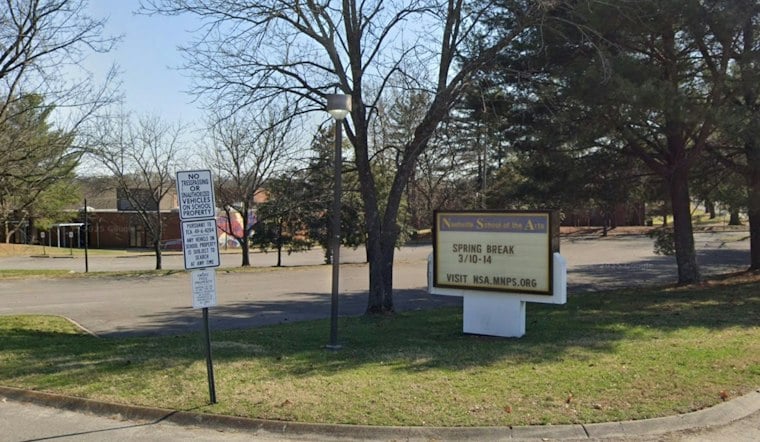
A storm toppled an old, dead tree right next to the Nashville School of Art, and when a Metro Schools cleanup crew moved in to clear the debris, they found something buzzing inside the hollow trunk: a honey bee nest that likely held thousands of bees.
Kevin Skinner and his crew, Charles Glenn and Tyler Eaves, were the ones who stumbled onto the hive while cleaning up the mess, according to NewsChannel 5. With the tree down right on school property, Skinner flagged the obvious danger. “Kids are here on property — they get over here and swarm, they could get stung,” he said. Rather than destroy the nest, Metro Schools made a different call: bring in a beekeeper.
That beekeeper happened to be the reporter covering the story. Nick Beres, who authored the NewsChannel 5 account of the rescue, said Metro reached out to him directly for help safely moving the hive. “So, Metro called this reporter — me, Nick Beres — for help. Yes, I'm a beekeeper,” he wrote.
Tennessee has a statewide framework for supporting beekeeping: the honey bee is the state’s official agricultural insect, and the Department of Agriculture’s Apiary program maintains beekeeper registration files and works with the University of Tennessee on research and education. The department also connects pollination with food production, noting that proper pollination can improve the size and shape of marketable fruits and vegetables. That context helps explain why Metro Schools called for a beekeeper rather than treating the hive as ordinary storm debris. Tennessee’s Apiary program describes those roles.
Waiting for the Right Weather to Move a Hive
Rather than rush the job, Beres and the crew settled on a plan built around patience: wait for a rainy, cooler day so the bees would stay clustered inside the hive, then move the entire trunk intact to a new location. Bees tend to stay put in cooler, wetter conditions, which made the timing critical to pulling off the relocation without provoking a swarm.
A hollow tree is a recognized nesting site for honey bees, not an unusual place for a colony to turn up. USDA pollinator-habitat guidance says feral honey bee colonies can nest in hollow tree or rock cavities and that a hive can support more than 10,000 bees. It also distinguishes honey bees from native bee populations: honey bees are not native to North America, though they are widely managed for pollination. USDA guidance on pollinator habitat outlines those distinctions.
When the right day came, Beres suited up and sealed the opening in the tree trunk with plastic wrap to keep the bees contained during transport. The trunk was then loaded up and trucked to Maplewood High School, where Metro Schools had planned to place it behind a wooded area on the property.
A New Home in the Woods at Maplewood
Once the trunk arrived at Maplewood, Beres and the Metro Schools crew set it upright in the woods and peeled away the plastic wrap, freeing the bees into their new surroundings. The report describes the outcome plainly: the bees were saved and given a new place to live, a result credited to Metro Schools for taking the steps needed to avoid harming them rather than simply eliminating the hive.
Tennessee also has a referral path for residents who encounter bees on their property. The University of Tennessee says county Extension offices can help identify insects and connect people with a beekeeper when a honey bee swarm appears; the university and the state Department of Agriculture also work together on beekeeper support and education. A swarm is not the same as an established colony inside a tree, but the referral service reflects a broader role for local experts in identifying bees and directing people to appropriate help. UT’s apiculture assistance guidance describes that service.
The rescue reflects a broader shift in how honey bees exist in Tennessee today. A separate NewsChannel 5 report on a similar incident in Hartsville notes that most bees in the state now live in hive boxes maintained by beekeepers rather than in the wild. In that Hartsville case, Beres was also called in after a storm knocked down another hollow, bee-filled tree, and the job involved removing honeycomb and carefully collecting the colony into a hive box. As that report put it, “The key to the entire process is getting the queen — which is tricky.”
Whether the queen from the Nashville School of Art colony made the move to Maplewood along with the rest of the hive was not addressed in the reporting. Still, the outcome lines up with how Beres framed the stakes of the rescue: honey bees, he noted, are an invaluable natural resource worth protecting rather than exterminating when they turn up somewhere inconvenient, even right beside a schoolyard.





