

























































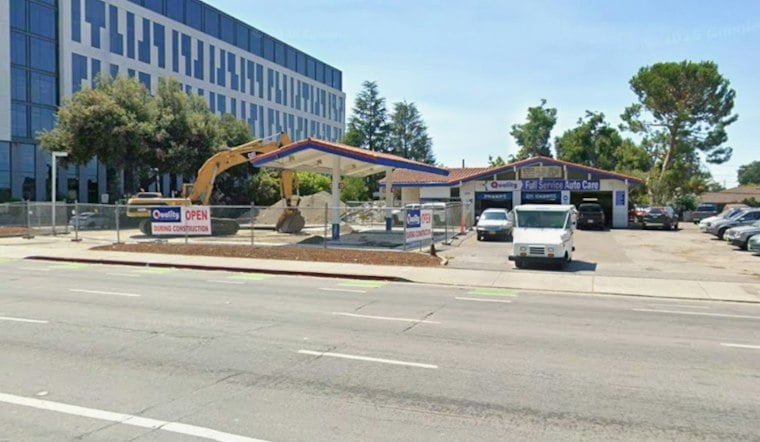
Pull into the gas station at 425 S. Winchester Blvd. in San José, directly across from Santana Row, and alongside the fuel pumps you will find something unexpected: a kitchen serving beef plov, samsa and shawarma wraps rooted in Tajik cuisine. Caspian Grill opened there in January 2026, and it has quietly become one of the Bay Area's only dedicated Tajik food businesses.
The business is owned by Zarina Akhmedova, who was born in Tajikistan and grew up in Russia, according to KQED. Before moving to California six years before the outlet's report, she worked as a restaurant manager in Russia for five years. That background now shapes the menu at Caspian Grill, where dishes include family recipes she learned from her mother.
A Cuisine Rarely Seen in the Bay Area
Tajik cuisine was, per the outlet's reporting, almost impossible to find in the Bay Area before Caspian Grill opened, even as other Central Asian and Afghan flavors have found footing locally. The region's restaurants have tended to feature cuisines from Kyrgyzstan, Uzbekistan and Afghanistan, leaving Tajik cooking largely absent from the scene. Akhmedova has said her goal is to make Tajik cuisine accessible to a wider audience, and she estimates about 70% of her customers are already familiar with the dishes she serves.
The Bay Area’s Central Asian food scene is small, but it spans distinct national cuisines. Eater’s 2025 look at the region’s handful of Central Asian eateries identified Uzbek restaurant Sofiya in San Francisco, Uyghur restaurant Kusan with locations in San Jose, Milpitas and Mountain View, and Nursel in San Carlos, where Kyrgyz-born owner Nursel Koigeldieva serves food she grew up eating. Those restaurants offer a regional point of comparison, but they don’t make Tajik cooking easy to find.
The centerpiece of that menu is beef plov, also known as osh, which the outlet describes as Tajikistan's most famous dish. It is prepared with beef, oil, onion, carrots and rice cooked in rendered meat juices, and Akhmedova has said it is the dish traditionally cooked for celebrations. Alongside it sits samsa, a triangular puff pastry filled with seasoned ground beef and onions, and cheburek, a larger fried pastry stuffed with ground beef, spices and onion.
Plov’s role extends beyond special occasions: UNESCO inscribed oshi palav on its Intangible Cultural Heritage list in 2016, recognizing it as a social practice as well as a dish. In Tajikistan, it is prepared for everyday meals as well as gatherings, celebrations and rituals, and the skills are passed down in families and from cooking masters to apprentices. That communal tradition gives added context to Akhmedova’s description of plov as celebration food.
Layers of History Behind the Menu
The cheburek on Caspian Grill's menu traces back to Crimean Tatars, who brought the pastry to Tajikistan after Joseph Stalin deported them there in the 1940s. Stalin also deported the Koryo-saram, an ethnic Korean minority, to Central Asia, and that community created morkovcha, a kimchi-style carrot dish that became popular in the region partly because carrots were more readily available than napa cabbage. Akhmedova puts her own spin on the dish, serving morkovcha over a chicken hot dog with soy sauce.
The cheburek’s place on a Tajik menu also carries the history of forced migration. In May 1944, Soviet authorities forcibly deported nearly 180,000 Crimean Tatars from Crimea; most were sent to Uzbekistan, while others were exiled to places including Tajikistan. The mass removal was ordered under Stalin, and deportees faced harsh transport and restricted lives in exile. The pastry’s arrival in Tajikistan is one part of a wider history of peoples and traditions being displaced across Central Asia.
Beyond the core menu, Caspian Grill specializes in shawarma wraps and savory pastries, and it offers limited specials including a Philly cheesesteak and a lentil cream soup. Akhmedova is also considering adding pumpkin manti and samsa filled with mushrooms and pumpkin, and the business plans seasonal menus built around seasonal produce and warming dishes for the cold, rainy months ahead.
Tapchans in a Gas Station Parking Lot
Part of what sets the spot apart is the setting: Caspian Grill's owners provide tapchans, the raised Central Asian dining platforms traditionally used for social gatherings and as canopies for outdoor naps, right there in the gas station parking lot. It is an unusual pairing of fuel pumps and a slice of Central Asian hospitality, tucked in plain sight across from one of San José's busiest shopping and dining destinations.
Caspian Grill is open daily from 11 a.m. to 10 p.m. at the Winchester Boulevard location. For now, it stands as one of the only places in the region where visitors can try beef plov, samsa and morkovcha prepared by someone who grew up with the dishes at home.





