

























































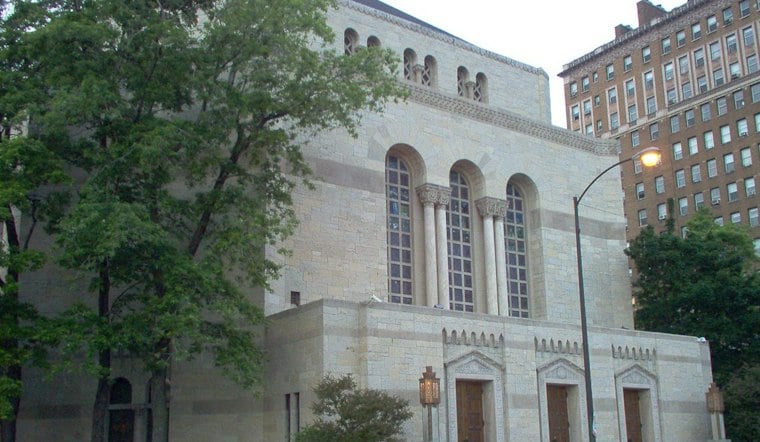
Ten of the 16 people who filed petitions to run for Chicago mayor showed up at Temple Sholom in Lake View to make their case to voters, sparring over housing targets, school policy and how City Hall handles antisemitism. Mayor Brandon Johnson was not among them, choosing instead to attend a community budget town hall in Uptown while the forum unfolded across town.
The forum, held at the Lake View synagogue and moderated by Rabbi Shoshanah Conover, marked an early test of the crowded field just nine days after the midterm election, according to the Chicago Sun-Times. Candidates were initially given two minutes each to answer questions on public safety, education and antisemitism, but organizers cut that down to one minute per candidate as the large panel ate into the clock. Illinois Secretary of State Alexi Giannoulias, described as a fundraising powerhouse who has shifted his focus toward a mayoral run, was also absent from the stage.
Housing Targets Split the Field
Housing emerged as one of the forum's sharpest points of contention. U.S. Rep. Mike Quigley said he wanted to fill schools rather than close them and pushed for the creation of 50,000 affordable homes in underserved Chicago neighborhoods, a figure that echoes a goal he laid out over the summer in a Chicago Tribune opinion piece calling for building or preserving 50,000 starter homes or apartments across the city within five years. Joe Holberg went further, calling for 100,000 housing units citywide.
On education, Bill Quinlan suggested closing under-enrolled schools while renovating or building others to operate more like recreation centers. Danielle Carter-Walters instead pushed for school choice that would direct more money toward private schools, staking out a different approach to the same debate over how Chicago spends on its classrooms.
Antisemitism and the Ceasefire Resolution
Several candidates used the forum to criticize Johnson over his push for a City Council resolution supporting a ceasefire in Israel's war on Gaza. Susana Mendoza said the city's report on antisemitism was incomplete under the Johnson administration and pledged to revamp it, adding that the mayor should bring down the temperature. Mendoza also touted her experience in the statehouse, as city clerk and as outgoing state comptroller.
On public safety, John Kelly proposed adding 1,000 Chicago police officers as part of his platform, while Bill Quinlan argued that hiring more officers was not a simple fix for all crime, including hate crimes specifically. Zoe Ma took the conversation in a different direction, backing a universal basic income program for the city.
Coalition-Building and Budget Reform
Several candidates leaned on their resumes to make the case that they could govern a fractious City Council. George Cardenas touted his 20 years on the council, including stints as a committee chair and as floor leader for former Mayor Lori Lightfoot. Matt Brewer pointed to his appointments under Lightfoot and former Mayor Rahm Emanuel as evidence of his ability to build coalitions, while Kelly said his own background as a lobbyist would make him an effective coalition builder.
Quigley also proposed creating a City Council version of the Congressional Budget Office to support a more transparent budget process with greater input from alderpersons. He argued the next mayor should be willing to be weaker on paper, telling the forum, “We need a city charter that codifies that.”
A Familiar Venue for Mayoral Hopefuls
This was not the first time Temple Sholom has hosted Chicago's mayoral field. The synagogue held a similarly structured forum in 2022 billed as “Vision for Chicago,” where Rabbi Conover asked each candidate the same set of questions on public safety, education and economic investment, each given two minutes to respond, according to Temple Sholom of Chicago. That event drew 11 of the 14 candidates then in the race and covered similar ground, including housing insecurity and antisemitism, as the Sun-Times reported at the time in its own coverage of the 2022 forum.





