

























































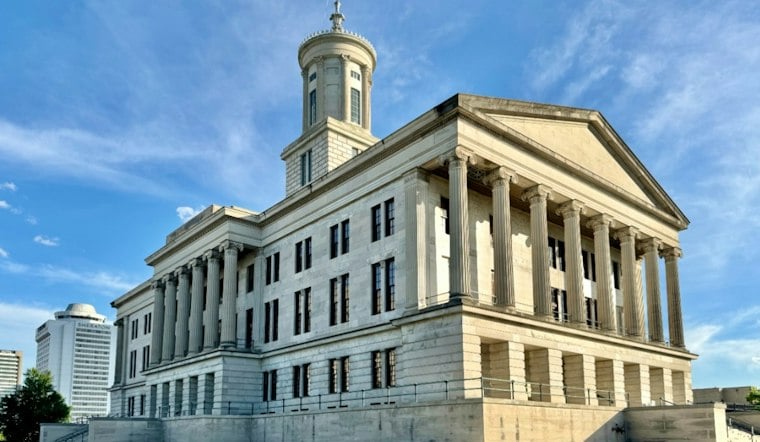
Tennessee House Speaker Cameron Sexton has filed legislation that would strip the state's food sales tax off milk, eggs and bread, and he says the exemption could eventually grow to cover far more of what's in your grocery cart. The bill, House Bill 6, targets a tax that currently sits at 4% on retail food sales statewide.
What House Bill 6 Would Actually Do
According to WSMV, House Bill 6 would exempt retail sales of milk, eggs and bread from the food sales tax. That 4% rate on food and food ingredients is confirmed in a fiscal note from the Tennessee General Assembly Fiscal Review Committee. But nothing changes at the checkout counter yet — the bill still has to clear the legislature and be signed into law before shoppers see any difference, per the same station's report.
Sexton has signaled the carve-out is just a starting point. “We're going to look at probably fresh food, vegetables, fruit, meat; food staples,” he said, according to WKRN. He's drawing a line, though, at food he considers less healthy: “if it's ultra processed or highly processed foods, I'm not sure that I would like to give a sales tax exemption to those foods,” he told the station. Speaking to WZTV, Sexton framed the broader version of his plan as covering staples like dairy, milk, cheese, yogurt, breads, fresh meats, vegetables, produce and fruits, with the goal of making food more affordable.
No Price Tag Yet, and a January Deadline Looms
Lawmakers aren't expected to take up the bill until they return for the legislative session in January 2027, WSMV reports. And there's a catch worth noting: no estimates yet show how much Sexton's proposed cut would cost the state, according to the Tennessee Lookout, which also notes the bill could still change as the session unfolds.
WKRN ran its own back-of-envelope math: a family spending $100 a month on items covered by the exemption would save $4 a month, or $48 a year. Sexton has pointed to state finances as the backstop, telling WZTV the money for his proposal would come from budget surplus revenue. He put it more bluntly to WKRN: “we will have surplus recurring revenue that would be able to cover this.” That's not an idle claim — the Tennessee Lookout reports officials are projecting another billion-dollar surplus for 2026-27, on top of a $1.2 billion surplus in collections the prior year, with revenues expected to climb 3.5% to 4.5%, roughly matching inflation.
Democrats Want to Go Further, and Have a History With This Fight
Nashville's Sen. Heidi Campbell, per WZTV, said she could support Sexton's proposal if it ultimately benefits Tennesseans. House Democratic Caucus Chair John Ray Clemmons welcomed the move too, telling WKRN, “we're very happy to hear that we're finally getting some support from across the aisle,” while making clear Democrats will keep pushing for a full repeal of the grocery tax rather than a narrower exemption.
That bigger Democratic push has a track record of going nowhere. Democrats have proposed a grocery tax cut again this legislative session, with that legislation still needing to be filed, per WZTV reporting; a similar Democratic proposal failed last year after Republicans, who hold supermajorities in both chambers, voted it down. The Tennessee Lookout reported that the 2025 version of that bill — sponsored by Democrats and aimed at eliminating the grocery sales tax entirely — would have replaced lost revenue with a corporate minimum tax projected to generate $900 million, and that Republican-sponsored grocery tax bills introduced during the 2026 session weren't taken seriously either. Sexton, for his part, has argued the Democratic approach would actually drive up the cost of living and the cost of goods, according to WZTV. Separately, WZTV reported Democrats estimate their proposal would avoid $800 million in annual revenue loss, while cost estimates for full repeal diverge elsewhere: Grocery Dive cited a fiscal analysis putting the toll at nearly $824 million, whereas the Tennessee Lookout put full repeal at about $1.2 billion in combined state and local tax revenue — the two reports don't agree on the number.
Affordability Pressure Behind the Push
None of this is happening in a vacuum. The Tennessean reported that affordability was a central issue in midterm elections in which Democrats flipped half a dozen state House seats, and separately found that Tennesseans spend about 11% of their income on groceries on average — the sixth-highest share in the country — as grocery prices keep climbing nationwide. WKRN notes that both parties have pushed to cut or eliminate the grocery tax over the years without ever agreeing on how to replace the revenue it generates.
There's already a smaller, local precedent for grocery tax relief. A reduction in Davidson County took effect November 1, lowering Metro's share of the tax on food while the state's 4% grocery tax stayed in place, WSMV reported. Senate Speaker nominee Jack Johnson has stopped short of endorsing Sexton's bill outright. “Affordability is a real concern. It's a real issue out there,” Johnson told the Tennessee Lookout, adding that the Senate would consider incremental improvements rather than committing to specifics just yet.
What Shoppers Are Weighing
For everyday Tennesseans, the debate over which version of relief — narrow or broad — actually lands is more than academic. Nashville resident Blaze Sams told WZTV he budgets carefully to make ends meet and sometimes sacrifices grocery purchases to cover rent, gas and other bills. He said he believes either tax-cut proposal on the table could help a lot of people, a sentiment that underscores just how much is riding on whatever the legislature decides once it convenes in January.




