

























































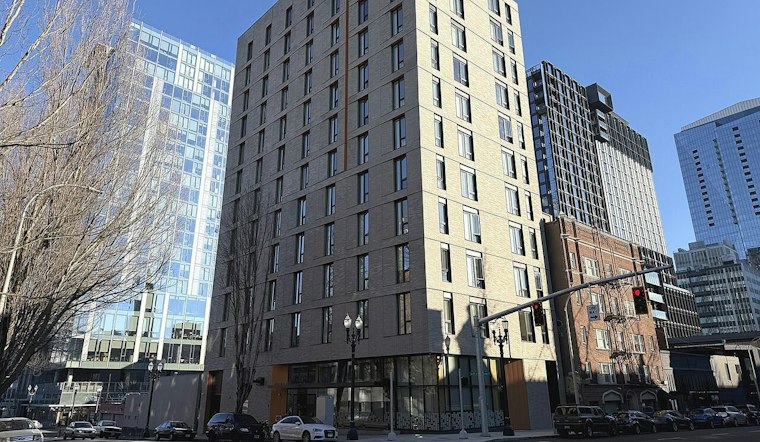
Woodland Hearth is a 63-unit community in the Tigard Triangle, built as two kinds of housing on one site: 22 permanent supportive homes for people leaving homelessness, and family-sized apartments for households earning up to 60% of area median income.
The split is the part worth reading closely. A June 10, 2025 Washington County account sets the rents by income band, while Metro’s project page attaches services to the supportive apartments rather than treating a low rent as the whole offer. The Registry describes the community as open, pairing those 22 homes with the family apartments.
Who The Rents Are Built For
County housing staff said 26 units are set aside for households earning 0–30% of area median income. In that June 2025 description, 30% of AMI for a family of four was $37,250 a year. The other units are priced for households at 31–50% and 51–60% of AMI, and 22 units come with rent assistance.
That is a wide stretch inside one building. A household near the top of the 60% band and a household with almost no income are not shopping the same apartment, even if the address is the same. The Registry’s account puts family-sized apartments in the mix for households up to 60% of AMI; the complex also includes two-, three- and four-bedroom homes, so the income schedule is meant to cover more than single adults.
The other 41 homes are regulated affordable apartments alongside the 22 supportive units. Nothing in the county income schedule says those 26 deepest-affordability units and the 22 rent-assisted units are the same set. They may overlap. What the published descriptions do establish is a stack: very low rents, mid-band affordable rents, and rent assistance on 22 units.
What Comes With The Supportive Apartments
Metro says the 22 permanent supportive apartments include job training, after-school and summer youth programs, eviction prevention and rental assistance. That is a different product from a restricted rent alone. The services are aimed at staying housed, keeping kids in a program after school, and catching a missed payment before it becomes a notice.
Washington County and Oregon Housing and Community Services fund rent assistance for residents of the supportive units. The state funds culturally specific mental health and recovery services, along with job training and eviction prevention. Native American Rehabilitation Association of the Northwest and Community Action provide support services to residents.
Gerritt Rosenthal said Woodland Hearth will be a lifeline for people experiencing homelessness in Tigard. The practical version of that claim is narrower than the slogan: 22 apartments with rent help and services, inside a 63-unit building that also houses families who qualify by income but are not in the supportive program.
Where The $9.5 Million Came From
Community Partners for Affordable Housing is the project sponsor. Woodland Hearth received a $9.5 million Metro affordable housing bond award.
Woodland Hearth includes 22 supportive apartments and family-sized homes.
Supportive Housing Services
The 22 apartments pair supportive housing with rent assistance, eviction prevention, job training and youth programs. For Tigard, the concrete offer is 63 regulated homes, 26 of them aimed at the lowest income band the county described, and 22 apartments that include rent help and support services.





