

























































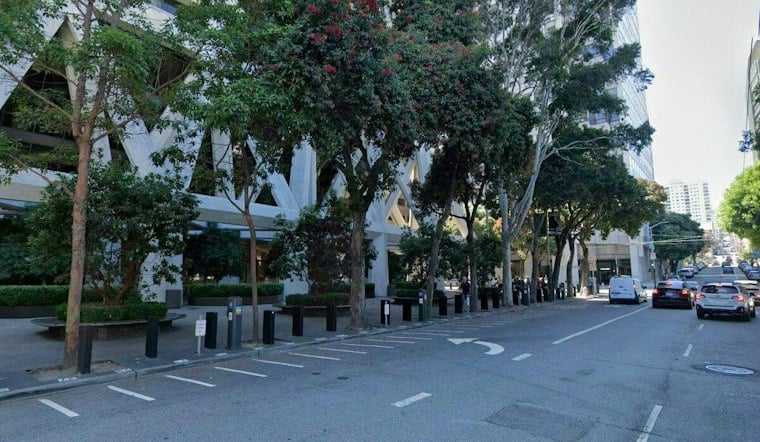
San Francisco is moving toward granting the Transamerica Pyramid historic landmark status, a designation that would protect the downtown icon down to its plaza benches and could also hand its owner a break on property taxes. The $691 million tower at 600 Montgomery Street has long defined the city's skyline, and now it's in line for formal preservation protection.
The move was reported by The San Francisco Standard, which reported that the pyramid is advancing toward landmark status and that its owner could ask the city to cut its property tax bill in exchange for maintaining the building. The outlet reported the tower, valued at $691 million, would be preserved in extensive detail, right down to its plaza benches.
Behind the scenes, city paperwork has already begun laying the groundwork. A San Francisco Historic Preservation Commission agenda item considered a recommendation to designate the tower at 600 Montgomery Street, known as the Transamerica Pyramid, as an Article 10 Landmark under Section 1004.2, according to a filing posted on sfplanning.org. A separate Board of Supervisors agenda document also identifies the Transamerica Pyramid by its Montgomery Street address, per sfbos.archive.sf.gov.
How a Landmark Label Could Translate Into Tax Relief
The tax angle hinges on a long-standing state program. San Francisco's Mills Act program offers a property tax reduction to owners who restore and preserve qualified historic properties, according to a description on sfplanning.org. In exchange for maintaining and preserving a historic property, the owner receives a property tax reduction, the city's own materials note.
That kind of arrangement is rooted in state law. Under California Government Code section 50280, cities and other local governments may enter into contracts with owners of qualified historical properties to restrict how those properties are used, in exchange for the preservation commitment. The statute establishes that such a contract is possible, though the evidence reviewed does not show that one has actually been finalized for the Transamerica Pyramid.
A related provision, Government Code section 50280.1, lays out baseline eligibility: a historical property must be privately owned and not exempt from property taxation, among other criteria specified elsewhere in the statute.
What's Still Unknown
Plenty of specifics haven't been nailed down yet. It isn't clear whether landmark status has been formally approved, when a final decision might come, or which city body will ultimately make that call. The identity of the tower's current owner also isn't established in the available records, and there's no confirmed figure for what any property tax reduction would actually be worth.
What is established is the scale of the preservation effort under discussion, with protections reportedly extending to street-level features like the plaza's benches. For a building as recognizable as the Transamerica Pyramid, that level of granular protection would mark a significant shift in how the city treats one of its most photographed structures.





