

























































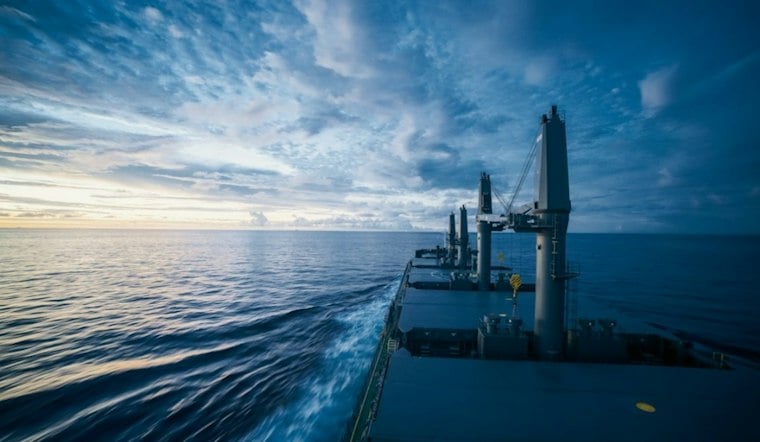
U.S. forces disabled a commercial cargo ship in the Gulf of Oman after the vessel allegedly tried to breach Washington's naval blockade against Iran, the military said. The strike targeted the ship's stern, leaving it unable to move, though officials have not said what happened to the people on board.
According to AP News, the U.S. military confirmed it fired on the vessel after it attempted to breach the blockade. U.S. Central Command later identified the ship as the St. Kitts-flagged M/V Huda, saying it was struck by precision munitions fired from a U.S. military aircraft, targeting the vessel's stern and leaving it disabled, per Anadolu Agency.
CENTCOM said the Huda had made a port call in Iran before attempting to leave regional waters, and that its crew ignored repeated warnings and attempted to breach the blockade, the same report states. The Arab Times adds that CENTCOM forces directed the crew to abandon targeted spaces before the munitions struck, a detail that suggests some effort to clear personnel ahead of the hit. Even so, the Anadolu Agency report notes that officials did not provide details about the condition of the Huda's crew or the extent of damage to the vessel, leaving the ship's fate and the welfare of those aboard unresolved.
A Months-Long Blockade Around a Critical Chokepoint
The Huda strike is the latest move in a U.S. naval blockade that has been enforced in and around the Strait of Hormuz for months, according to News4JAX's reporting on the original wire account. The waterway is widely recognized as one of the world's most important shipping corridors, and the Center for Strategic and International Studies notes it carries roughly a quarter of global oil flows and remains contested, as CSIS has detailed. CSIS also says the strait has been effectively closed since March 2, following U.S. and Israeli strikes on Iran.
Trade data backs up how disruptive that closure has been. The World Trade Organization's tracker found that shipping through the Strait of Hormuz remained severely constrained throughout July and August, with no evidence of a broad or durable recovery, according to the WTO Data Lab. The same tracker found that seven-day moving averages for crude oil, LNG, and fertilizer-related outbound shipments stayed close to zero for most of that two-month stretch, while inbound agricultural shipments were more persistent but still volatile. The WTO also cautioned that its figures may understate real traffic, since any stretch of a voyage is missed if a vessel's AIS transmission is disabled or interrupted while crossing the strait.
CENTCOM Says Dozens of Ships Have Been Stopped or Destroyed
The Huda is far from the only vessel caught up in the enforcement campaign. CENTCOM said blockade operations since July have resulted in 147 commercial vessels being redirected after complying with orders, the Anadolu Agency report states. Five merchant ships that refused to comply have also been disabled, and CENTCOM says U.S. forces have destroyed 10 Iranian commercial oil tankers allegedly linked to a multibillion-dollar shadow network operated by Iran's Revolutionary Guard Corps.
Beyond the blockade itself, the region has seen other recent flashpoints. Iranian media reported explosions on Saturday on Qeshm Island in the Strait of Hormuz and in the southern port of Jask, according to a Reuters report carried by Investing.com. Iran's semi-official Tasnim news agency said two missiles struck Qeshm Island, though there was no official information on possible damage, the same report notes. A U.S. official told Reuters that recent U.S. strikes on Qeshm Island were limited and not a resumption of major combat operations, but the cause and source of Saturday's explosions were not officially confirmed by Iran.
Strikes Continue as Diplomacy Plays Out
The disabling of the Huda comes against a backdrop of continued, if limited, U.S. military action against Iran even as negotiations are reportedly underway. An AP headline reported that the U.S. carried out targeted strikes as Iran's leaders weighed a mediator's proposals, underscoring that military pressure and diplomatic outreach are unfolding at the same time. Whether the Huda incident will factor into those talks, or how it affects the ship's crew, remains unclear based on what officials have disclosed so far.




