

























































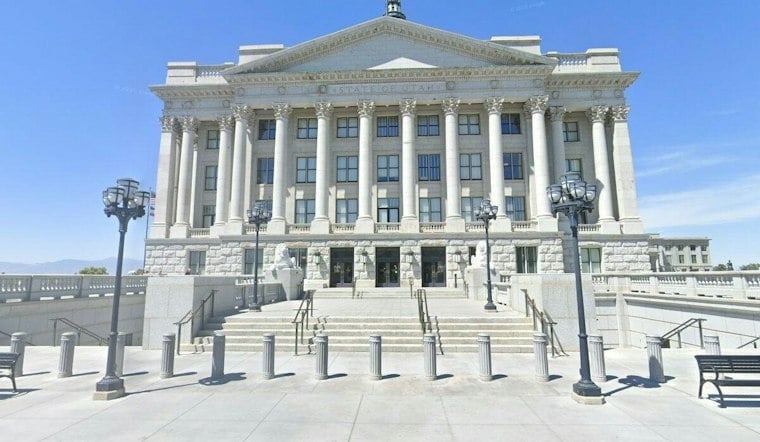
Utah Lt. Gov. Deidre Henderson's office refused to hand over the state's voter rolls to a nonprofit that wanted to post every registered voter's name and birth year online, and now that group has sued. The Voter Reference Foundation filed a federal lawsuit demanding Henderson's office, which oversees elections in Utah, turn over the official statewide voter list and stop enforcing the state's ban on posting voter records online.
According to The Salt Lake Tribune, the nonprofit first requested Utah's voter rolls in February, asking for the name and birth year of every registered voter in the state, and it warned Henderson's office in emails attached to the lawsuit that it would sue if the request went unfulfilled. Henderson's office confirmed the complaint was served Monday and said officials are reviewing it; attorneys for the Voter Reference Foundation did not respond to a request for comment that same day, per the same report.
Utah law requires requesters not to post voter records online, and Henderson's office has argued that state law also prohibits releasing voters' birth years. The Voter Reference Foundation counters that federal law supersedes the state restriction and that the lieutenant governor cannot limit how a voter roll is used once it is obtained, according to the Tribune's account. The group says its request complies with the National Voter Registration Act.
A Group With Deep Conservative Ties
The Voter Reference Foundation describes itself as a nonprofit dedicated to increasing voter participation and protecting election integrity, saying it requests, analyzes, and publishes each state's official statewide voter list. It identifies itself as an affiliate of Restoration of America, which describes itself as the umbrella name for a family of conservative organizations. The group has already published voter data from 35 states and the District of Columbia.
Its online postings typically include voters' names and street addresses, congressional and legislative districts, and when they first registered and whether they voted in the most recent election — but not Social Security numbers, state ID numbers, phone numbers, email addresses, or whom a person voted for. As ProPublica has reported, the group's data overall has covered more than 106 million people nationwide, including personal identifying information and the years each person voted, though not how they voted.
ProPublica's reporting also tied the group's origins and funders to a super PAC predominantly backed by billionaire Richard Uihlein, founder of packaging supply company Uline and a major supporter of President Donald Trump. The outlet reported that Restoration of America and a related super PAC were predominantly funded by Uihlein, and described the effort as a sign that well-funded Republicans planned voter-roll crowdsourcing to flag perceived errors and challenge registrations. The 2026 midterm vote was completed before the nonprofit renewed its campaign, per the dossier timeline.
Mixed Record in Other States
The nonprofit's push to publish voter data has met very different fates elsewhere. In early August, the group published the names, birthdates, addresses and voting histories of 2 million Nevada voters online, the same ProPublica investigation found. But election officials in all 12 states ProPublica contacted said the group's methods for identifying voter-roll discrepancies were flawed, its data incomplete, or its math wrong.
Court outcomes have been just as uneven. A federal judge approved online publication of New Mexico voter records, and a separate ruling sided with the group in its push to access and publish voter rolls, both according to the Associated Press. Yet a federal appellate case tied to that same New Mexico dispute shows the group obtained the state's voter data through a third party before publishing it, per an opinion on file with Justia.
Pennsylvania went the other direction. A federal court there ruled that the state's ban on publishing publicly accessible voter data online did not conflict with federal election law or the First Amendment, according to the Pennsylvania Capital-Star. The group had sued Pennsylvania's secretary of the commonwealth in 2024, arguing the state's refusal violated the National Voter Registration Act and the First Amendment; Pennsylvania does sell a digital voter-list export for $20, but only if requesters agree not to publish it online. In Virginia, the state's Department of Elections simply instructed the organization to remove Virginia's voter rolls from its website, according to the Virginia Mercury.
Utah Already Fighting Off a Separate Federal Request
This is not the only fight over Utah's voter files this fall. A federal judge dismissed a separate, monthslong effort by the Trump administration's Justice Department to obtain Utah's entire, unredacted voter database. The Tribune described that dismissal as the 27th such case rejected by a district court nationwide, while the ACLU of Utah characterized it as the 28th ruling to reject the Justice Department's attempts to seize statewide voter files — the two sources differ on exactly what is being counted.
That DOJ case is legally distinct from the Voter Reference Foundation's new lawsuit, which centers on whether a private group can force the state to release the voter list for online publication rather than the federal government seeking the data itself.





