

























































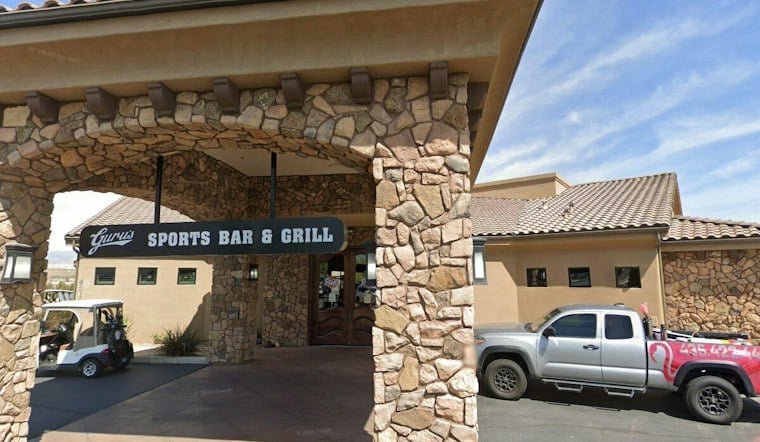
Wild pigs have been rooting through fairways at the Sunriver Golf Club in St. George and turning up along rivers in Washington County, and one state lawmaker thinks he knows why: hunters may be planting them there on purpose. Rep. Rex Shipp, who represents Cedar City, suspects sport hunting is behind the invasive animals' arrival, and he wants Utah to respond with a felony charge rather than roll out a welcome mat.
A Felony Instead of a Hunting Season
Shipp has revived a proposal to make trapping, killing, transporting or keeping a live feral pig a third-degree felony, according to Utah News Dispatch. A conviction would carry up to five years in prison and a $5,000 fine. Shipp also wants authorities empowered to seize vehicles used in those activities, with seized vehicles sold at auction within a month under his proposed bill. The measure would still let the state and landowners protecting their property kill feral pigs, and existing Utah law already allows anyone to kill a wild pig with landowner consent, according to a Utah Code excerpt.
The lawmaker says his reasoning runs counter to how some other states handle feral hogs. Where some places encourage hunters to kill wild hogs for sport, Shipp wants Utah to go the opposite direction, arguing that a hunting community built around the animals can backfire. Shipp has said some people may be trying to establish a pig population specifically to hunt it, and he does not want that take root in Utah.
Pigs Along the Virgin and Santa Clara Rivers
The concern is not hypothetical. Utah wildlife managers heard reports of wild pig sightings along the Virgin and Santa Clara rivers in Washington County in June 2025, the outlet reported, and wild pigs were photographed rooting in dirt at the Sunriver Golf Club in St. George in April 2026. Dax Mangus, the Utah Division of Wildlife Resources' southern region supervisor, said wild pigs are not currently a major issue in the state but that officials do not want the problem to grow.
Wildlife managers, working with state agriculture officials and the Shivwits Band of Paiutes, trapped and euthanized more than 100 feral hogs, per the same account. DNA collected from the animals suggested some came from Oklahoma. To track them down, managers used trail cameras and a GPS tracking device placed on one animal at a time — an approach wildlife managers refer to as a Judas pig, since the tracked animal has led them to other areas with additional pigs.
Suspicious Activity Under Investigation
Troy Forrest, deputy commissioner at the Utah Department of Agriculture and Food, said trail video captured at least one person who appeared suspicious near where the pigs were found. Forrest said officials were investigating the suspicious people with law enforcement's help, according to the report.
Southern Utah's climate may be part of what makes the region attractive to the animals in the first place. Wild hogs in southern Utah are less likely to succumb to cold weather than they would be elsewhere in the state, and the species can have multiple litters per year — a reproductive pace that mirrors national patterns. Feral hogs nationally begin breeding at around six months old and produce litters of six to 10 piglets once or sometimes twice a year, according to Tucson.com.
Not Yet an Established Population, DWR Says
Despite the sightings and the trapping effort, Utah Division of Wildlife Resources biologists said they have no evidence that established, reproductive groups of feral hogs are present in the state, according to reporting by Deseret News. A report cited in that coverage counted 23 feral hog reports in Utah. Mangus has said creating a hunting community around feral pigs can encourage people to maintain huntable populations — part of the logic behind discouraging, rather than welcoming, hunters who might want them around.
Nationally, the trajectory has moved in the opposite direction from what Utah officials hope to avoid. Feral swine expanded from roughly 20 states about four decades ago to 36 states, with affected counties climbing from 550 in 1982 to 1,496 in 2023, the Deseret News report noted. Hunting alone has had limited effectiveness as a control strategy, the same report said, because hogs often relocate in response to hunting pressure.
Costly Damage and Disease Risk
The scale of the national problem helps explain why Utah lawmakers are trying to get ahead of it. Feral hogs are responsible for at least $3.4 billion in property damage each year nationwide, largely through rooting, wallowing and trampling, Tucson.com reported, while USDA estimates cited separately put agricultural damages at about $2.5 billion annually. The USDA no longer tracks the total national population, but its 2019 estimate put the number at least 6 million animals living in the wild.
Feral hogs — a combination of escaped domestic pigs, Eurasian wild boars and hybrids first brought to the United States as food for settlers in the 1500s, per USDA — can carry at least 30 viral and bacterial diseases along with more types of parasites, according to the Tucson.com report. The animals have attacked farmers, golfers and hikers elsewhere, the same account noted.
Momentum Heading Into the 2027 Session
Shipp's proposal failed to advance earlier in 2026, running out of time in the final hours of that year's legislative session, but he has said the earlier version had broad support from state lawmakers. The Utah Farm Bureau supports the current proposal. In November 2026, the Natural Resources, Agriculture, and Environment Interim Committee endorsed Shipp's proposal as a committee bill, which gives it prioritized consideration when the 2027 Utah legislative session begins on January 19, 2027.
A similar story is playing out across the state line. Just four Arizona counties — Cochise, Mohave, Navajo and Yavapai — show up on the USDA's 2025 feral swine distribution map, though wild pigs have also been spotted in recent years along the San Pedro River in Pima and Pinal counties, per Tucson.com. Arizona Game and Fish does not regulate or protect wild pigs there, since the state does not consider them wildlife at all — a contrast with the tighter approach Utah lawmakers are now weighing.




