

























































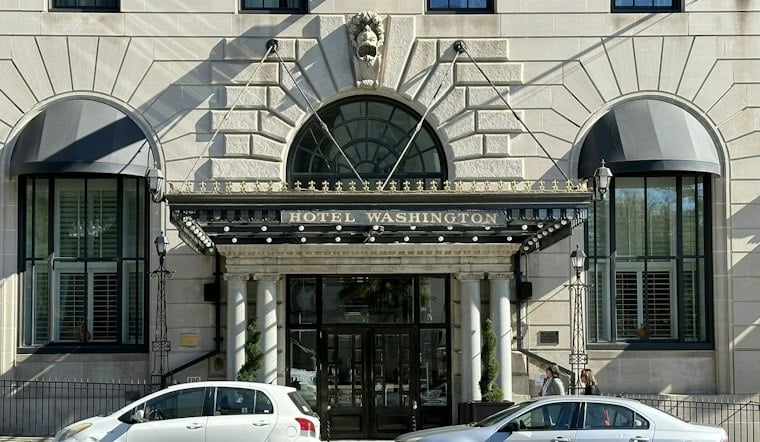
West Virginia's Supreme Court of Appeals has upheld a state law that was written with a single project in mind: the long-stalled redevelopment of the Hill Top House Hotel in Harpers Ferry. In a 4-1 decision issued Nov. 13, the court rejected a challenge from Harpers Ferry residents who argued the Tourism Development District Act amounted to unconstitutional special legislation carved out for one developer's benefit.
The court held that the Act does not violate constitutional prohibitions on special laws or equal protection, according to the opinion published by law.justia.com. Justice William Wooton, who wrote the majority opinion, found no error in how the lower courts handled the case, as reported by WV MetroNews. Harpers Ferry citizens had challenged the law as special legislation, an equal-protection violation, and an infringement on local self-rule and voting rights, according to the seed facts behind this case as reported by The Journal.
What the Law Actually Allows
Passed in 2020, the Tourism Development District Act lets the state Department of Economic Development designate up to five districts statewide in municipalities with 2,000 or fewer residents, so long as qualifying projects carry at least $25 million in private investment. Those designated districts are then exempt from most local regulations, according to the Justia-published opinion. Wooton wrote that the Act applies statewide to a broad class of hundreds of small municipalities and does not target specific people or entities, and he said it encourages tourism development by granting benefits to up to five large projects sought by private entities in small communities, per The Journal's reporting.
Wooton also dismissed the residents' equal-protection and municipal-autonomy arguments, writing that the West Virginia constitution contains no inherent right to self-rule as the lower courts had found, and that legislative decisions to delegate or withdraw municipal powers are generally not subject to judicial review. He added that the Act does not affect residents' right to vote in elections. Judge D. Andrew McMunn sat in place of Justice Charles Trump, who recused himself from the case, The Journal reported.
Chief Justice's Dissent Focuses on Standing
Chief Justice C. Haley Bunn dissented, but on procedural and jurisdictional grounds rather than the case's constitutional merits. She argued the case should have been remanded for factual findings on the petitioners' injury and standing, saying the court should have ordered supplemental briefing on standing or sent the matter back for further findings, according to the same MetroNews report.
A Law Built Around One Hotel
The Act was passed specifically with the Hill Top House project in mind, according to The Journal. The law authorizes the state's development office to participate in qualifying tourism projects within historic districts, and to date, Hill Top House is the only project ever approved as a tourism development district, per WV MetroNews.
Swan Hill Top House Hotel LLC wanted to renovate the dilapidated 129-room historic hotel, which Swan had acquired in 2007. The state's Department of Economic Development approved Swan's application in 2021, designating the Hill Top project an approved tourism development district, with the company's private investment estimated at $138 million that same year, according to The Journal's reporting. Swan began demolishing portions of Hill Top House in 2021. The hotel was built in the late 19th century by Black entrepreneur Thomas Lovett and has hosted guests including President Calvin Coolidge, Alexander Graham Bell, Mark Twain, and W.E.B. Du Bois.
Still Fenced Off After Nearly 20 Years
The project has been delayed nearly 20 years, and its vision as a $150 million destination remains just that — a vision, not a measure of money actually spent. Most of the hotel property is surrounded by metal fencing, per the MetroNews account from earlier this month. The Harpers Ferry Historic Landmarks Commission has reported that the hotel site continues to deteriorate, and the commission wrote to the state Department of Commerce this past June about Swan's lack of progress, The Journal reported.
Despite that unresolved physical state, the legal fight over the law itself now appears settled at the state's highest level, with the 4-1 ruling affirming both the circuit court and the Intermediate Court of Appeals. The decision leaves the Act's framework intact statewide — including its $25 million investment threshold, its five-district cap, and its exemptions from local zoning, land use, historic preservation, building permit, noise, lighting and licensing ordinances, even as those same designated districts remain subject to state-level regulatory oversight.




