

























































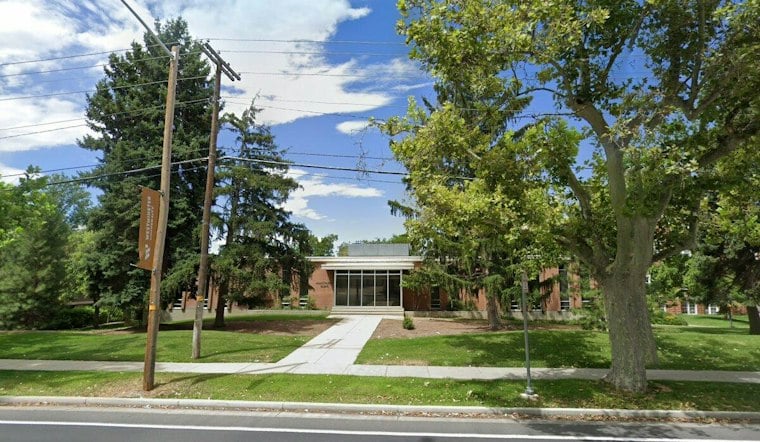
Westminster University has sold its off-campus French château-style president's mansion in Salt Lake City's Gilmer Park Historic District, with the sale closing on Nov. 20. Neither the buyer nor the sale price has been disclosed, even though the 8,019-square-foot home had been listed for $4.7 million.
As reported by KUER, the mansion's location in Gilmer Park was confirmed by the university, and the property had previously been featured on Mansion Global's website before it sold. Westminster's chief communications officer, Sheila Yorkin, told the station that the sale was not tied to financial stresses at the school, and that it instead let the university take advantage of favorable conditions in the real estate market.
A Gift That Became a Liability
The château has a layered history. Built in the late 1920s by Joseph G. Vincent, per KUER, the home was restored in 2003 by artisans and craftsmen, according to the Deseret News. Dale and Sheri Holt restored and donated the home to Westminster in June 2018, and the gift was substantial: the house itself was valued at $4.1 million, with its antique and original furnishings worth another $600,000, according to Westminster University's own alumni magazine. The home went on to serve as the president's residence and as a venue for entertaining and special occasions, the university noted at the time. Before the Holts' gift, Westminster had leased housing for its presidents, KUER reports.
University officials say the retirement of former president Beth Dobkin in fall 2025 became a natural moment to reconsider whether Westminster should keep owning the property at all, per Yorkin's account to KUER. Consultants reportedly told the school that presidential candidates' housing preferences had shifted, and that an opulent residence was not a compelling draw for prospective leaders. Westminster's current president, Sylvia Torti, was named the university's 20th president in April 2026 and already owned a home near campus at the time of her appointment, KUER reports.
Enrollment and Revenue Questions Persist
The sale lands amid broader financial scrutiny of the 151-year-old university. KUER reports that Westminster's enrollment declined 57% between 2016 and 2025, and that the school's revenue has fallen every year since 2018. The university reported a $20 million loss in its 2025 tax filing and a $12.5 million loss in the fiscal year ending June 2024, according to KUER's reporting. ProPublica's Nonprofit Explorer confirms that, per its June 2025 tax filing, Westminster is organized as a school with details reported on Schedule E.
Forbes gave Westminster a D grade in a May 2026 financial review and flagged it as one of 20 colleges on the brink, KUER reports, though the university disputes that rating. A separate, low-confidence search excerpt attributed to S&P Global Ratings indicates Westminster's bond-rating outlook was revised to negative in May 2025 over operating pressures tied to declining enrollment, though the full report was not available for review.
Yorkin pushed back on the gloomier read of the school's position, arguing that Westminster is better positioned than many colleges because of Utah's growing population and strong economy, according to KUER. She estimated that student numbers rose about 3% in fall 2026, with gains reported in undergraduate business and nursing enrollment. Yorkin said Westminster need not be as large as it once was, but it does need to grow from its current size, and that the school wants to outperform the common higher-education benchmark of simply staying even. Starting with the class entering in fall 2027, Westminster will also guarantee job placement for graduates who opt in, per the KUER report.
A Former Employee's Worries
Not everyone connected to the university shares that confidence. Elizabeth Hannah, a former Westminster employee who taught graduate nursing for just under three years and served on the faculty's planning and priorities committee, left her position in August 2026 partly because of concerns about the school's economic outlook, KUER reports. Hannah said she was nervous about having her finances tied to Westminster.
A relative sent Hannah a link to a site called College Closure Watch, which flags Westminster's declining enrollment and finances among its listed concerns. Hannah described the site as a wake-up call, telling the station that roughly 100 similar schools had closed in the previous five years. KUER frames enrollment as a serious concern for small private colleges nationwide, not just Westminster.
Westminster Is Far From Alone
The pattern of financially stretched colleges shedding presidential mansions has shown up elsewhere this year. Drake University recently listed its own historic president's residence for sale after its Board of Trustees evaluated the property's future, citing national trends in presidential housing models, modern campus event needs, an abundance of existing venues and a desire for historical preservation. Drake said the renovations needed for modern technology and large-scale events would have significantly altered the home's historical character.
Other schools have structured their sales differently. The University of Minnesota sold its Eastcliff mansion to the University of Minnesota Foundation for $2.2 million — below its $3.4 million assessed value — in a 9-2 Board of Regents vote, while arranging to retain access to the property, according to Minnesota Public Radio. Columbia College Chicago sold its former presidential residence in the Gold Coast for $2.3 million after its former president recommended the sale as part of a strategy to reduce a $17 million deficit, per The Columbia Chronicle. And a low-confidence excerpt describes a New Jersey university selling its president's house for $1 million and then renting it back for $10 as part of a $10 million county deal meant to rescue the financially struggling school as it faces accreditation probation.
The pressures behind these sales reflect a sector-wide reckoning. A Huron Consulting Group forecast cited by The Hechinger Report projects that 442 of the nation's 1,700 private, nonprofit four-year colleges and universities — serving a combined 670,000 students — are at risk of closing or merging within the next decade, with more than 120 institutions at the very highest risk. The same report notes that Sterling College in Vermont became the seventh private college in that state to close since 2016.





