

























































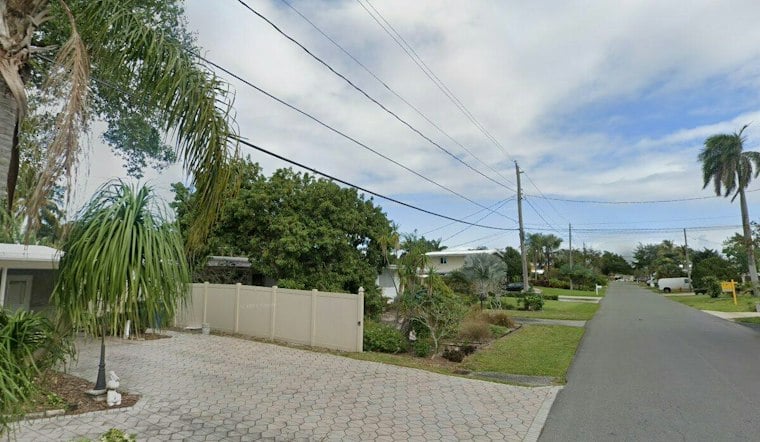
A South Florida artist whose painting hangs inside the White House was taken into custody Tuesday, accused alongside a second suspect of scheming to steal the Fort Lauderdale home of an 85-year-old man who has since died. Marc Lipp, 64, and Florence Mundle, 63, now face felony charges tied to the alleged exploitation of Donald Adams, who lived on Marathon Lane in Fort Lauderdale.
Lipp was charged with first-degree grand theft of $100,000 or more, elderly exploitation of $100,000 or more, and a third-degree felony for filing false or fraudulent documents against real or personal property, according to The Real Deal. Mundle faces the same charges, plus an additional felony tied to an in-title property transfer. The outlet reported that authorities have not confirmed details about the arrest or the charges themselves.
Terri Adams, Donald Adams' sister-in-law, said Lipp and others manipulated Adams into giving up both his home and his personal possessions. Adams died last September; according to Terri Adams, he had cancer and a history of other medical conditions at the time. She said she hoped those charged would face justice and be prevented from harming anyone else, and that she hoped the case could educate others on how to safeguard elderly loved ones who live alone.
An Artist Known for a White House Portrait
Lipp is known for a painting recreating the Associated Press photograph of President Donald Trump pumping his fist after the 2024 assassination attempt in Butler, Pennsylvania. The portrait now hangs on the White House State Floor, in the spot where a portrait of former President Barack Obama once hung, a White House official confirmed to USA Today. That same reporting noted the Obama portrait was relocated across the foyer.
A Similar Case in Hollywood Weeks Earlier
The arrests come less than a month after a separate, similar scheme allegedly unfolded in Hollywood, Florida. South Florida investors, a real estate agent and a notary were arrested in October in connection with a plot that allegedly defrauded a 71-year-old man with dementia of his home, according to the same Real Deal report. Suspects in that case allegedly abandoned the man at a dilapidated rooming house in Miami Gardens and face a combined 15 charges, including elderly exploitation, kidnapping, grand theft and money laundering.
That Hollywood case, detailed separately by the Sun Sentinel, involved investigators alleging suspects used a power-of-attorney document and a warranty deed to transfer ownership of the man's home, valued at $300,000 according to the Broward County Property Appraiser's Office, to a company owned by two of the accused. The plan reportedly included removing all of the man's property, including three cars that belonged to him. The evidence available does not establish whether the Hollywood case is connected to the Adams case; it is described only as similar.
Why Older Floridians Are Frequent Targets
Florida ranks second only to California in its number of residents 65 or older, but has the highest percentage of older residents in the nation, according to The Florida Bar. The organization's reporting notes that about 22 percent of Miami-Dade seniors, or 106,000 people, live alone, making them prime targets for scammers, while services meant to support older and vulnerable adults are experiencing funding and staffing shortages.
What Florida Law Says About Elder Exploitation
Under Florida Statute 825.103, exploitation of an elderly person includes knowingly obtaining or using, or endeavoring to obtain or use, an elderly person's funds, assets or property under specified circumstances, according to the Florida Legislature. The statute makes exploitation involving property valued at $50,000 or more a first-degree felony, with lesser values charged as second- or third-degree felonies. The law also provides a permissive presumption of exploitation for certain transfers exceeding $10,000 from a person 65 or older to a nonrelative known for fewer than two years, when equivalent value was not received, though that presumption only applies when the statute's specific conditions are met.





