

























































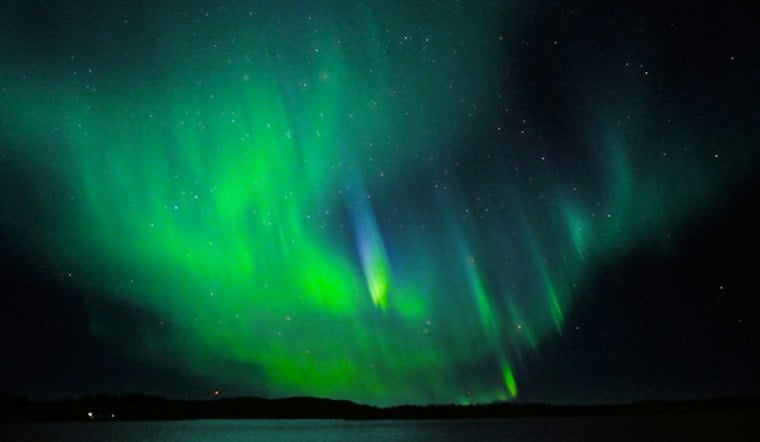
Wisconsin skywatchers hoping to catch the northern lights are entering one of the best stretches of the year for a shot at seeing them, even though the odds of a show happening tonight are considered low. The timing lines up with what federal space weather officials describe as a seasonal sweet spot for auroral activity, though nothing is guaranteed on any given night.
Two Different Answers for ‘Best Time of Year’
According to the Milwaukee Journal Sentinel, Shawn Dahl, service coordinator for the National Weather Service's Space Weather Prediction Center, says there are actually two ways to think about when the northern lights are easiest to catch. One answer favors winter: earlier darkness gives the aurora a dark sky to illuminate, and winter night skies tend to be darker overall, with less natural heat to trap haze, wildfire smoke, humidity and pollen. Dahl is quoted saying viewing the northern lights is often best during winter months when conditions are right.
But the other answer points to the shoulder seasons. The Journal Sentinel's reporting notes that coronal mass ejections and coronal hole high-speed streams — the two solar phenomena responsible for the magnetic disturbances that spark auroras — are more likely to be stronger during fall or spring. That lines up with separate federal guidance: the Space Weather Prediction Center's own tips page states that the best seasons for aurora watching are around the spring and fall equinoxes, according to Space Weather Prediction Center materials. NASA has separately noted that geomagnetic disturbances have historically been almost twice as likely during spring and fall compared with winter and summer.
What Actually Triggers an Aurora
Per Dahl, aurora development requires both a magnetic disturbance and charged particles reaching Earth from the sun. Those disturbances can occur through a coronal mass ejection, described as a blast of charged particles, solar material and strong magnetic fields launched into interplanetary space from the sun, or through a coronal hole high-speed stream, which allows changes in escaping solar wind to intensify. When either reaches Earth, the resulting geomagnetic storm is what produces the glowing display skywatchers chase. Space.com explains that when these solar outbursts collide with Earth, as Space.com puts it, they can trigger geomagnetic storms which in turn lead to dramatic auroras, and that forecasters track the strength of that activity through the Kp index, with a higher Kp indicating stronger auroral activity.
Tonight's Odds and the Bigger Picture
Despite the favorable seasonal window, the aurora has relatively low odds of being seen at the time of publication, per the Journal Sentinel's reporting. The Space Weather Prediction Center releases aurora forecasts regularly, and the same report notes that Wisconsin residents would need a road trip to Canada for their best chance to see the northern lights that particular week, according to the forecast cited in the article.
That is a notable comedown from 2025, which the Journal Sentinel described as a stellar year for viewing the northern lights in Wisconsin. The report attributed that stretch of strong activity to the sun having reached a solar maximum period, a stretch when overall solar activity increases. NASA and the National Oceanic and Atmospheric Administration said Earth entered that solar maximum phase in October 2024 and expected it to continue for about a year, a timeline later reiterated in NASA's own announcement that the sun had reached its maximum phase in the 11-year solar cycle. Separately, NOAA's Space Weather Prediction Center has projected that the solar cycle's peak could fall anywhere between November 2024 and March 2026, with the cycle maximum estimated between 105 and 125.
For now, the takeaway for Wisconsin aurora chasers is to keep expectations in check even as the calendar turns favorable. Checking the Space Weather Prediction Center's short-term outlooks remains the most direct way to gauge a given night's chances, since forecasters there use a three-day geomagnetic forecast built on the Kp index to drive the aurora model that predicts viewing lines for tonight and tomorrow night.



