
























































The term "yacht club" conjures a snobby stereotype: The ultra-wealthy in designer nautical outfits, being waited on hand and foot as they decide who's worthy of joining their exclusive ranks.
But the South Beach Yacht Club, nestled between Pier 40 and AT&T Park, is the antidote to snobbery. The early members of this down-to-earth, do-it-yourself operation even built their first clubhouse themselves, out of an old double-wide trailer. They don't discriminate, either; anyone with an honest interest in, and knowledge of, sailing is welcome. Even the membership fees aren't that steep by sailing standards.
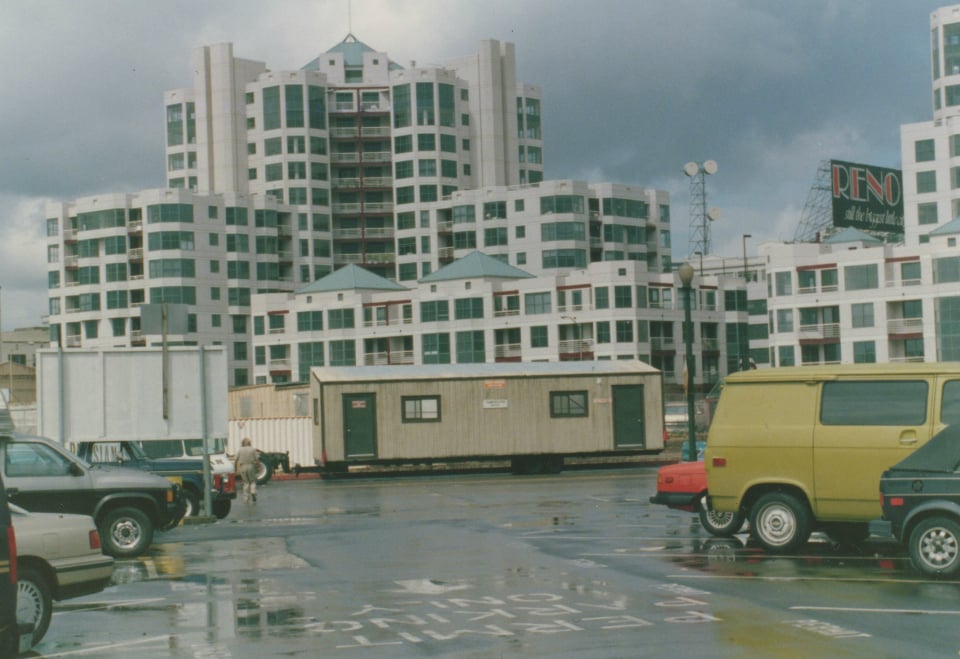
The SBYC's first clubhouse, in raw form. (Photo: SBYC)
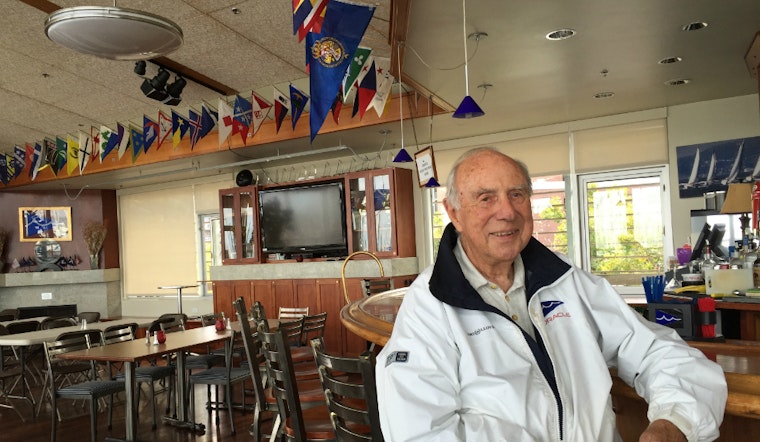
The SBYC's new clubhouse is more modern and boasts dazzling views, but it, too, was a hands-on project, and all of the members volunteer to keep it going. Ray Hall, the club's historian, sat down with Hoodline to talk about the club and what makes it special. "We organized it, we built it and we run it," he said.
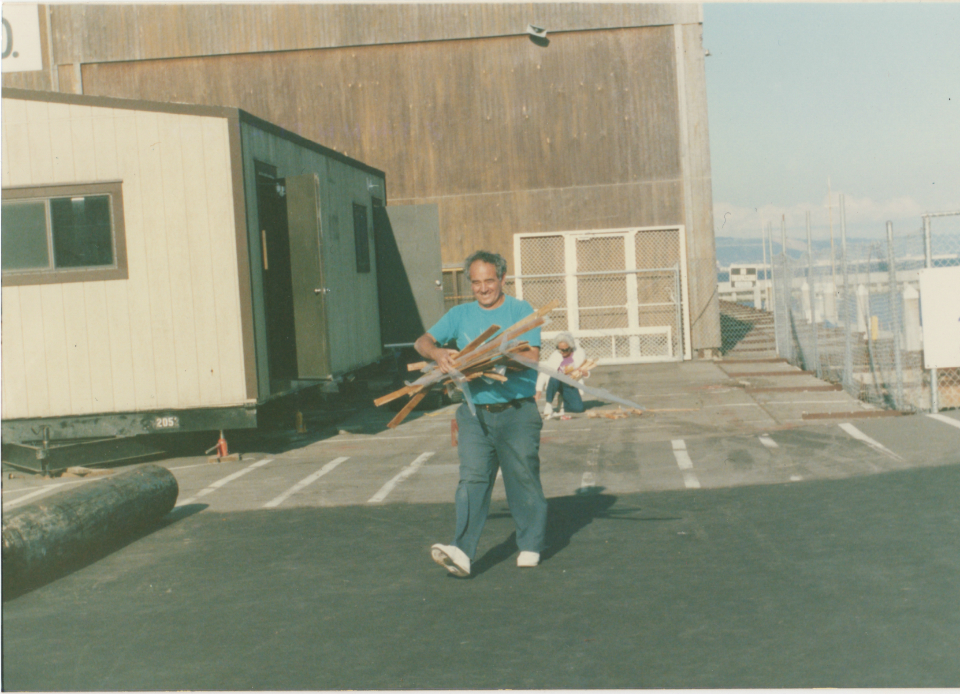
A member working on the SBYC's first clubhouse. (Photo: SBYC)
The club's history starts back in 1986, when the South Beach Harbor opened at Pier 40. It was built by the San Francisco Redevelopment Agency, on property leased from the Port of San Francisco and with funding provided by the State Department of Boating and Waterways. Hall moved his boat there from Alameda, because it was an easier commute from his home in Belmont.
At the time, few people wanted to be in SoMa. AT&T Park hadn't been built, the Embarcadero Freeway was still in use, and the area was "deserted," Hall said. "We had more seagulls than we had people." The harbor had to rent berths to commercial fishermen in the area for the smelt run.
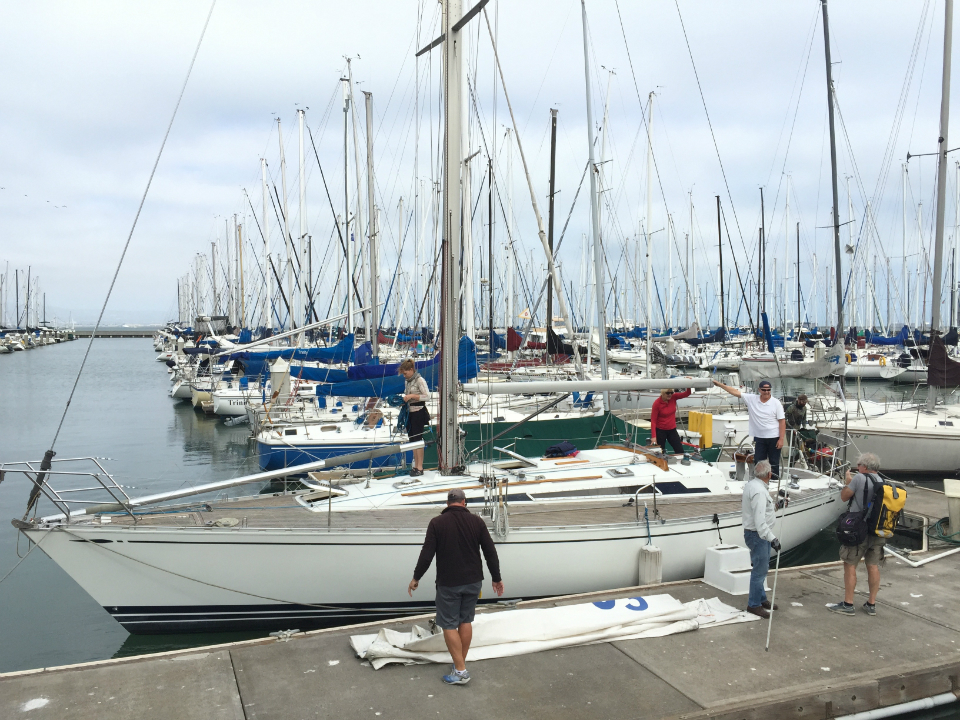
Preparing for a Friday night race. (Photo: Geri Koeppel/Hoodline)
These days, there's a five- to 15-year wait list at the South Beach Harbor for a berth, depending on the size of the boat. Everything changed in SoMa after the Embarcadero Freeway was knocked down and the view was opened up, Hall said. "They couldn’t give these berths away. It was a real bad part of town. Now, it’s so fancy and charming, you can’t believe it."
Back to the 1980s: as the harbor's ranks slowly grew, Harbor Master Carter Strauch called a meeting of anyone interested in forming a yacht club. At the first meeting, on April 30th, 1988, 53 people showed up. “The first meeting was shaking hands and trying to remember names," Hall recalled. The club formed, and the inaugural Friday-night race was held on June 24th, 1988.
After that, the SBYC met monthly in the nearby International Longshore and Warehouse Union Local 34 hall at 4 Berry St. The club is a 501(c)(7) nonprofit, "organized for pleasure, recreation, and other nonprofitable purposes," according to the Internal Revenue Service.
Meanwhile, the yacht club's members were hoping to build their own clubhouse. One day, they got a lead on a double-wide mobile home that had been used as a classroom; one of the members paid for it with a credit card and had it towed to the site.
Construction started in June 1989, under the leadership of Fred and Rae Maeder, who were in charge of the facilities committee. Their hands-on crew of club members, dubbed "Maeder's Raiders," built a deck and painted it with a blue-and-yellow maritime theme. The SBYC got its permit to occupy the building on December 18th, 1990.
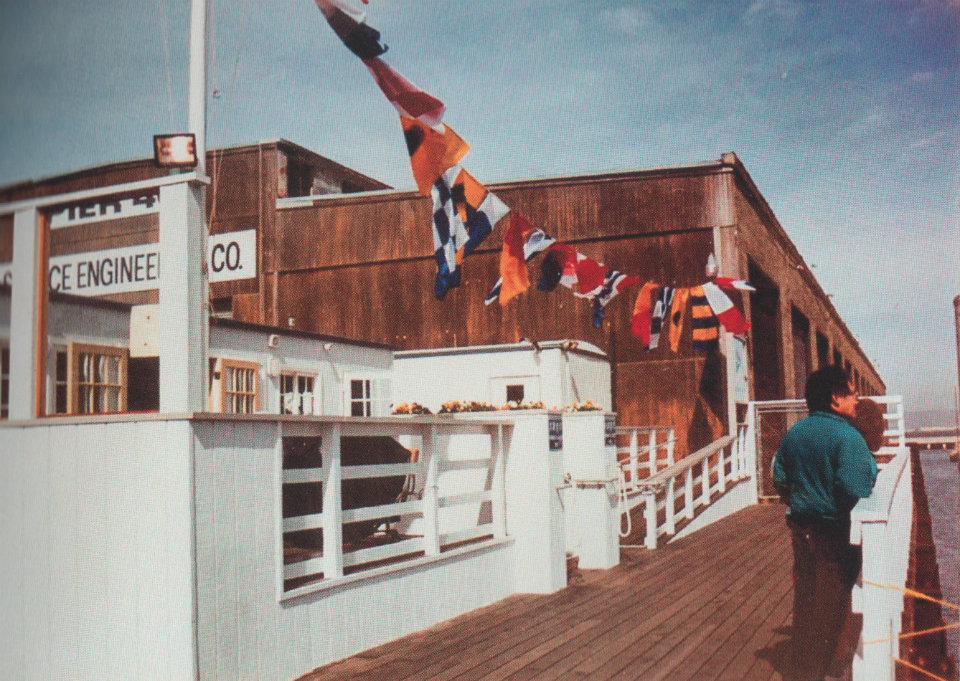
SBYC's first clubhouse. (Photo: SBYC)
The first SBYC cruise was held January 27th–28th, 1990, with members sailing to Ballena Bay Yacht Club in Benicia. As it happened, Benicia was having a jazz festival that weekend, so the race was named the Jazz Cup. The next year, the fledgling club earned a first-place prize for group effort at the Pacific Inter-Club Yacht Association's Opening Day on San Francisco Bay Decorated Boat Parade. Their yacht was decked out with with a pagoda and a dragon that emitted "smoke" from its mouth (provided by fire extinguishers).
The club was housed in the renovated trailer for 14 years until it moved into its new building, erected by the Port. But despite the larger digs, the new clubhouse still took some elbow grease to put together. "When we walked in, there was nothing here," Hall said, except for plywood on the floor, glass in the windows and a roof. "That was it."
"Everything you can see right now is new," Hall said. "That’s what our club members built here. [Club member] Frank Navarro was in construction, and he was the one who ran this job. We also had a member that was in the flooring business," and another who was an architect and lent his skills to the layout of the space. Work on the current building started in 2004, and it opened in 2006.
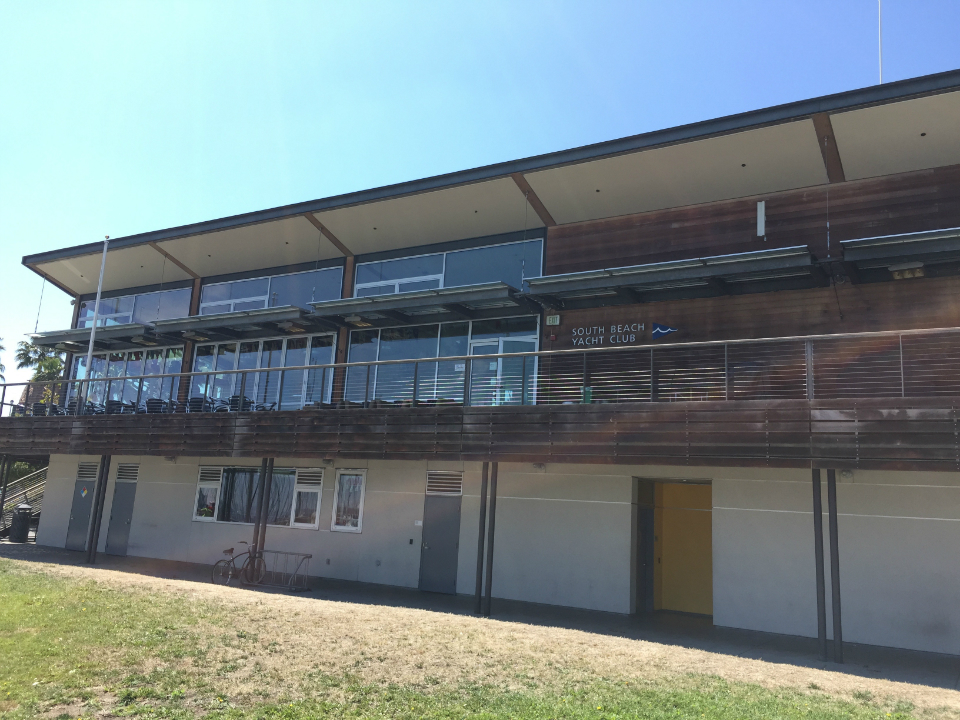
The SBYC clubhouse. (Photo: Geri Koeppel/Hoodline)
SBYC members built the beautiful curved-wood bar, and they staff it, too—all of the bartenders on duty are also club members. Tips go are donated to a youth sailing program or to the Bay Area Association of Disabled Sailors, a nonprofit group that uses SBYC facilities and strives to make sailing accessible. Inside, you can see hundreds of burgees, or flags, from other yacht clubs that also have an SBYC yacht club flag inside the clubhouse, showing the dizzying array of destinations club members have visited.
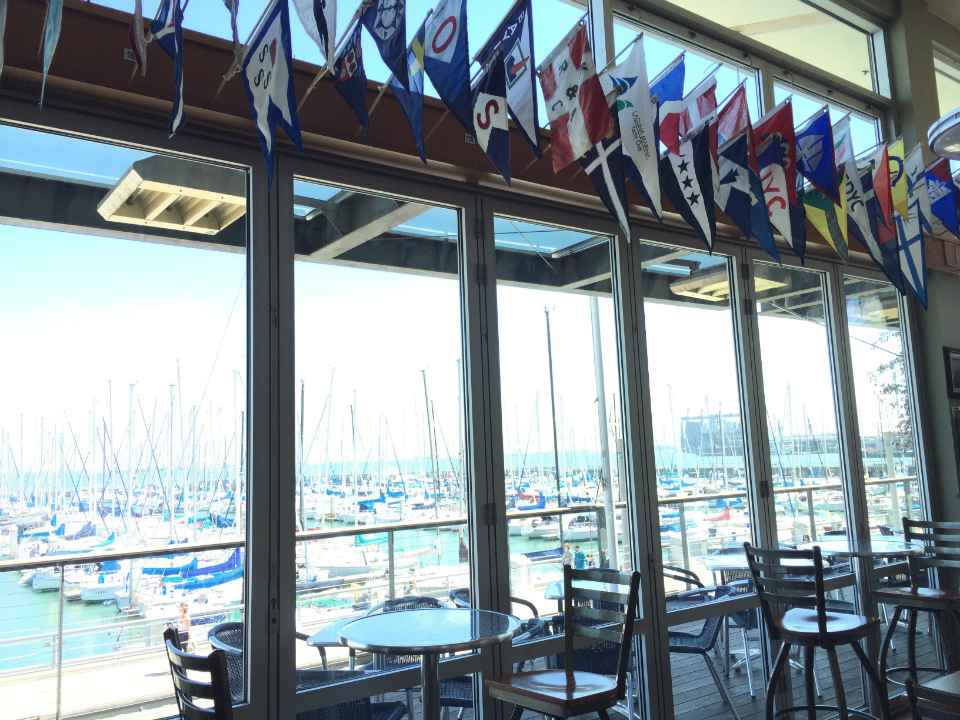
SBYC clubhouse with burgees. (Photo: Geri Koeppel/Hoodline)
Today, the club hosts a long list of events, from junior sailing camps to Friday night races. You don't have to own a boat to join—the club is seeking new members, even though berths aren't available—but an interest in boating and some experience is necessary.
Nancy Ellen, who is on the membership committee, said if an applicant has no sailing experience, she'll tell them to go take some courses. They want members who will be involved, and not just use the club to gain access to the area's other clubs. They have reciprocity agreements with all the other clubs in the area, except for the St. Francis Yacht Club. All applicants must receive a referral from three current members.
Hall summed up the attitude of the type of people who belong to SBYC: "They are goers and doers; they’re not waiting for someone else to do it."





