
























































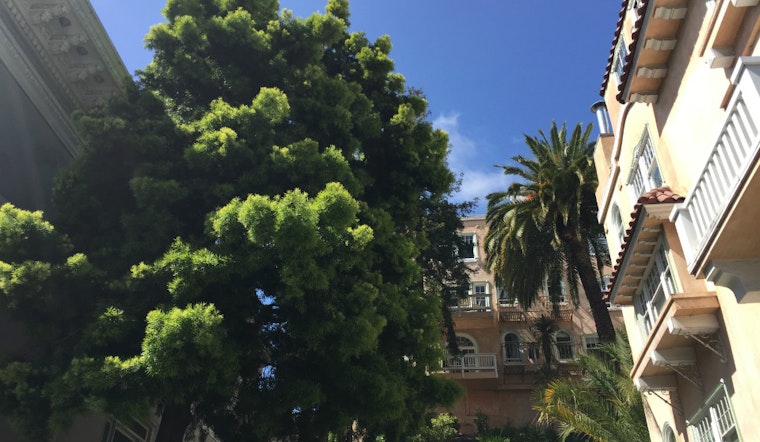
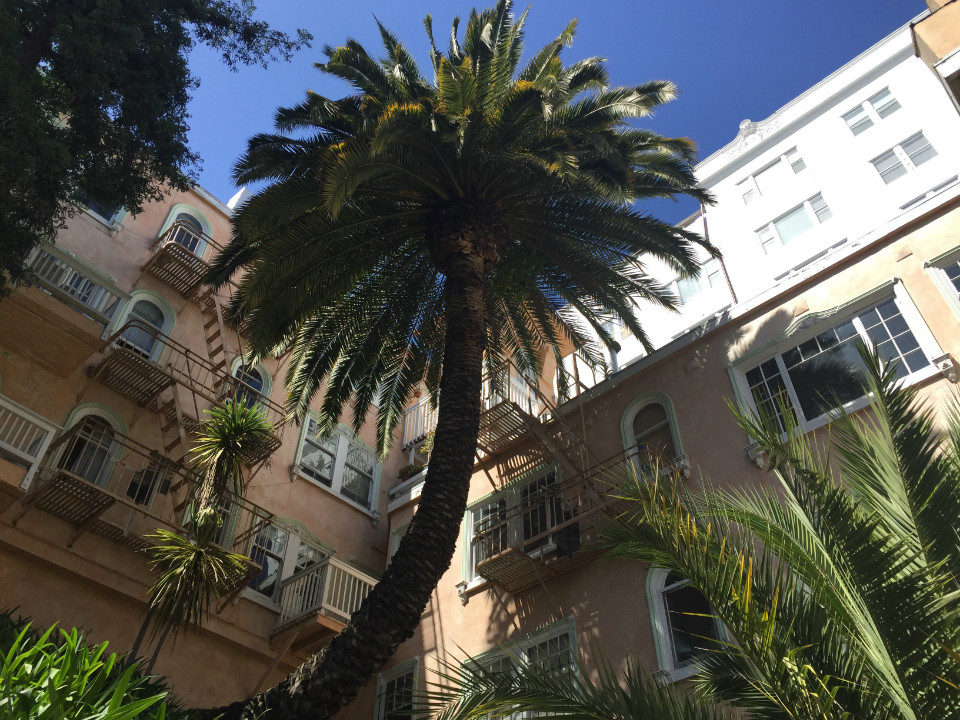
Neighbors are outraged to hear that six mature trees, including two redwoods and a date palm, are going to be removed from 621 Stockton St. starting this Wednesday, April 6th—and that there's nothing they can do about it, because they're on private property. Greentree Property Management, meanwhile, explained to us that the trees must be replaced, due to disease, danger to people and property, and other reasons.
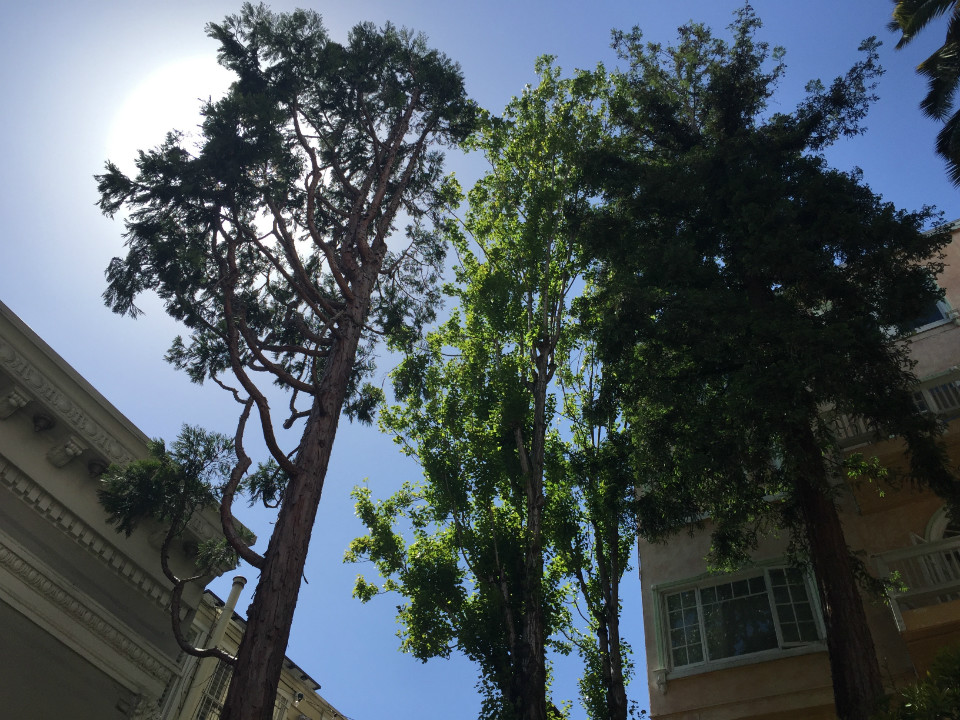
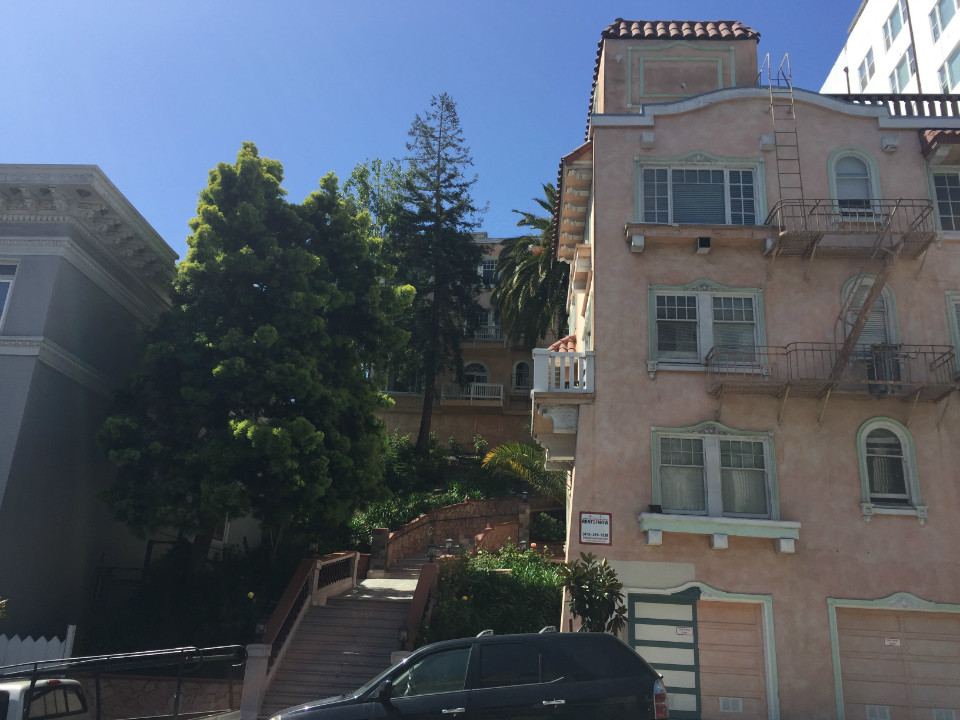
The trees line a series of steps leading to the entrance of the peach-colored Mediterranean-style 1912 building, just above the Stockton Tunnel. "I don't need to tell you that the trees are objectively beautiful and home to a lot of wildlife, including hummingbirds and songbirds such as robins, sparrows, and mourning doves," one tenant (who wishes to remain anonymous, out of fear of reprisals) told us via email. "The tallest redwood is where the feral parrots tend to stop over on their evening swoop through Lower Nob Hill. The entire yard and everything in it is an important part of the downtown environment and ecosystem."
We reached out to the building's manager, Greentree Property Management, which issued this statement:
The work at 621 Stockton is part of a significant improvement and renovation effort throughout the property, involving interiors, exteriors and landscaping. We’re working with the city for all proper permits, including complying with the city’s new drought-tolerant landscape requirements.
In terms of the trees, we consulted arborists and landscape specialists who helped us determine that the large tree on the sidewalk could be preserved, but six others fully on our property should be replaced because of disease, age, root problems and even danger to people and property—including a large palm that is of the type that can fall without much warning. The arborist is now studying the best types to put in their place but we anticipate olives, among others. All will be mature trees that will actually be healthier, better-canopied trees, providing more long-term habitat for birds and more suitable to the environment.
The only tree not being removed is a podocarpus, which is a type of conifer.
We reached out to SF Public Works to find out if the landlord has the right to remove the trees. According to the city's street tree removal permitting process:
[L]egislation enacted in 2007 requires that a permit be issued to remove any significant tree. As defined in the Public Works Code, Significant trees are located on private property, but within 10 feet of the public right-of-way and also meet any one of the following size requirements:
- 20 feet or greater in height
- 15 feet or greater canopy width
- 12 inches or greater diameter of trunk measured at 4.5 feet above grade
Rachel Gordon, spokesperson for SF Public Works, told us the department sent an inspector out and measured, but found that none of the trees are under their jurisdiction, because none fall within 10 feet of the public right-of-way.
Our tenant source was dismayed to hear that, saying that even though the trees are on private property, they're admired and enjoyed by many. "Everyone from Academy of Art students and wedding parties from the Ritz-Carlton across the street come up and pose in front of the steps and towering trees," the tenant wrote in an email. "Businesspeople and visitors regularly stop to eat or just rest here."
The tenant was also frustrated by the lack of communication throughout the process. Greentree posted notices in the lobby and elevator advising people to close their windows during the tree removal, but didn't respond to tenants' questions regarding which trees would be removed or why.
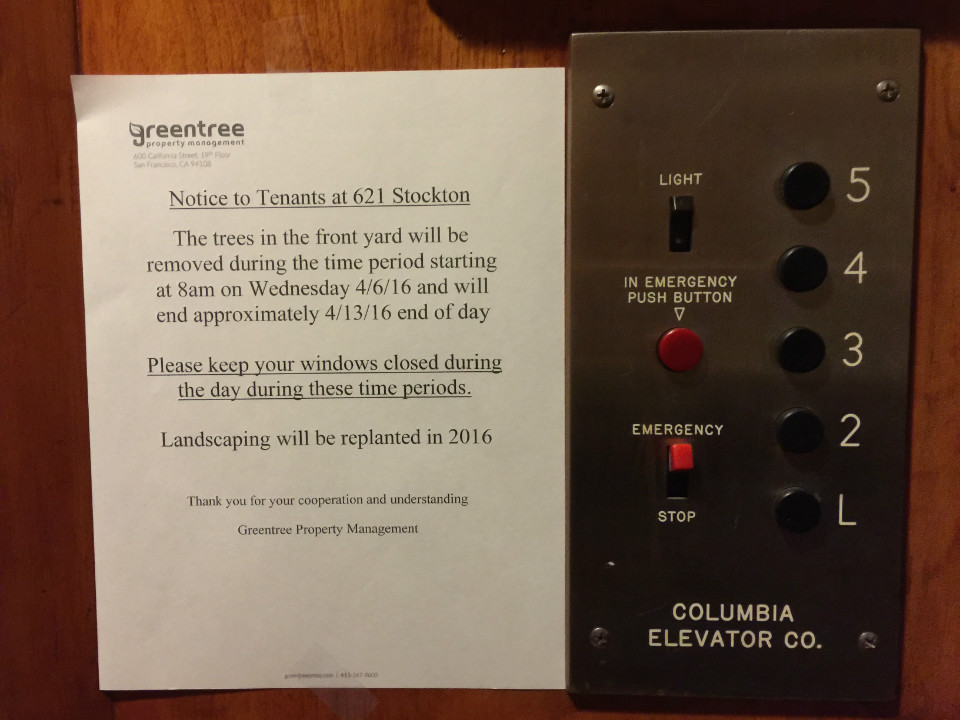
"This sort of statement perfectly illustrates why there's so much friction between tenants and landlords," the tenant said in reply to Greentree's statement explaining the reason for the tree removals. "People who actually live in the buildings and neighborhood aren't given any information and can't get detailed answers until they do something like get the press involved. It makes it hard to believe any subsequent statements or explanations, like this one, are made in good faith, because again, the people this impacts the most have been completely left out of the loop."





