
























































[Editor's note: This article, written by Mark Hedin, was originally published in Central City Extra's August 2016 issue. You can find the newspaper distributed around area cafes, nonprofits, City Hall offices, SROs and other residences—and in the periodicals section on the fifth floor of the Main Library.]
The Secret Service, everyone knows, protects the safety of presidents and president wannabes. They’re in charge of dead presidents, too. The Secret Service is the lead agency in the government’s battle against counterfeit currency.
And here in the Bay Area, we’re keeping them busy. So much funny money is circulating, one can almost trip over it. On a hot July afternoon, the smell of urine wafted strong on the wind blowing east down Natoma Street from Sixth. Near the corner, a little piece of paper coated in chlorophyll tumbled toward the ink-stained wretch walking the other way. He quickly bent down to snatch it up, and another rolling along right behind it.
On their face was the scowling visage of the scoundrel President Andrew Jackson, slave owner, Indian conqueror and renowned racist. Jackson is soon to be banished from U.S. currency in favor of abolitionist and underground railroad conductor Harriet Tubman, but this afternoon, he was a hero again.
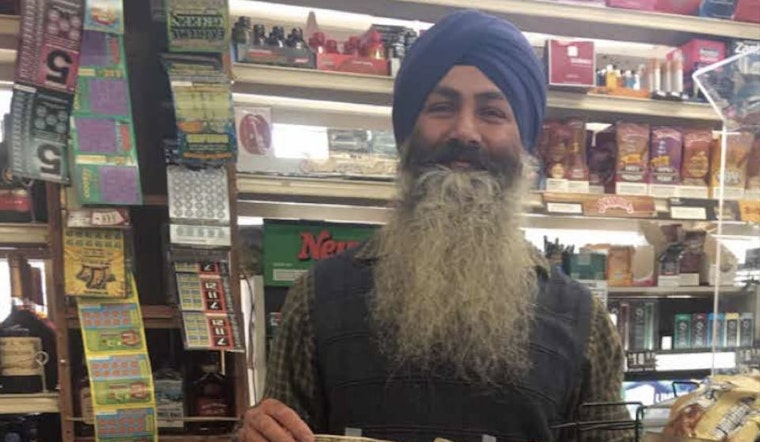
But Satwinder “Bill” Multani, the ever-cheerful proprietor at Dalda’s market on the corner of Eddy and Taylor, did a reality check the next day. Speaking with authority and a smile, he declared those ersatz Jacksons phony as a $3 bill. He said he sees the like regularly, and showed an array of fakes he keeps taped to the wall behind his cash register to remind his workers to take better care in what they accept. Jackson, Hamilton and even Lincoln have a place there.
And over at the Tip-Top on Turk, Jack behind the counter was just as certain those Jacksons were lacking, as he brandished the $7.99 pen he keeps handy to ensure he’s only taking honest bucks.
The Extra’s Jacksons looked pretty good to a less-trained eye. A little soft, perhaps, but not to someone who’s occasionally, in a purely innocent manner, laundered his money.
Angel Smells A Rat
Across the street from the Mission Cultural Center at La Taqueria, Angel, the owner’s son, was the first to smell a rat. He pointed out the lack of a vertical stripe embedded in the paper about a half-inch from the margin. Held up to the light, the Jackson he pulled from the register had it plain as day. He later told The Extra he intercepts a couple of hundred worth of phonies every year.
A kid working the counter at Rainbow Grocery noticed the funny feeling of these bills. So did the gal working the register at a Telegraph Avenue gas station in Oakland.
“Counterfeiting is such a widespread problem,” said David Thomas, special agent in charge of the Secret Service’s San Francisco office. “We conduct an average of 75 counterfeit currency criminal investigations per year in Northern California,” G-man Thomas told The Extra. “Those investigations result in about 30 arrests per year by the Secret Service.”
“Counterfeit currency-passing activity has increased in Northern California from $4.6 million worth in 2012 to $6.3 million in FY 2015,” he wrote in an email. “It appears we are on track for right around $6 million for FY 2016,” which ends Sept. 30.
Local law enforcement agencies, too, prosecute counterfeiting. “Not all are federally prosecuted,” he said. “We work very often with state and local agencies.”
Back in April, for instance, in a Cupertino apartment across the street from Apple Computer offices, the Santa Clara County sheriff arrested a suspect, Eric Aspden, 43, alleging he’d been making six-figure bank for the past year or two, sending bundles of $20s across the country.
Santa Clara extradited him to Virginia, one of 30 states he’s alleged to have distributed to. He’d made them, the six felony charges say, on inkjet printers and 100% cotton paper, stuff easily purchased at any office supply store.
Turns out, just holding that phony currency is a crime, too, like possession of other controlled substances.
Bank Tellers' Keen Eyes
“We try to collect all the counterfeit currency that gets passed around the world,” Thomas said. It comes to them, he said, “primarily from police departments or bank deposits.”
Bank tellers, he said, are the best at spotting counterfeits. Also, Thomas said, they do better at confiscating them when they’re presented, given banks’ generally better security than what mom-and-pop stores have. “We would prefer that they (shopkeepers) do take it,” Thomas said, but “our No. 1 concern is for their safety,” and the official recommendation is that merchants report attempts at passing fake currency, with descriptions of the persons of interest.
Despite his efforts, Tip Top’s Jack says he regularly gets notified by his bank that not all of the money he’s deposited is acceptable.
That money, he says, he never sees again. It’s not a lot, $40-$100 every month or two, but it’s consistent, he said.
“Most of the victims are going to be smaller businesses,” Thomas said. “It’s like that old game of hot potato. Whoever’s got it last loses.” Sometimes, he said, they get odd-looking money that’s actually the real deal. “A 1935 series bill looks very different,” he said.
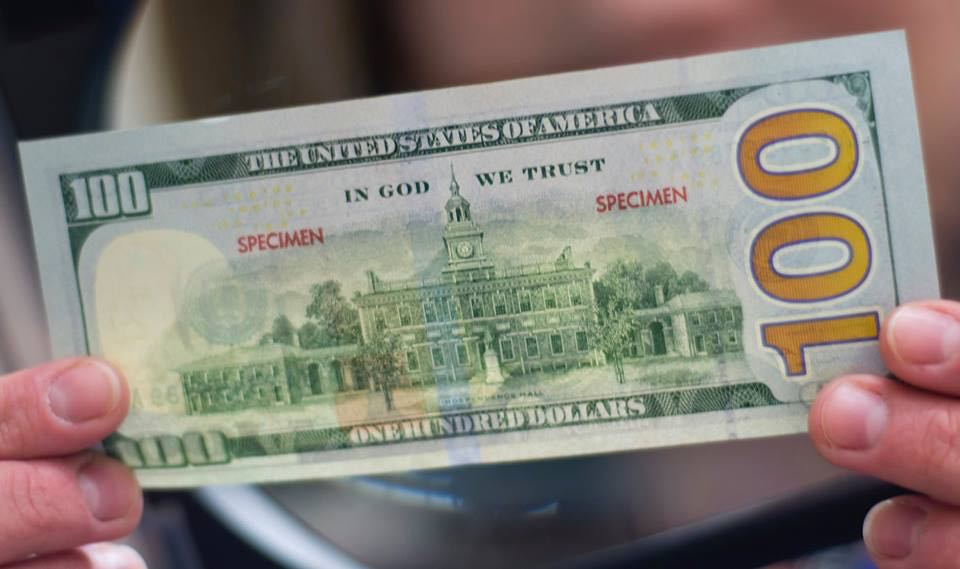
Twenties are the most commonly faked currency, he said, followed by 100s, but he’s seen ’em all. Multani showed The Extra a fake $5, a $10 and a $20.
$61 Million Dollars So Far
Counterfeiting in general, Thomas added, “might not get much attention because the victims are spread so thin,” but nationwide so far this fiscal year, he said, the Secret Service has collected $61 million in phony currency. In his jurisdiction, which ranges up the coast from San Mateo to the Oregon border, it’s $2.5 million since Oct. 1.
The inland district, including Fresno, San Jose and Sacramento, he said, has taken in another $2.25 million in the same time period.
“It has become so easy to do with the increase in technology capacity for copying,” Thomas said. “Sixteen-year-old kids might do it for fun.” The maximum sentence on counterfeiting charges, Thomas said, is 20 years. In colonial times, under British rule, counterfeiting was a capital crime.
Counterfeiting Cartels

Beyond mischievous teenagers with sophisticated computer ware, a bigger problem, Thomas said, lurks in the jungles of South America, where, he alleged, drug cartels have set up sophisticated printing operations to exploit their countries’ “dollarized” economies.
“It’s easy for them to have these large-scale printing operations in the jungle manufacturing high quantities of U.S. currency,” Thomas said. “Some of that makes its way into the United States.” The Secret Service, he said, has 25 foreign offices, besides its presence in all 50 U.S. states. More sophisticated offset presses, he said, can change the bills’ serial numbers during the press run, to make them seem more authentic.
President Lincoln signed the legislation that created the Secret Service, Thomas said, on April 14, 1865, just hours before he was assassinated at Ford’s Theatre. At the time of the Civil War, counterfeits accounted for 30-35 percent of the money circulating, and combatting that was “the sole purpose” for the agency’s creation, he said.
And combatting financial crime remains a key element of the Secret Service’s assignment. Nowadays, that’s grown to include things like credit card and bank fraud and cybercrimes for financial gain, Thomas said.
The Secret Service didn’t begin protecting
presidents until 1901, after President
McKinley was murdered. Decades
too late for Honest Abe.





