

























































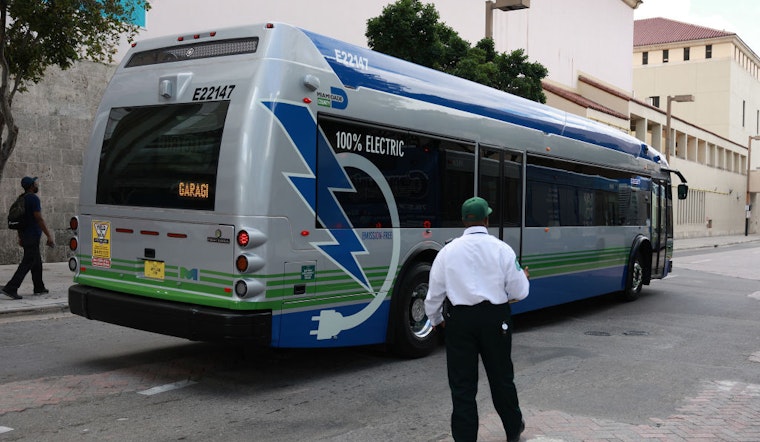
Bay Area electric vehicle (EV) company, Proterra, known for manufacturing electric buses, batteries, and charging stations, has filed for Chapter 11 bankruptcy according to SF Gate. This comes as a major surprise, given Proterra's promising start and high praise as the "Tesla of electric buses". The company has reportedly suffered massive losses and faced numerous challenges, leaving industry insiders and consumers shocked by this sudden turn of events.
Despite being at the forefront of commercial vehicle electrification and having a strong product lineup, Proterra faced significant "market and macroeconomic headwinds", as stated by CEO Gareth Joyce. Following the bankruptcy announcement, Proterra's stock price plunged, dropping from nearly $17 a share to a shocking 17 cents.
Proterra's claim to fame was the production of zero-emission electric transit buses for the North American market, supplying numerous transit agencies, including San Francisco's Muni and Napa County. Notably, President Joe Biden had visited the company's factory in South Carolina in 2021 to highlight U.S. electric vehicle makers. However, the company had only manufactured around 1,000 electric transit buses since 2010.
The company's leadership had impressive credentials, with late co-founder and CEO Ryan Popple having served as a senior finance director at Tesla, and former COO Josh Ensign having worked at Tesla and Honeywell International. Proterra's valuation reached around $1.6 billion just before its Nasdaq debut in June 2021, after going public through a special purpose acquisition company (SPAC).
However, despite generating $749.2 million in revenue over the past three years, Proterra had an accumulated deficit of $1.1 billion by the end of 2022. The company's bankruptcy filing statement also cautioned that they "may not achieve or sustain positive gross margin or profitability in the future".
Proterra is not the first EV manufacturer to face these challenges. Just weeks prior, Lordstown Motors filed for bankruptcy protection after failing to resolve a dispute over a promised investment from Foxconn per Reuters. These incidents highlight the volatility and rapidly changing landscape of the electric vehicle industry.
Despite the bankruptcy filing, Proterra aims to maintain normal operations and use existing capital to fund its ongoing work, including payments to employees, vendors, and suppliers. CEO Gareth Joyce has stated that the company would separate its product lines during the bankruptcy process and focus on its electric vehicle battery technology business "for the benefit of our many stakeholders" per SF Gate.
The bankruptcy of Proterra, once a shining star in the EV market, serves as a stark reminder of the challenges faced by electric vehicle manufacturers in an ever-evolving industry.





