

























































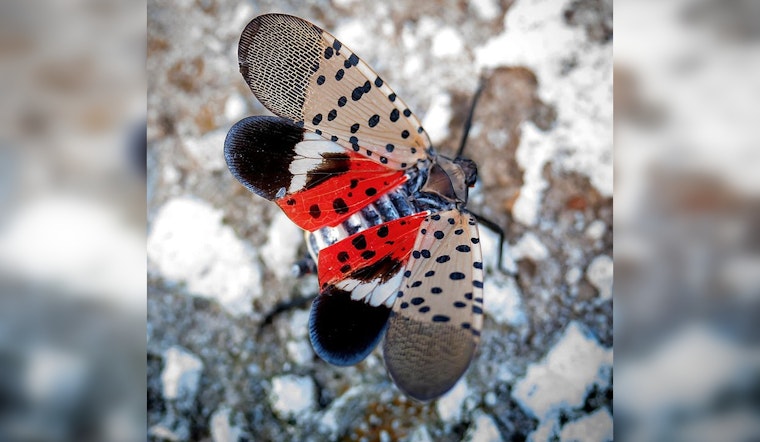
As the leaves change color and the crisp air of autumn begins, an unwelcome arrival has made its way to Illinois: the spotted lanternfly. First detected in the state on September 16th, this invasive plant hopper, native to eastern Asia, has rapidly expanded its range across the East Coast and Midwest since its initial appearance in Pennsylvania in 2014. Now, Illinois faces the challenge of addressing this pesky intruder, which comes with a whole host of concerns about its potential environmental and economic impacts.
The spotted lanternfly, classified as a "nuisance pest," has steadily crept closer to the Midwest over the last decade, according to NBC Chicago. It feeds on numerous plant species, including the invasive "tree of heaven," grapevines, and maple trees, as well as other crops like apples, hops, and walnuts. Although it is not a direct threat to human or animal health, its voracious appetite poses significant risks to local ecosystems and agricultural industries.
"Spotted lanternfly has been inching closer to the Midwest and Illinois for close to a decade," Illinois Department of Agriculture Director Jerry Costello II said in a statement. "We have had a multi-agency team working to prepare for this scenario – including efforts on readiness, informing and educating the industry and the public, as well as monitoring early detection."
Lurking beneath the spotted lanternfly's attractive red underwings is its inherent danger: an unchecked population that can grow exponentially. Scott Schirmer of the Illinois Department of Agriculture told CBS 2 Chicago that the non-native insect's lack of natural predators in the U.S. allows its population to rapidly increase and become overwhelming. Furthermore, the creature's ability to adhere to vehicles and wooden surfaces makes containment especially challenging, as it can hitchhike its way to new destinations.
Schirmer noted that widespread plant or tree death resulting from the presence of spotted lanternflies was unlikely, and the pest would be more of a nuisance that interferes with enjoying outdoor activities. However, this does little to alleviate concerns about its potential impact on the agritourism industry, from orchards and pumpkin patches to vineyards.
As states surrounding Illinois have also detected spotted lanternflies, such as Indiana, Michigan, and Ohio, the stakes are raised for the entire region. Spencer Campbell, a plant program coordinator with the Morton Arboretum, warned that large congregations of these pests can cause significant harm to flora, as their combined excreta of "honeydew" creates lasting damage.
State officials are enlisting the public's help in the effort to protect against the spotted lanternfly's spread and minimize its impact on the environment and agriculture. Residents are encouraged to report sightings of the pest to [email protected] and then, as Campbell recommends, "stomp it." Educating the public on how to identify and report the invasive insect is a vital part of this effort, as it is likely to affect everyone in the region one way or another.





