

























































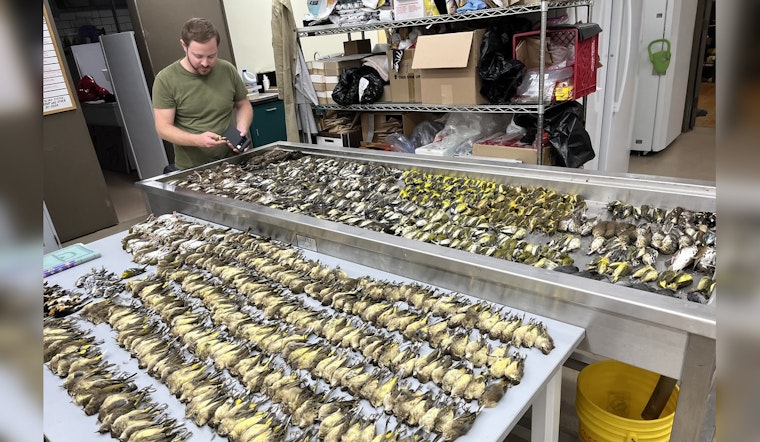
Chicago's McCormick Place Lakeside Center building is going dark during the fall bird migration period to prevent migratory birds from colliding into its glass structure, as stated by the Chicago Sun-Times. This decision was triggered by a heartbreaking incident earlier in October when approximately a thousand birds perished after hitting the lakefront edifice during peak migratory season.
Lakeside Center management already had a lights-off policy for unoccupied periods, now extended through November 15. This policy darkens the building at night until the fall migration ends. Meanwhile, the Metropolitan Pier and Exposition Authority (MPEA), which runs the building, investigates more permanent measures to keep birds away.
Bird collisions with structures are gaining focus, prompting worldwide urban centers to mitigate avian losses. In America alone, structural collisions kill hundreds of millions of birds each year, reducing bird populations by between 2 to 9 percent according to Yale Environment 360. "Lights out" programs and bird-safe architectural solutions are rising collaboration between cities, communities, and professionals to counteract this issue.
Launched in 1999, the Chicago Lights Out initiative was the premier U.S endeavor of this type to help, reduce bird fatalities. This program has since broadened to 48 U.S cities, advocating for the dimming of exterior lights and switching off of interior lights during spring and fall migrations as detailed by Yale Environment 360.
Another pioneering solution is the introduction of bird-friendly glass in contemporary structures. Architects like Jeanne Gang have come to frequently utilize fritted glass, decorated with bird-visible patterns, to reduce collisions. Additionally, existing windows get can get treatments like Feather Friendly's vinyl film, whose sales have increased twentyfold in the previous five years reports Yale Environment 360.
With bird-collision awareness rising, cities and communities are enacting requirements for the use of bird-friendly glass in new projects. New York City and Washington, D.C. have enacted laws mandating that new or renovated buildings use bird-safe glass up to specified heights as cited by Yale Environment 360. Similarly, smaller areas like Lake County, Illinois, are following in suit.
Those advocating for these measures argue that although bird migrations have always brought risk, our modern predilection with glass facades and windows has significantly increased, these risks. This growing problem reflects in that North American bird populations have diminished by nearly 3 billion, or 30 percent, in the past 50 years Yale Environment 360 reports.
However, significant discovery of bird collision causes and their prevention, more challenges are still abound. Annette Prince, director of the Chicago Bird Collision Monitors, and Matt Igleski, executive director of the Chicago Bird Alliance, are working with Lakeside Center management to identify more sustainable solutions as per the Chicago Sun-Times. Maintaining attention will be crucial for securing long-term benefits for both our avian friends and human populations.




