

























































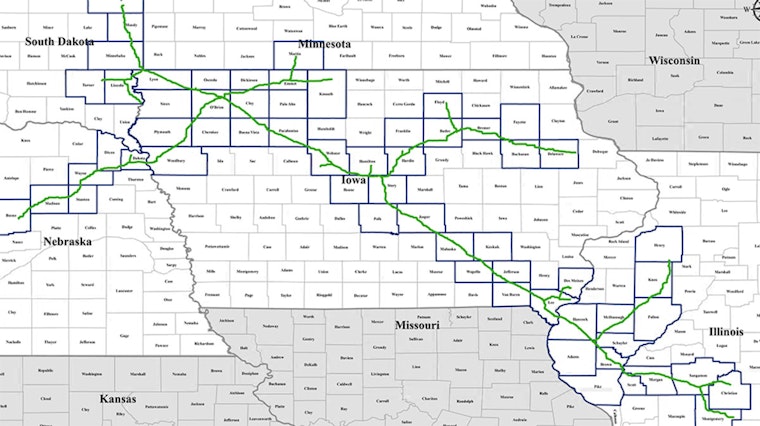
Navigator CO2, an Omaha-based company, has withdrawn its application for the construction of a controversial 1,350-mile carbon dioxide pipeline in Illinois, following a setback in South Dakota and a pause in Iowa as reported by the Chicago Tribune. The decision has prompted a wider debate on the need for a moratorium on carbon dioxide pipeline construction due to strong resistance from landowners and environmentalists in Illinois.
Navigator CO2 stated in its withdrawal motion submitted to the Illinois Commerce Commission that it is intending to reevaluate the route and other aspects of their pipeline system, keeping open the possibility of refiling if deemed suitable. Rising opposition from environmentalists and local landowners in Illinois has fueled the calls for a moratorium on carbon dioxide pipeline construction, according to Agriculture.com
In reaction to Navigator's announcement, the Coalition to Stop CO2 Pipelines, a group of Illinois landowners and environmentalists, urges a temporary halt in the construction of CO2 pipelines. The group advocates for a halt until new state regulations expected next year are implemented and new safety norms are finalized by the federal government. Steve Hess, a board member of Citizens Against Heartland Greenway Pipeline, stresses the need to protect "Illinoisans, our land, and our water," with a moratorium, according to the Chicago Tribune.
Despite opposition, Navigator CO2 remains optimistic about their pipeline project, dubbed Heartland Greenway. The pipeline could potentially prevent the release of up to 15 million metric tons of CO2 in the atmosphere annually, akin to removing 3.2 million cars from the roads each year. The pipeline is one of three major carbon capture projects proposed for the Midwest, aimed at swiftly storing CO2 released by ethanol and fertilizer plants underground, reports Agriculture.com.
As a key part of efforts to achieve net-zero emissions by 2050 and combat climate change, carbon capture and storage have become crucial. Casualty for the Inflation Reduction Act, a major climate bill, would increase tax incentives to as much as $85 per metric ton for permanently storing CO2. However, opposition to Navigator's project stems from worries about the unprecedented scale of CO2 storage underground, along with concerns related to crop yields, personal safety, and property values referenced in the Chicago Tribune.
The future of the Heartland Greenway pipeline remains uncertain in light of challenges faced by Navigator CO2, including South Dakota's denial, the pending decision in Iowa, and just now the withdrawal of its application in Illinois. However, the resolve of Illinois landowners and environmentalists in advocating for stricter regulations and scrutiny against potential environmental and safety implications remain unwavering. As Navigator CO2 reevaluates its pipeline project amidst ongoing objections and concerns, the direction for future carbon capture and storage ventures in the Midwest is likely to be a point of intense debate.




