

























































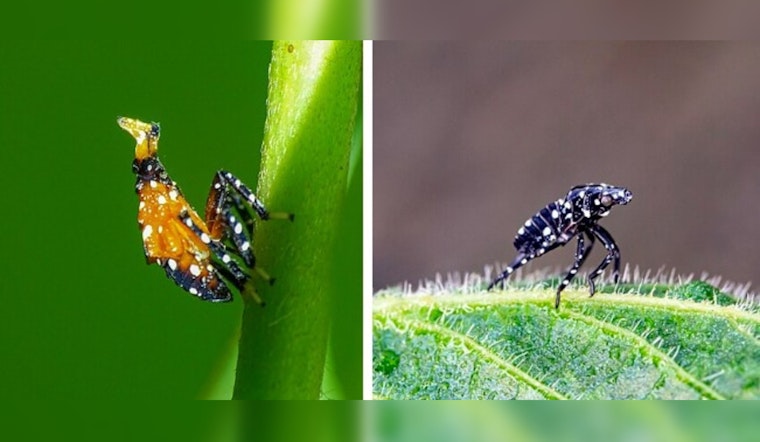
Vintners in the Land of Lincoln are bracing for an unwelcome guest that's threatening to sour their grape endeavors. The spotted lanternfly, an invasive insect first spotted in Cook County this fall, has now caught the wary eyes of Illinois grape growers, according to a report by the Chicago Tribune. These pests aren't merely content with devouring vineyard vines, they're notorious for leaving a sticky mess called honeydew, which in turn can foster sooty mold, spoiling the state's booming agritourism sector. "A lot of grape growers, the winery is also maybe a bed-and-breakfast, but then you come drink wine and sit and watch the sunset, and nobody wants to do that or have a wedding there when there's insects flying all over or there's sticky, sooty honeydew everywhere where you sit or walk," said Kelly Estes, state survey coordinator for the Illinois Natural History Survey.
The spotted lanternfly's potential for destruction isn't just theoretical; once they latch onto vines, potential earnings are at stake and the health of the plants could suffer across multiple seasons, causing concern for an industry that has already seen significant economic impact in states like Pennsylvania, where damages from these pests were pegged at a sizable $43 million hit to agriculture, with fruit growers feeling the worst pinch. Ethan Wirth, operations manager at DC Estate Winery, is gearing up to combat these invaders with the same diligence he applies to his weekly scouting, now with the added task of spotting these critters "I’m definitely concerned about it; it’s just one more thing that we’ve got to scout for and know the best plan of attack for treating that issue," Wirth told the Chicago Tribune.
Experts are putting heads together to champion the fight against the spotted scourge, with a battery of solutions including pesticides, removal of host species like the tree of heaven, education, and vigilant reporting of sightings to the email address [email protected], which, as the University of Illinois' specialty crop entomologist Kacie Athey advises, will aid in tracking and curtailing the pest’s spread. Athey, in her keen monitoring of the situation, notes, "You can get what's called sooty mold, which is another thing that will grow on the leaves and create issues with the plant, sometimes making it so the plant isn't getting as many nutrients as it needs to," She continued to detail these concerns to Brownfield Ag News.
As the Illinois Department of Agriculture continues to update its strategies for dealing with the pesky penetrant, the grape and wine industry is left holding its breath, hoping that the collective effort will bear fruit and preserve both the livelihood of their businesses and the integrity of Illinois's beloved vineyards.





.jpg)