

























































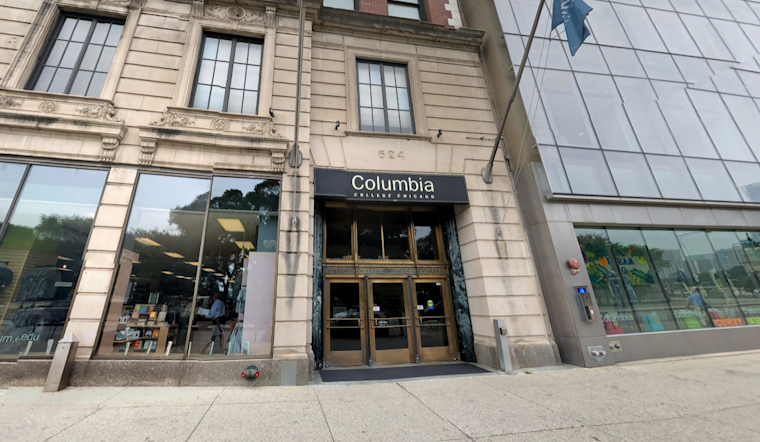
As the Columbia College Chicago adjunct faculty strike enters its seventh week, students are left grappling with the fallout, resulting in replacement teachers and disrupted education. The strike, which began on Oct. 30, was prompted by the institution’s decision to cut hundreds of classes amid a $20 million budget shortfall, as reported by the Chicago Sun-Times. The college has since enlisted “361 adjuncts who are not striking” alongside another 260 full-time faculty to take over the classes, the number of substitute instructors, however, was not confirmed by Columbia College, whether these were new hires remains a question raised by the union.
The impact of the ongoing labor dispute is palpable among the students with some expressing support for their adjunct professors by joining the picket lines, film major Damian Cutler told the Sun-Times that this has been "the most outspoken and outgoing I have had to be in... basically my life." While others, like Zoe Falcon, face challenges due to replacement faculty lacking familiarity with course content she details one instructor "was reading directly off the original teacher’s slides," meanwhile another stated bluntly, "She didn’t have anything else to teach us." These transition woes trigger concerns over the quality and continuity of their educational journey, especially as the school administration looks ahead, setting priorities to plan for the spring semester.
Joining the adjuncts’ cause, heavy hitters within the labor movement such as the AFL-CIO, SAG-AFTRA, and SEIU rallied in support on the campus, with Charles Andrew Gardner, president of SAG-AFTRA Chicago, urging students to learn not just from classrooms but from the actions of striking faculty, "You’re fighting the righteous fight," according to an account by Block Club Chicago. Meanwhile, Columbia College spokesperson apportioned blame to the strike for "financial repercussions", leading to the withdrawal of a previous comprehensive offer dealing with pay raises, title changes, and medical benefits, a motion which Diana Vallera, Union President, labeled as a “regressive proposal” at Friday’s rally.
Students like Ethan Kerr and Guo-Jian Swartz are feeling the academic pinch, with Kerr, an acting major, revealing to Block Club Chicago that "I had zero classes, I had nothing to do," capturing the nullifying effect of the strike on his semester, fearing a tarnished school reputation could hamstring future employment chances, concerns echoed by Swartz, who underscored the importance of getting real feedback from part-time faculty, “they don’t sugarcoat it, which is good because I want to know if I did something wrong.” The strike continues without a foreseeable resolution, leaving Columbia College’s administration and adjunct faculty locked in a stalemate, as students navigate an uncertain educational landscape.





