

























































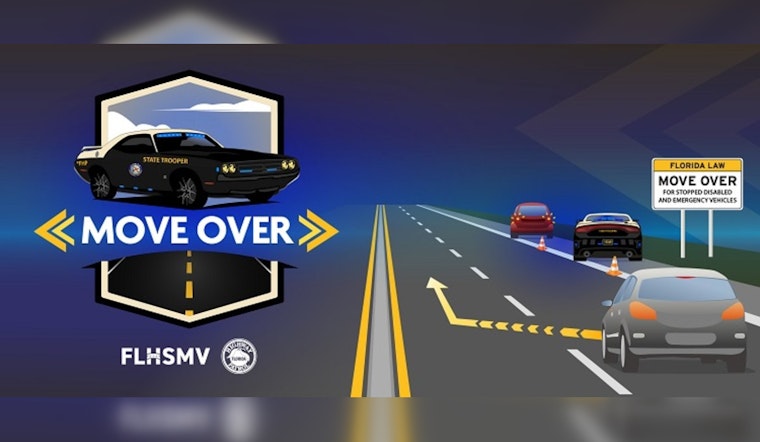
Starting on New Year's Day, Florida drivers will need to make some adjustments to their driving habits. The Sunshine State will enforce an expansion of its 'Move Over' law, designed to keep the side of the road less hazardous for everyone, including those with car trouble. The state legislation, House Bill 425, is ringing in 2024 by requiring motorists to move over for all disabled vehicles with hazard lights flashing or positioned with emergency signs or flares, as reported by NBC Miami.
The expansion broadens the scope, previously aimed at ensuring safety for tow truck drivers and first responders, now extending to everyday drivers who face a breakdown. "Unfortunately, hundreds of people are killed on the roadside, and these are deaths that could be prevented if you just move over," Mark Jenkins, a spokesperson for AAA told NBC Miami. This proactive step is expected to help avert tragedies like the recent incidents detailed by WPBF, including a severe injury to a Lantana woman checking her car and the death of a man changing his tire on I-95.
Florida authorities, like Highway Patrol Trooper Joe Sanchez, have clarified what's expected of drivers under the new law, "Once you have your hazards on and you're disabled, vehicles must move over a lane. And if they can't move over, then they have to reduce their speed by 20 miles an hour," Sanchez told NBC6. With the inclusion of stalled vehicles, the law maintains that on a two-lane road or in cases where moving over isn't possible, drivers must decelerate to 20 mph below the speed limit or slow to 5 mph when the limit is 20 mph or below.
Penalties for ignoring the Move Over Law range from a $60 to $158 fine, a financial deterrent that lawmakers hope will promote adherence to the regulations and reduce the number of preventable roadside fatalities. With Florida joining 16 other states in enforcing such measures, the move is a clear signal of prioritizing safety in the fast lane. The revisions to the law carry weighty implications for the state's drivers – and according to WPBF – reflect an evolving understanding of risk on the open road.





