

























































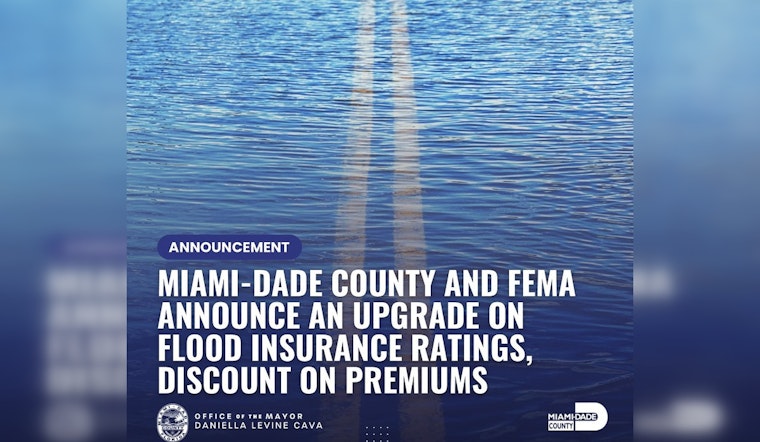
In a move that's sure to bring smiles to property owners, flood insurance premiums are taking a nosedive in Miami-Dade County. Thanks to an upgraded ranking from a Class 5 to a Class 3 in the National Flood Insurance Program's Community Rating System (CRS), those residing in unincorporated areas of the county are looking at a hefty 35 percent reduction in their flood insurance costs. This change, announced by FEMA officials, puts an estimated $12 million back into the pockets of the insured annually, as reported by NBC Miami.
The announcement couldn't come at a better time. With federal emergency managers set to release new flood zone maps, which will likely raise the number of property owners who need flood insurance, this discount offers a financial cushion against potential rising costs. "As hurricanes and storms become more frequent and severe, I am grateful that communities like Miami-Dade County are making critical investments to keep residents safe from these increasing climate threats," FEMA Administrator Deanne Criswell said in statement obtained by NBC Miami.
Miami-Dade Mayor Daniella Levine Cava hailed the rate reduction as a significant step in resilience for the county. "This indicates that we have been able to demonstrate that we can create more resilience, more protection for our community,” she told WLRN. The improved CRS ranking marks Miami-Dade as the largest community to achieve that level and showcases them among the top two percent nationwide.
The county's decade-long efforts to enhance flood mitigation, including investment of over $1 billion in stormwater infrastructure and quickening infrastructure upgrades and flood mitigation activities, have played a key role in this advancement. FEMA’s associate resilience administrator, Victoria Salinas, noted that Miami-Dade also got credit for taking a harder look and improving projections for future conditions. She emphasized the importance of this foresight: "That's something we want to see all communities do more of, because we're no longer dealing with yesterday's disasters," Salinas said according to WLRN.
Moving forward, Miami-Dade is also finalizing a new floodplain management plan which Mayor Levine Cava stated would be available later this month. With the expected release of updated flood maps this year, the proactive measures taken by the county could not only lead to insurance savings but also provide a needed benchmark for communities nationwide grappling with the evolving challenge of climate change.





