

























































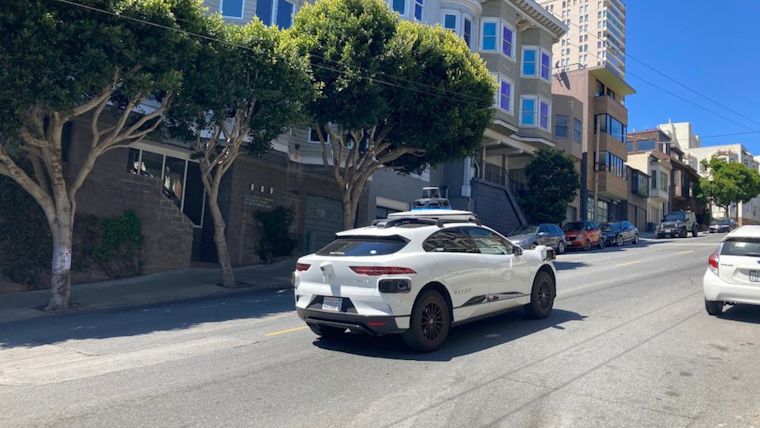
As the City of San Francisco pursues legal action against the California Public Utilities Commission, Waymo plans to expand its driverless taxi service to new territories, including Los Angeles and parts of Santa Clara County. According to an announcement on the social media platform Twitter, the company, owned by tech giant Alphabet, applied last week seeking to include LA and 22 Bay Area cities.
We’ve applied to the @californiapuc to extend our driverless deployment service to include LA, and we’ll continue our work w/ local policymakers, first responders & community organizations there. Angelenos, join us for a ride! https://t.co/bGP0imibM6 pic.twitter.com/KfFbCRp0V7
— Waymo (@Waymo) January 20, 2024
Despite San Francisco City Attorney David Chiu's lawsuit that surfaced in the Washington Post, Waymo's spokesperson Julia Ilina stated, "We are disappointed that [San Francisco] has chosen to appeal the CPUC’s previous decision, however, we remain confident in our ability to continue safely serving San Francisco’s visitors and residents." The expansion aims to bring Waymo's autonomous Jaguars to the streets of the Peninsula, including a route to SFO airport and Google's home base in Mountain View.
A recent report by Waymo detailed a safety record of 0.6 crashes per 1 million miles driven by its autonomous vehicles in San Francisco, a statistic it used to emphasize its commitment to safety amid the rolling out of its services. In the meantime, with its competitor Cruise having its permit suspended after several mishaps, Waymo operates as the sole driverless car service in San Francisco, as detailed by SFist.
Yet, Waymo's ambitious expansion comes with hurdles. Supervisor Aaron Peskin expressed skepticism regarding the company's capacity to navigate the complexities of SFO. Peskin implies leveraging the airport access as a bargaining chip for more city oversight, stating, "I’m using [SFO] as an opportunity to try to force a more collaborative relationship with Waymo," in an interview with the Chronicle. Conversely, in the realm of freeway capability, Waymo has recently started testing on Phoenix freeways without a human operator on board, signaling a step forward in their operational capabilities, as mentioned in their company blog.
On the legislative front, Senator Dave Cortese introduced a bill to allow local governments to veto robotaxi services operations in their jurisdictions without explicit approval. This development and Chiu's ongoing legal challenge pose a potential snag in Waymo's statewide ambitions. Despite these, the company has procured a DMV approval that sanctions them to increase its speed limit to 65 mph and extend its operation to freeways and rural roads, as observed by The Standard.
Public comment regarding Waymo's safety plan is open until February 8, following which the CPUC will decide on the proposed expansion. Waymo has initiated dialogue with San Francisco International Airport to map the area for future passenger services. The company's spokesperson informed The Standard that while immediate plans for airport pick-up and drop-off are not in place, the groundwork is being laid for that possibility.


