

























































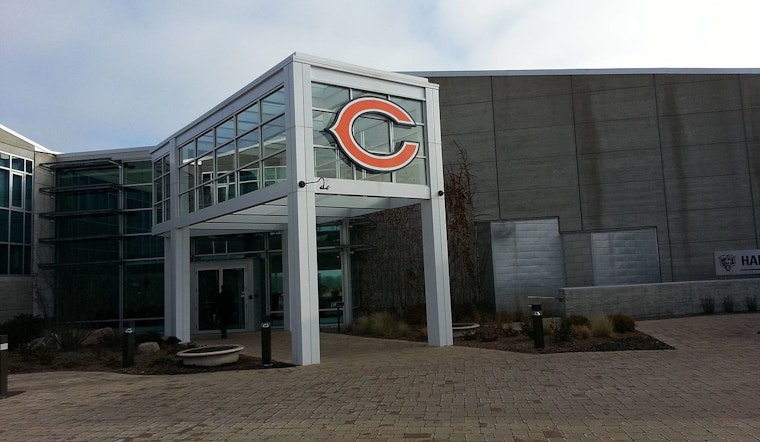
The future home of the Chicago Bears remains in limbo after the Cook County Board of Review set the property tax valuation much higher than the team's estimates, according to reports. The Bears have expressed their disappointment with the decision that leaves them with a substantial tax bill, potentially throwing a wrench in plans to develop a new stadium in Arlington Heights.
The Chicago Sun-Times reported that the Board put the value of the former Arlington International Racecourse property at $124.7 million, resulting in the Bears' facing an annual tax bill estimated between $10 million and $11 million. This figure stands in stark contrast to the lower valuation range the Bears had advocated for, between $60 million and $71 million, it is far less than the $160 million that local school districts believed the property was worth.
Despite the setback, the Bears signaled their resolve to forge ahead. "While we review the effects of this decision, we will continue to work with local municipalities to select the best location for the future stadium of the Chicago Bears that will bring a transformative opportunity to our region — boosting the economy, creating jobs, and generating millions in tax revenue," the team said in a statement obtained by the Sun-Times.
George Cardenas, one of the commissioners who voted for the $124.7 million figure, justified the decision based on equity. "Our decision for the Bears’ stadium site is about fairness — fairness to the Bears and fairness to Arlington Heights taxing bodies," Cardenas told The Chicago Sun-Times. The Bears, on their part, felt their offers were more than generous, considering they had "offered to pay more in taxes on vacant land with no commercial usage than the site generated with a fully operational racetrack — but our offers have been rejected," according to their statement.
The disagreement comes as the team also entertains potential sites closer to the city of Chicago. With a 30-day window to appeal the Board's judgment, the Bears' leadership stands at a pivotal decision point. They could either challenge the Board's ruling or potentially aim their sights at other locales that could be more financially favorable. Hoodline notes that the team's flirtation with different suburbs, as well as discussions with Chicago Mayor Brandon Johnson's administration, indicate that a shift in location is still on the table as the team seeks property tax certainty for their future development plans.




