

























































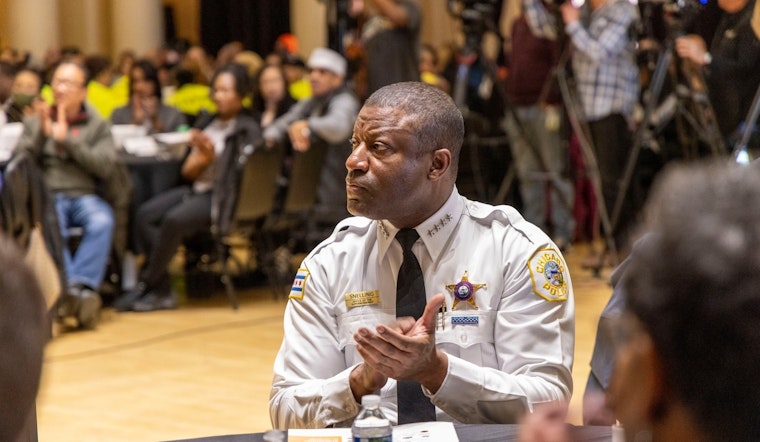
In a stark admission, Chicago's police superintendent, Larry Snelling, faced a humbling correction this week. He erroneously claimed a vastly inflated murder clearance rate for January of this year, only to reveal a markedly lower figure days later. According to the Chicago Sun-Times, Snelling originally touted that detectives had "cleared" 76% of the month's murders, stating to West Side residents that out of 25 homicides, 19 had been resolved. This figure was significantly above the department's historic average.
The gap between the superintendent's early claims and the reality is staggering. Snelling, who doubled down on his assertion at an Economic Club of Chicago event, declaring 20 of the 26 murders had been cleared, later admitted the true number was merely three. His overzealous accounting did not go unnoticed, as officials scrambled to clarify that another 16 cases cleared this year involved homicides from previous years. "This was my miscommunication, and I own it," Snelling noted in a statement, hoping to refocus attention on the victims and the community's trauma rather than his numerical blunder.
The city's grappling with law enforcement accuracy came as a tragic mirror to a 35-year saga of wrongful conviction that finally concluded. Brian Beals walked free after being locked away for a crime he didn't commit, according to a report from CBS News Chicago. His release marked the end of a severe miscarriage of justice, where flawed testimony and inadequate evidence had pinned him for the 1988 murder of a 6-year-old Chicago boy.
The vindication of Beals' innocence yielded a bittersweet reclamation of life outside bars. "I'm looking forward to building a life, starting over," Beals told CBS News Chicago, acknowledging the profound changes in the world since his incarceration. His wrongfully served time is recorded as the second-longest in Illinois history. The Cook County state's attorney's office, which aided in extinguishing his charges, called the original conviction "a grave miscarriage of justice."
Beals emerged from his long, undeserved stint as a new man ready to embrace the possibilities. His wrongful imprisonment spanned decades marked by mentoring, writing, and enduring the loss of close family members, undeniably shaping the man who the world receives back today. Meanwhile, Chicago law enforcement, mired in its own struggle with the veracity of case resolutions, demonstrates the complexity of crime and punishment in a modern city choked by violence and the pursuit of justice.





