

























































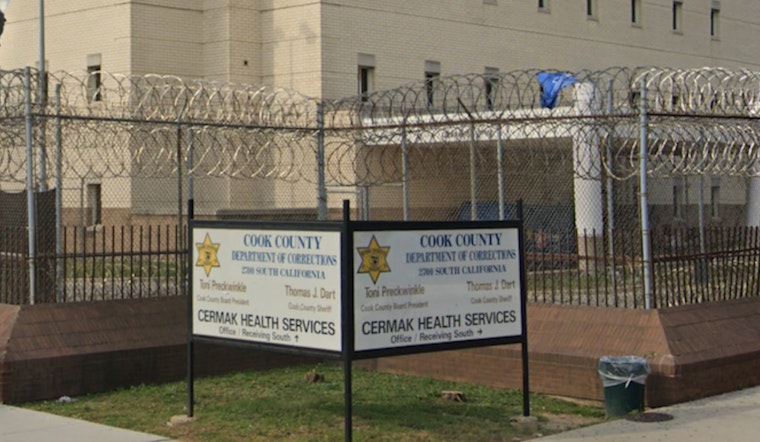
The population at the Cook County Jail has more than halved over the past decade, but surprisingly, their spending hasn't seen a commensurate decrease, causing taxpayers to question where their dollars are going. According to a Chicago Sun-Times report, the average number of inmates dipped to 4,675 last month from a high of 11,248 back in September 2013. However, this significant drop of 58% in detainees has only led to an 18% fall in the adjusted operating expenditures from 2013 to 2023.
Costs remain soaring, with over $412 million spent in the last fiscal year, which formally closed on Nov. 30. Cook County Sheriff Tom Dart, responsible for overseeing the jail, attributed the inflexible costs to factors beyond his control. These include established union contracts he isn't involved in negotiating, as well as pay hikes mandated by the County Board, a detail Dart's office revealed to have contributed substantively to the overall expenses. The aforementioned Sun-Times analysis indeed confirmed that most salary increments roughly kept pace with inflation.
Mental health and substance abuse treatments for a growing number of detainees have added complexity to the provision of services by the sheriff's office. "The sheriff's office has worked extraordinarily hard to cut costs wherever possible while still ensuring the safety of individuals ordered into custody and providing programming and treatment options to address mental health needs and substance use disorders," the office asserted in a statement. Despite the emphases on efficiencies, the per-day cost to house a detainee has escalated to more than $130, up from an inflation-adjusted $94 in 2013.
On the flip side, the Cook County jail population cut by over 500 inmates is partially credited to the bail reform measures Illinois introduced on September 18, pledging to promote justice and fairness in pretrial. The Hoodline reported this decrease as evidence of the state's commitment to a fairer judicial system. This move is part of a larger trend focused on permanently reducing the levels of incarceration, especially for nonviolent offenders.
Yet critics and observers are demanding a more cohesive approach to budgeting. "It’s very important in the next budgeting cycle that the sheriff is more forthcoming about what the actual operational model is and that the County Board is more rigorous in its scrutinization of that budget so that we all can understand that this money is being well spent," said Joe Ferguson, president of the nonprofit Civic Federation, in a statement obtained by the Chicago Sun-Times. Meanwhile, County Board President Toni Preckwinkle suggested a reallocation of funds to address court backlogs and the root causes of crime, from drug addiction to housing shortages, an approach also referenced by Hoodline.
As reforms continue to reshape the pretrial landscape in Illinois, the balance between ensuring public safety, offering treatment, and managing costs in Cook County and beyond remains a contentious issue—particularly when aligned with the need for increased transparency and fiscal responsibility.





