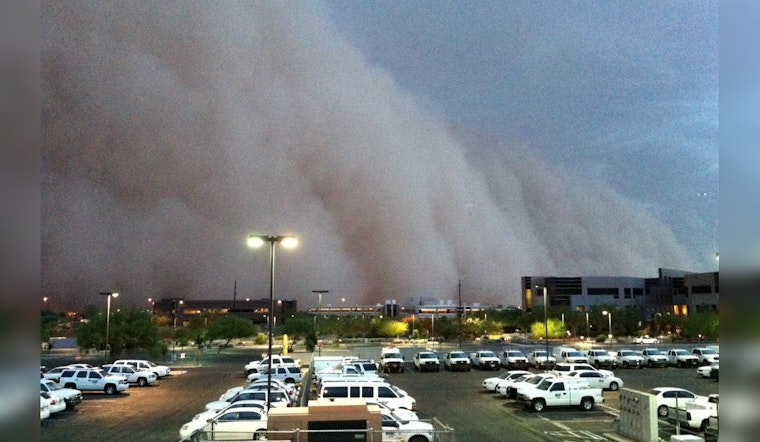
Valley fever, the desert's insidious health trespasser, may not stalk its victims in the gusty aftermath of a haboob as once thought, per a groundbreaking study by the Translational Genomics Research Institute (TGen). Researchers at TGen have sifted through more than 5,200 air filters in Phoenix, not finding the expected jump in Valley fever spores following the area's infamous dust storms, challenging long-held beliefs about the disease's patterns of transmission. Dr. David Engelthaler, indicating to AZFamily, mentions, "Valley Fever is not everywhere all at once, in the air." And while that news is reassuring, the unpredictable nature of the spore's dispersal remains a concern.
The common assumption that a haboob's wrath increased the risk of encountering the Coccidioides spores, the fungus causing Valley fever, has been turned on its head with data from this study pointing to more localized, and perhaps human-influenced, factors at play such as construction or neighborhood developments that churn the desert soil and liberate these microscopic threats, "We are trying to do is get more precision on what's actually driving Valley Fever spores to get up into the air to cause people to breathe them in and get sick," Engelthaler told AZFamily. The findings, published in Nature's Scientific Reports, observed the presence of the spores varied, hinging on the whims of weather patterns and soil conditions, as per the research cited by TGen's report.
The study, which examined filters from 11 sites across the Phoenix metro area, knocks down the old narrative that one must brace for a Valley fever barrage post-dust storm. This public misconception, as Engelthaler notes, could have undermined actual preventive measures against the fungus, "That messaging is probably doing little to reduce the risk of people getting exposure to cocci or Valley fever," he explained according to the study reported by TGen. Public health workers can now leverage these insights to refine health advisories and mitigation tactics.
Delving further into the implications of climate on Valley fever, the study draws a tentative connection with increased prevalence on hotter, drier days, not yet anchoring Valley fever's spread to global climate change, yet hinting at a potential correlation that could be a harbinger of more frequent spore encounters as climate patterns shift, "That probably does mean that the more of those days we have, in a changing climate, the more exposures we’re going to see," stated Tanner Porter, the study's lead author, as mentioned by TGen. The TGen team isn't through with these wind-borne culprits, as they continue to monitor the filters and apply genomic sequencing to hunt down different strains, adding layers to our comprehension of cocci spore dispersal.