

























































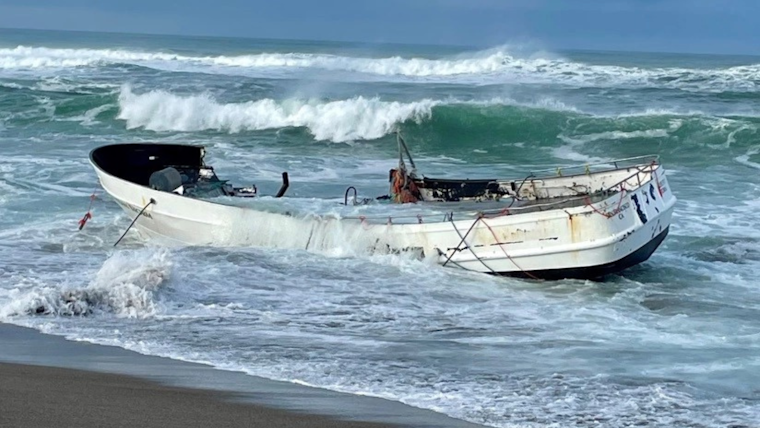
The Greater Farallones National Marine Sanctuary has become the stage for an urgent ecological rescue drama as efforts to salvage the grounded 58-foot commercial fishing vessel, Aleutian Storm, escalate near Bodega Bay after the U.S. Coast Guard and California wildlife officials handed over the response to the NOAA's sanctuary. The Aleutian Storm, now a threat to the marine sanctuary, had roughly 1,500 gallons of diesel onboard when it hit the seabed, according to Hoodline.
After unsuccessful attempts to refloat the vessel and prevent the looming ecological disaster, the situation intensified; particularly after the ship's four crew members, finding themselves unable to free the Aleutian Storm, ended up swimming to safety o shore. The initial response saw the U.S. Coast Guard and California Department of Fish and Wildlife's Office of Spill Prevention and Response (CDFW-OSPR) forming a Unified Command that has since delegated the ongoing operations to NOAA’s Greater Farallones National Marine Sanctuary for oversight of salvage operations, as detailed by U.S. Coast Guard press releases.
Pollution removal has been deemed unsafe due to the vessel's degraded state and adverse weather conditions, shifting the focus squarely to salvage operations. Although crews were able to remove some diesel from one tank, the total amount of pollution on board remains unclear. Coast Guard Sector San Francisco and CDFW-OSPR will continue to keep a close eye on the situation, monitoring for any pollution detected during ongoing and future efforts.
Questions and concerns about the response and salvage operations are being directed to Jennifer Stock, the Public Information Officer for NOAA’s GFNMS, ensuring the public is informed as the situation develops. While the threat to the sensitive ecosystem is of utmost importance, the authorities are balancing the precarious task of managing public information with the intricate unfolding of recovery and protection strategies for the coastal habitat, home to a rich variety of marine life.





