

























































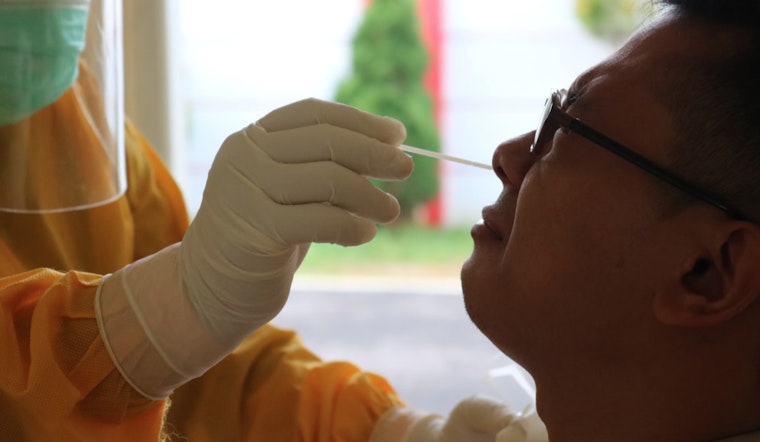
The CDC is stepping up its game in the health arena, bolstering a program that puts international travelers in the swab spotlight for infectious diseases — with Miami and Chicago's major airports being the latest additions. The Centers for Disease Control and Prevention is asking visitors from afar to roll up their sleeves, or rather, tilt back their heads, to collect valuable data on potential new health threats from overseas.
Previously operating at six airports, the initiative is making its way to O'Hare and Miami, notable gateways to and from South America, Africa, and Asia, as per CDC's Allison Taylor Walker in a statement obtained by ABC News. "Miami and Chicago enable us to collect samples coming from areas of the world where global surveillance is not as strong as it used to be," Walker stated. The move is designed to paint a broader picture of the global state of health, monitoring more effectively the arrivals that might harbor the seeds of tomorrow's epidemics.
The CDC program has its origins in the maelstrom of 2021 and has been instrumental in sniffing out coronavirus variants ahead of other existing methods. It's not just about the 'rona though; the nasal swab song and dance includes a number crunch for influenza and RSV too. More than 475,000 travelers from over 135 countries have participated, providing a sizable sample to inform public health strategies.
While individuals who volunteer in the swab-a-thon don't get a briefing on what's brewing in their nostrils, they do walk away with a COVID-19 home test kit — a token of sorts from their brief encounter with epidemiological surveillance. The CDC isn't only dipping into nostrils, but also exploring airport wastewater, as mentioned by NBC Miami. This icky but insightful dive could expand to monitor for a brimming portfolio of over 30 pathogens.
Though the taxpayer's bill for this public health prophecy initiative runs about $37 million, the investment is a handshake between the CDC and two companies, Ginkgo Bioworks and XWell, tasked with swabbing and decoding what travelers are packing in their noses. As international pathways remain bustling with people, these efforts ensure the U.S. stays one step ahead — or at the very least, not blind-sided — by the next wave of microscopic invaders.





