

























































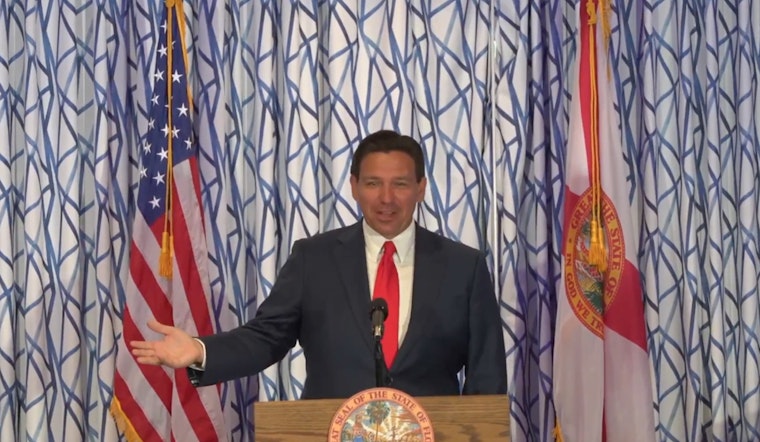
Governor Ron DeSantis of Florida has taken a new approach to the state's homelessness issue by signing a law that restricts encampments in public spaces, such as sidewalks and parks, while also providing a framework for the establishment of tent encampments under certain conditions, set to take effect on October 1. The new legislation demands local governments create designated areas for homeless encampments when shelters exceed capacity, ensuring that they offer essential services like substance abuse treatment and mental health counseling, as reported by Hoodline.
In Miami, where downtown areas have seen an increase in homeless individuals occupying sidewalks, this law could significantly alter the urban landscape, David Bianchi, an attorney working in the affected area, told NBC Miami, he explained the law's necessity, citing sanitation issues and safety concerns for both the homeless and the local residents, his office recently witnessed an aggressive encounter involving a homeless individual, signaling an urgent need for solutions.
Under DeSantis' directive, the Department of Children and Families is tasked with overseeing the local governments to ensure they comply with the new requirements for temporary encampment areas, which include strict rules prohibiting alcohol and drug use while also providing sanitation and security, these measures are intended to balance the need for public order with the provision of support to the homeless population, with DeSantis himself saying at a news conference, "I think this is absolutely the right balance to strike," according to Hoodline.
Yet, not everyone agrees with the effectiveness of the approach; Democratic state Sen. Shevrin Jones criticized the law for what he sees as merely concealing rather than confronting the deeper causes of homelessness and he's not alone in his belief, bolstered by the number of individuals on the streets, which, while lower than many other urban centers, sits at approximately 30,700 people, suggesting a disparity between the state's attempt to clean up its streets and its grappling with the systemic issues at hand. Jones' thoughts on the law were, "This bill does not and it will not address the more pressing and root cause of homelessness," a sentiment echoed by his peers in a debate earlier this year, Hoodline reports.
Local efforts, such as those by "Hermanos de la Calle" working with the Homeless Trust, continue as social workers strive to move the unsheltered into housing, with agency chairman Ron Book insisting on the importance of transitioning the homeless into stable living situations and providing necessary services, over the past three decades, the Homeless Trust has notably reduced the number of homeless individuals on the streets to around 1,032 in Miami-Dade County, significantly lower compared to tens of thousands in similar cities, Book detailed his agency's efforts in an interview with NBC Miami, saying, "Our job is to catch people and get ‘em into shelter and permanent housing, get them the services they need." However, the enforcement of the new law, which also allows local residents and businesses to sue if local governments do not relocate the homeless from public areas, is yet to be seen in the coming months.





