

























































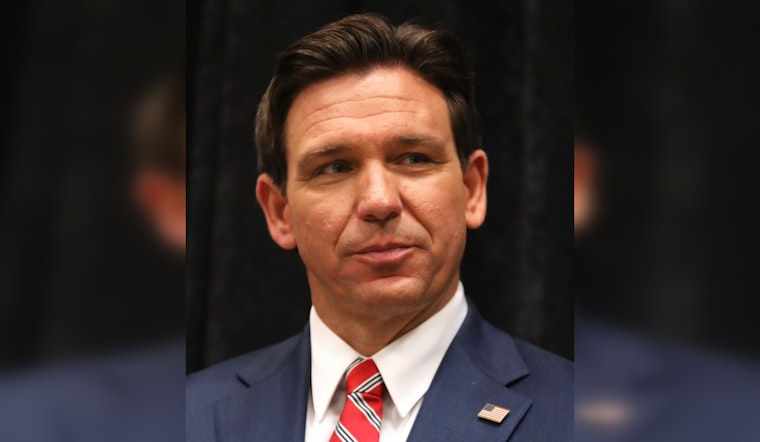
Gov. Ron DeSantis and his administration are weighing their options after a federal appeals court delivered another blow to the controversial "Stop WOKE Act," a piece of legislation aimed at curtailing discussions on race and diversity in the workplace. According to a report by The Miami Times, this is the second time that courts have found the act's restrictions to run afoul of the First Amendment, leaving the future of the law uncertain.
The recent ruling on Monday by the 11th U.S. Circuit Court of Appeals upheld a preliminary injunction first issued in 2022 by Chief U.S. District Judge Mark Walker, the law's limitations on race-related workplace training was deemed unconstitutional and was criticized for targeting speech based on its content and penalizing certain viewpoints, this decision has thrown the DeSantis administration into a stance of consideration on whether it will take the battle to the U.S. Supreme Court or not. The panel responsible for upholding the injunction was composed of two judges appointed by former President Donald Trump and one by former President Bill Clinton, a point that underscores the bipartisan nature behind the court's acknowledgment of constitutional protections over political aims.
Under the Act, businesses were prohibited from conducting training that suggested that members of one ethnic group are inherently racist or should feel guilty for past actions by others—concepts that the governor and his allies have labeled as "woke." The law specifically challenged the compulsion on employees to buy into certain race-related concepts under threat of discrimination, which was spelled out in the challenged legislation. As reported by ABC News, DeSantis has been a vocal critic of what he perceives as race-based discussions infiltrating private sector training, frequently campaigning on the promise that Florida is where "woke goes to die."
The lawsuit against the 'Stop WOKE' act was brought forth by several businesses, including a Ben & Jerry's ice cream franchisee and Honeyfund.com, a Clearwater-based company specializing in wedding registries, while these companies claimed their free speech rights were infringed upon the appeals court sided with their plight and disagreed with the state's argument that the law regulated conduct instead of speech. Judge Britt C. Grant, writing for the court, highlighted the issue by stating, "By limiting its restrictions to a list of ideas designated as offensive, the Act targets speech based on its content and by barring only speech that endorses any of those ideas, it penalizes certain viewpoints — the greatest First Amendment sin," which is a hefty endorsement of free speech principles even when those principles collide with the legislative intent, according to the Governor’s Office's contention that the Act was a necessary move to protect employees from being indoctrinated with racial hostility in the workplace.
With arguments scheduled for June regarding a separate injunction against the law’s restrictions within universities, and the Governor's Office considering further appeals, the 'Stop WOKE' Act remains a contentious issue that tests the boundaries of state power and individual liberties, and as quoted by Antonio McBroom, CEO of Primo Tampa and one of the plaintiffs, "The government obviously has no right to patrol my workplace for words that some politicians don’t like," a sentiment echoed by the court's decision and shared by many who view the First Amendment as a shield against government overreach into the private expressions of citizens and, by extension, businesses.




