

























































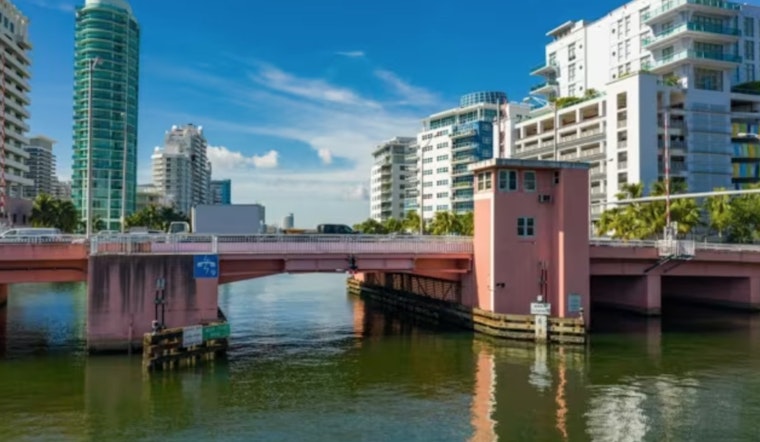
In an effort to mitigate persistent vehicular congestion, Miami Beach city commissioners are spearheading a campaign requesting that the U.S. Coast Guard slash the number of openings of the 63rd Street Bridge. The bridge, which traverses Indian Creek, has become a bottleneck for traffic as it currently opens to marine traffic every half hour. According to a report by Local 10, the proposed change is to reduce this to once an hour.
Commissioner Kristen Rosen Gonzalez described the process as "arduous" and is advocating for a revised schedule, which she asserts is a significant point of stress for transportation flow affecting La Gorce, Allison Island, Mid-Beach, and North Beach communities. A meeting with the Coast Guard is in the planning stages to discuss the proposal, running with the current set by the tides of bureaucratic procedure, Local 10 reported.
Backing the proposal, Commissioner Tanya Katzoff Bhatt emphasized the daily impact of the bridge's frequent openings, remarking, "There is not a chance that moving your yacht or your party boat takes precedence over getting to work on time or making it to a doctor’s appointment or getting to school," Local 10 quotes her as saying. Further advocating for data-backed negotiations, Bhatt continued, "We need to go with data."
Unveiling her method to navigate the gridlock of administrative processes, Commissioner Rosen Gonzalez, told Miami Today, "Sometimes we can circumvent bureaucracy and do something politically, which is … the avenue that I’m taking." This proactive approach aims to cut the bridge's openings from every half hour to just hourly, theoretically reducing traffic interruptions by half.
City officials intend to collaborate with the office of U.S. Rep. Frederica Wilson, D-Florida, to formulate a solid case for this operational change. The bridge, identified as a double-leaf bascule bridge, presently allows an 11-foot clearance for boats, a design that while functional, has become an urban impediment for those traveling by car. Beyond the congestion, this debate of bridge schedules touches on broader concerns regarding the prioritization of maritime needs over the day-to-day movement of city residents and workers.





