

























































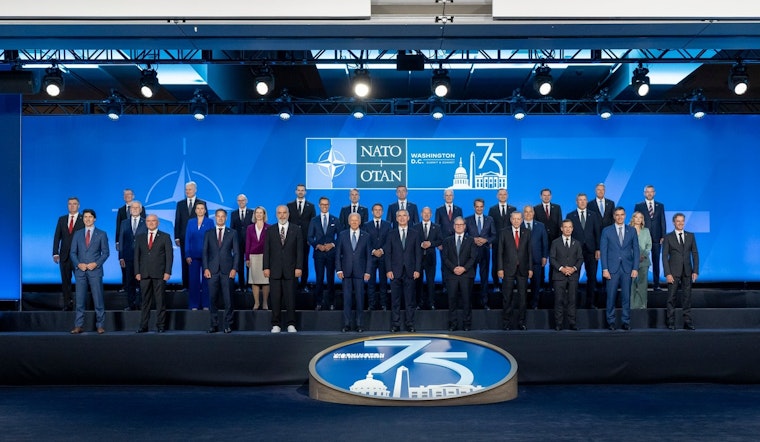
The recent NATO Summit in Washington, DC marked a milestone in the Alliance's 75-year history, with the United States heralding the increasing security contributions from NATO’s Indo-Pacific Partners (IPP) - Australia, Japan, New Zealand, and the Republic of Korea (ROK). Amid rising global threats, these nations represented at the summit have shown an escalating commitment to addressing transnational challenges.
In the face of Russia's continued aggression against Ukraine, the discord cast by this conflict has reverberated across continents. Australia, for example, has committed over AUD 1.1 billion in military and humanitarian assistance to Ukraine since 2022. They also guard a vital junction for international help to the beleaguered country and have placed sanctions on Russia, as per a White House Fact Sheet. Across the water, Japan has stepped up with financial and material assistance totaling over $12 billion since the onset of Russia's invasion, including vehicles and vital energy infrastructure support.
New Zealand's prolonged engagement with Ukraine encompasses training troops and intelligence efforts, bolstered by a fresh tranche of funding for drones and medical rehabilitation just announced this July. The Republic of Korea has similarly been active, with its humanitarian and economic commitments, short-term aid pledges, and technological support for Ukrainian energy needs.
Defense spending is another arena where these Indo-Pacific nations are syncing with NATO's targets for a stronger collective posture. Australia's increase to 2.3 percent of GDP by 2033, Japan's 17 percent rise in their most recent defense budget, and South Korea's 4.2 percent hike reflect significant regional commitment to security. Notably, Japan is poised to reach a defense spending benchmark of 2 percent of GDP by fiscal year 2027—a substantial shift for the typically pacifist nation.
The tailored partnerships between NATO and each IPP country are at the core of these interactions. From cyber defense and global security to the champions of Women's Peace and Security, the areas of cooperation have diversified. These relationships are not just about meeting immediate concerns but are a testament to a shared recognition of global interconnectivity and the multifaceted challenges it holds.





