

























































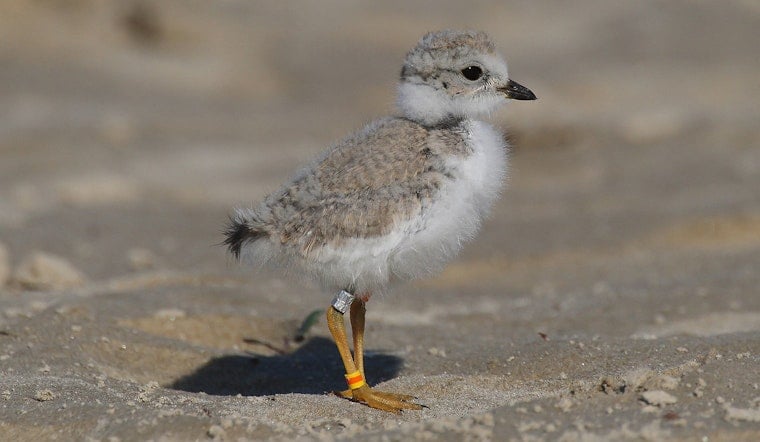
In a deeply disheartening development for conservationists and nature enthusiasts alike, only one chick remains from this year's brood of piping plovers at Montrose Beach, following the recent deaths of three hatchlings. ABC 7 Chicago reported that the third chick's life came to a somber end despite concerted efforts from local monitors and veterinaries to nurse it back to health after it was observed in a weakened state on Saturday.
The sobering news comes as the Great Lakes population of the piping plovers—an endangered species—continues its struggle against the precipice of extinction. A report by The Chicago Tribune detailed that necropsies are underway to uncover the causes of the sudden losses. The first of Imani and Sea Rocket's offspring was discovered deceased with a growth on its neck, while the subsequent fatalities involved chicks that showed signs of lethargy before their death despite no evidence of injuries or illness.
Volunteers and wildlife enthusiasts had followed Imani, hatched to the cherished plover couple Monty and Rose in 2021, with hopeful anticipation as he found a mate in Searocket and fathered this year's chicks. The Chicago Piping Plovers group has been inundated with support as they navigate this trying period. In a statement obtained by ABC 7 Chicago, the group said, "We are saddened to report the passing of another chick. Chicago Piping Plovers and its partners remain grateful for the outpouring of love and support. We are working to understand the factors that have led to the demise of our precious chicks."
The remaining chick's situation underscores the precarious nature of the efforts to bolster the piping plover population, which has incrementally improved from an all-time low of 13 pairs in the 1980s to around 70 breeding pairs due to recent conservation endeavors. The Great Lakes piping plovers were listed as endangered, and every hatchling's survival is critical to the species' recovery. According to The Chicago Tribune, experts from Michigan State University’s W.K. Kellogg Bird Sanctuary note that, on average, only 1.5 out of four chicks typically reach the fledging stage in wild nests.
Maintenance of the delicate habitat at Montrose Beach, which became a protected sanctuary in 2019, is essential for the continuation of these rare birds' lifecycle within the Illinois shores—a sight that had disappeared for nearly 64 years prior to their return. The efforts of various agencies and the vested interest of the public in the preservation of these birds paint a picture of collective determination to sustain the species against the odds, even as each loss mournfully reminds us of the fragility inherent in the struggle for survival.





