

























































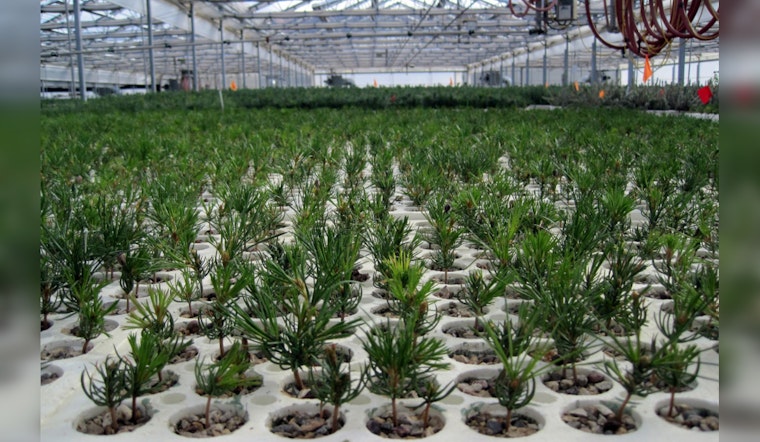
In an effort to address the environmental aftermath of the Telegraph Fire, the Globe Ranger District is gearing up for a comprehensive restoration project aiming to revive the habitat for the threatened Mexican spotted owl. Announced on the U.S. Forest Service website, the plan spans over five years and includes reestablishing native flora and ponderosa pine trees across 551 acres of land once scorched by the devastating wildfire.
These reforestation efforts are not only about bringing back trees, they're also about nurturing an ecosystem critically important to the Mexican spotted owl, which has seen its nesting grounds ravaged by fire. The U.S. and Mexican governments recognize this animal as threatened in regions like Colorado, Utah and the Navajo Nation, while Arizona and New Mexico consider it a species of concern. Jamie Wages, the wildfire crisis strategy project manager, revealed that seedlings for the project will be sourced from Idaho's Lucky Peak Nursery, a tree farm designated for reforestation purposes in the West. In anticipation of planting which could, roll out between spring and fall of 2026, "We will be hoping for a wetter winter prior to planting seedlings to give them the best chance of survival," Wages told the U.S. Forest Service.
Funding for this ecological endeavour may come through the Repairing Existing Public Land by Adding Necessary Trees Act or REPLANT Act, included in the 2021 Infrastructure Investment and Jobs Act. The REPLANT Act notably uncaps the Reforestation Trust Fund allowing for an influx of up to $140 million annually, a substantial increase from the previous $30 million limit. This will enable the Forest Service to plant an approximated 1.2 billion trees and create around 49,000 jobs over a decade, in an effort to tackle the daunting reforestation backlog on nearly two million acres of national forestland.
With the REPLANT Act facilitating these new opportunities, Wages highlighted its potential, "The REPLANT Act presents the Forest Service with a bold opportunity to integrate new approaches to reforestation in response to today’s challenges." These challenges encompass shifts in fire dynamics, climate change impacts, invasive species proliferation, and the overarching issue, of biodiversity loss. Moreover, the project is not isolated in its aims and is in tune with a larger collaboration involving the San Carlos Apache Tribe. Possibilities are being explored for the tribe to procure ponderosa pine seedlings through a 638 agreement, a funding mechanism aiding priorities identified under the Tribal Forest Protection Act. Wages emphasized the ongoing dialogue, "We continue to brainstorm with tribes about who might plant the seedlings and how that will be done."
This initiative is part of a broader 10-year plan by the Forest Service to confront the wildfire crisis, with the restoration project bolstering the San Carlos Apache Tribal Forest Protection landscape. The end goal is not only to revitalize the native ecosystem but also to ensure a culturally sensitive approach to land management, one that blends traditional knowledge with ecological practices to safeguard resources vital to the local communities, and to the heritage of the tribe. More details on this and other related initiatives can be found by visiting the Tonto National Forest's official website.





